

The patterns we can't see control us
Why Do I Keep Attracting the Wrong Partners

You swore you'd never date someone like your ex again. You made lists of red flags to avoid. You told yourself this time would be different. And yet here you are — heartbroken, confused, staring at the wreckage of another relationship that followed the same devastating script. Different face, different name, same painful ending.
The person who seemed so different at first somehow transformed into a familiar nightmare. The charming attentiveness became controlling jealousy. The mysterious depth revealed itself as emotional unavailability. The exciting intensity turned into exhausting drama. Once again, you're left wondering: why does this keep happening to me?
This isn't bad luck. It isn't that "all the good ones are taken." And it isn't proof that you're fundamentally unlovable. What you're experiencing has a name in psychology: repetition compulsion — the unconscious drive to recreate familiar emotional patterns, even painful ones. Your psyche is running a program you didn't consciously write, selecting partners who fit a template you don't remember creating.
Understanding why you attract the wrong partners requires looking beneath the surface of your choices — into childhood experiences that shaped your attachment style, into unconscious beliefs about love and worthiness, into the hidden logic of attraction that operates below awareness. This isn't about blame; it's about understanding. And understanding is the first step toward change.
People often ask me why they keep choosing the wrong partners, as if it's a conscious decision gone wrong. But partner selection happens largely unconsciously, driven by attachment patterns formed in childhood and reinforced through every subsequent relationship. We're not choosing badly — we're choosing familiarly. The partners who feel 'right' are often the ones who fit our wounds perfectly. Breaking this pattern requires making the unconscious conscious, understanding why certain people feel like home even when that home was never safe.
— Dr. Sarah Mitchell, Clinical Psychologist and Attachment Researcher, Stanford University Relationship Lab
The goal of this exploration isn't to make you feel broken or defective. It's to illuminate the hidden architecture of your romantic choices so you can finally build something different. The patterns that have caused you pain aren't destiny — they're psychology. And psychology can change.
The Unconscious Architecture of Attraction
Why "Chemistry" Often Misleads Us
That instant spark, the feeling of having known someone forever, the magnetic pull toward a particular person — we call it chemistry and treat it as evidence of compatibility. But chemistry is often something far more complex and potentially problematic: recognition.
When someone feels intensely familiar, it's frequently because they match patterns established in our earliest relationships. The nervous system recognizes something — not consciously, but at a deeper level. This recognition feels like connection, like destiny, like finally finding "the one." In reality, it may be the recognition of familiar emotional dynamics, including painful ones.
Consider what "chemistry" might actually signal: the person who creates the same emotional uncertainty your inconsistent parent did; the partner whose emotional unavailability mirrors what you experienced in childhood; the lover whose intensity replicates the chaos of your family home. These matches don't feel alarming — they feel like coming home. The tragedy is that for many people, home wasn't safe.
This doesn't mean all chemistry is pathological. Genuine compatibility can also create spark and connection. But when chemistry consistently leads to painful relationships, it's worth examining what the nervous system is actually recognizing and why it feels so compelling.
The Familiar Feels Safe (Even When It Isn't)
Author: Evan Miller;
Source: psychology10.click
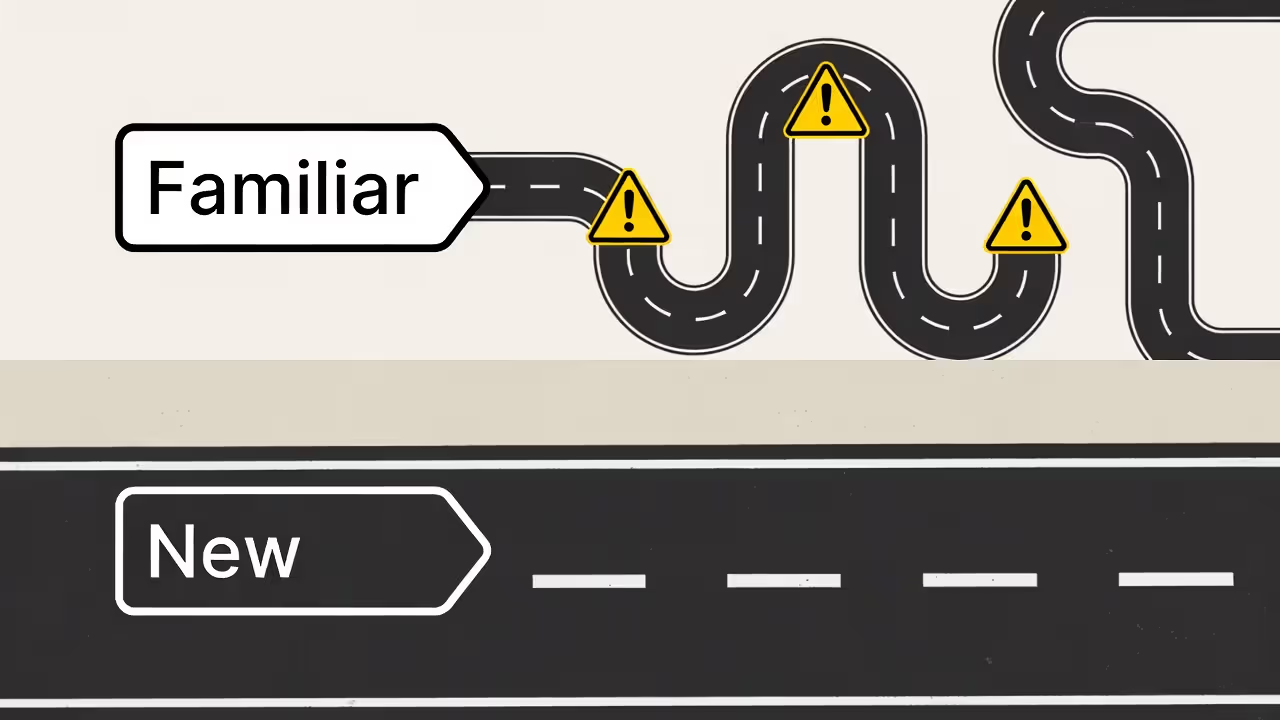
Human beings are fundamentally oriented toward the familiar. Our brains are prediction machines, constantly trying to anticipate what comes next based on past experience. The familiar, even when painful, is predictable — and predictability feels safer than the unknown.
This creates a paradox in relationships: healthy partners may feel wrong precisely because they're unfamiliar. Someone who offers consistent love without drama might trigger anxiety rather than comfort. "Where's the catch?" the mind asks. "This is too easy — something must be wrong." The person who would actually be good for us feels boring, suspicious, or simply not "right."
Meanwhile, the partner who recreates familiar dysfunction feels compelling. The anxiety they trigger is interpreted as passion. The uncertainty they create feels like excitement. The emotional unavailability seems like depth and mystery. We mistake the activation of old wounds for the spark of new love.
This isn't stupidity or masochism — it's the nervous system doing what it evolved to do: seeking the known over the unknown. Changing this pattern requires conscious override of instincts that feel like truth.
Attachment Theory: The Blueprint Written in Childhood
How Early Relationships Shape Adult Love
Attachment theory, developed by John Bowlby and expanded by Mary Ainsworth, provides perhaps the most powerful framework for understanding why we choose the partners we choose. The theory proposes that our earliest relationships — primarily with caregivers — create internal working models of what love is, what we deserve, and how relationships function.
These models aren't intellectual beliefs we can easily examine and change. They're implicit, operating below conscious awareness, shaping perception and behavior automatically. A child who received consistent, responsive care develops secure attachment — the internal sense that they're worthy of love, that others can be trusted, that relationships are sources of comfort rather than anxiety.
But many people didn't receive consistent care. Their caregivers were unpredictable, unavailable, intrusive, or frightening. These children developed insecure attachment styles as adaptive responses to their specific environments. These adaptations, brilliant survival strategies in childhood, become relationship obstacles in adulthood.
The cruel irony: we tend to be attracted to partners who confirm our attachment models rather than challenge them. If your model says love is inconsistent, you'll feel most "in love" with inconsistent partners. If your model says you must earn love through performance, you'll seek partners who make you work for their affection. The attachment system seeks confirmation of its beliefs, even when those beliefs cause suffering.
The Four Attachment Styles in Adult Relationships
Secure attachment develops when caregivers are consistently responsive, available, and attuned. Adults with secure attachment find intimacy comfortable, can depend on partners without losing themselves, tolerate separations without excessive anxiety, and generally experience relationships as sources of mutual support. They represent roughly 50-60% of the population — which means a significant portion of people are working with insecure patterns.
Anxious attachment (also called anxious-preoccupied) develops when caregivers are inconsistently available — sometimes responsive, sometimes not, unpredictably. The child learns that love requires vigilance and effort; you must monitor constantly and work to maintain connection. Adults with anxious attachment crave intimacy intensely but fear abandonment constantly. They may become preoccupied with relationships, seeking reassurance frequently, interpreting ambiguity as rejection, and struggling to feel secure even in stable partnerships.
Avoidant attachment (also called dismissive-avoidant) develops when caregivers are consistently emotionally unavailable or rejecting. The child learns to suppress attachment needs, to not expect comfort from others, to rely only on themselves. Adults with avoidant attachment value independence highly, feel uncomfortable with too much closeness, may dismiss the importance of relationships, and tend to withdraw when partners seek more intimacy. They've learned that needing others leads to disappointment.
Disorganized attachment (also called fearful-avoidant) develops when caregivers are frightening or frightened — the source of potential comfort is also the source of fear. The child faces an impossible dilemma: the person they need to go to for safety is the person they need to get away from. Adults with disorganized attachment want intimacy but fear it, may oscillate between anxious and avoidant behaviors, often experienced chaotic or abusive childhoods, and may find themselves in relationships that recreate that chaos.
Understanding your attachment style illuminates why certain partners feel magnetic while others feel wrong, why you behave certain ways in relationships, and what needs to shift for healthier connection.
The Anxious-Avoidant Trap
Author: Evan Miller;
Source: psychology10.click
One of the most common and painful repeating relationship patterns occurs between anxiously attached and avoidantly attached individuals. Understanding attachment styles psychology explained helps illuminate why these pairings feel intensely compelling initially but tend toward mutual suffering.
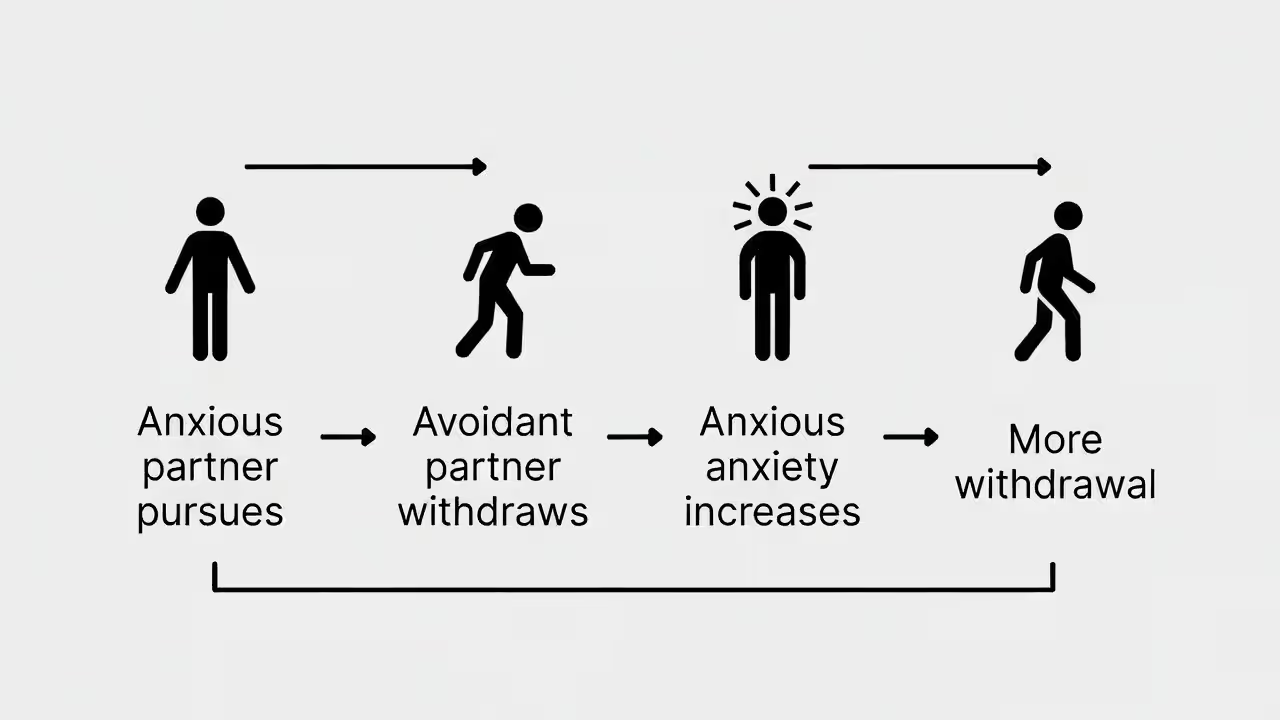
The dynamic works like this: in anxious attachment relationships, the need for closeness triggers the avoidant partner's need for space. As avoidant attachment partners withdraw, the anxious partner pursues more intensely, seeking reassurance. This increased pursuit triggers more avoidant withdrawal. A cycle establishes where one partner is always seeking and the other is always retreating.
Why do these opposites attract? For the anxious partner, the avoidant's independence can seem like strength, their emotional unavailability like depth, their withholding like value worth pursuing. The inconsistent reinforcement — occasional closeness amid general distance — triggers powerful attachment responses, similar to how intermittent rewards create the strongest behavioral patterns.
For the avoidant partner, the anxious partner's pursuit can feel validating without requiring vulnerability. They receive attention and love while maintaining comfortable distance. The anxious partner does the emotional work of the relationship, allowing the avoidant to remain protected.
Both partners may mistake the intensity of this dynamic for love. The anxiety, the longing, the emotional highs and lows — these feel significant, meaningful, like evidence of deep connection. In reality, they're often evidence of triggered attachment wounds playing out in painful synchrony. This is why why do I keep choosing the wrong partner often leads back to unexamined attachment patterns.
The Hidden Logic of Repetition Compulsion
Why We Recreate What Hurt Us
Repetition compulsion, a concept from psychoanalytic theory, describes the tendency to unconsciously recreate traumatic or painful situations. In relationships, this manifests as choosing partners who replicate dynamics from the past, often the very dynamics that caused the most pain.
This seems counterintuitive — why would anyone seek out pain? But the unconscious mind has its own logic. Several mechanisms drive repetition compulsion:
The attempt at mastery. The psyche may unconsciously recreate difficult situations hoping for a different outcome this time. If you can finally get the unavailable parent-figure to love you, you'll heal the original wound. The new partner becomes a stand-in for unfinished psychological business. Of course, this rarely works — the new partner isn't the original person, and even changed dynamics with them can't heal childhood wounds.
The comfort of the familiar. As discussed, the known feels safer than the unknown, even when the known is painful. Dysfunction you understand feels more manageable than health you don't. The nervous system prefers predictable suffering to unpredictable possibility.
Confirmation of beliefs. If you believe deep down that you're unworthy of love, partners who treat you poorly confirm this belief. There's a strange comfort in confirmation, even negative confirmation. Having your worldview validated feels more stable than having it challenged, even when your worldview causes suffering.
Unconscious self-punishment. Some people carry deep shame that demands punishment. Choosing partners who treat them badly satisfies an unconscious belief that they deserve mistreatment. This isn't conscious masochism but rather enacted shame that the person may not even recognize.
Understanding repetition compulsion doesn't immediately stop it, but awareness is necessary for change. When you recognize the pattern, you can begin to make different choices, even when those choices feel wrong initially.
The Role of Unprocessed Trauma
Unprocessed trauma profoundly shapes partner selection. Trauma that hasn't been integrated remains active in the psyche, influencing perception and behavior in ways the person may not recognize. The trauma survivor may be drawn to situations that trigger trauma responses because those responses are so familiar they feel like identity.
This is particularly relevant for survivors of childhood abuse or neglect. The child who was mistreated often carries unconscious beliefs formed in that context: that love is painful, that they caused the mistreatment, that they're only valuable for what they provide, that they should expect harm from intimate others. These beliefs don't announce themselves — they operate silently, filtering perception and guiding choice.
A trauma survivor might feel most comfortable with partners who are somewhat dangerous because hypervigilance is familiar. They might interpret controlling behavior as care because someone paying intense attention feels like love. They might tolerate abuse because their threshold for acceptable treatment was distorted in childhood.
Healing trauma often involves recognizing these patterns, mourning the losses of childhood, and gradually developing new templates for relationships. This work is often best done with professional support, as trauma processing requires careful pacing and containment.
The Self-Worth Connection
How You Value Yourself Determines Who You Accept
Author: Evan Miller;
Source: psychology10.click
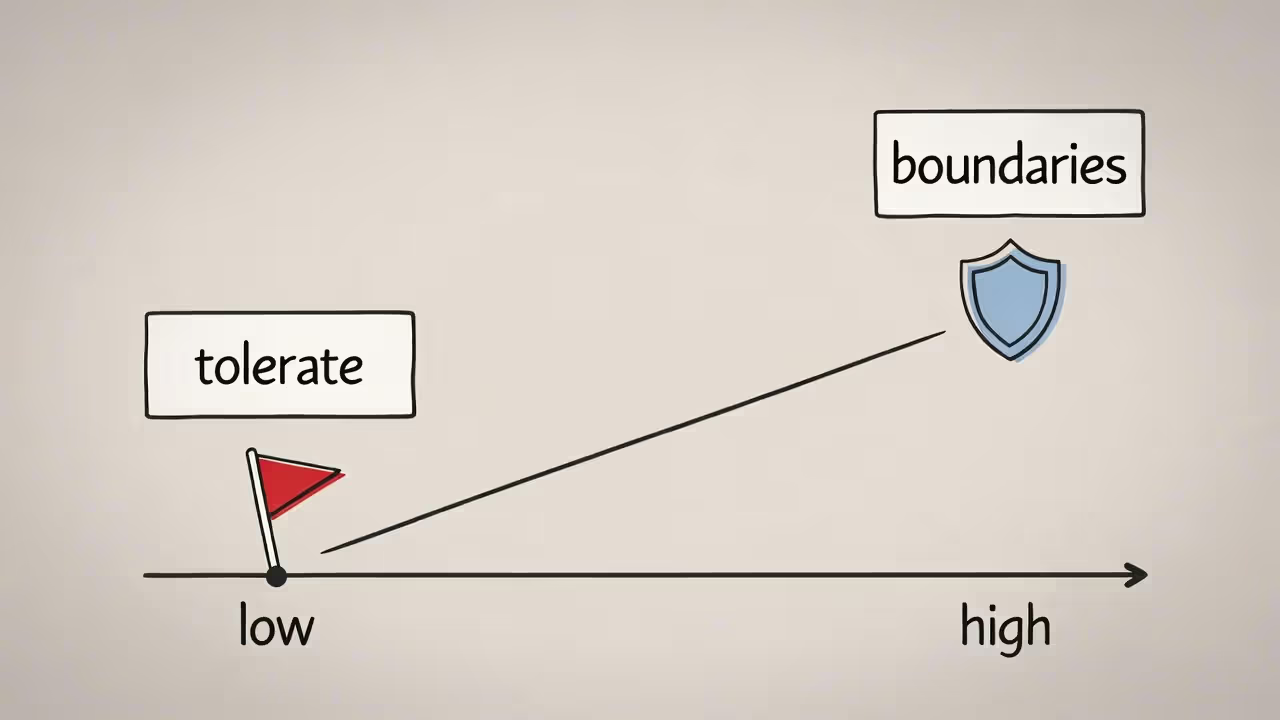
One of the most direct determinants of relationship quality is self-worth. People generally accept treatment consistent with how they believe they deserve to be treated. Low self-worth creates tolerance for poor treatment; the person can't recognize mistreatment as mistreatment because it matches their internal sense of their value.
This isn't about surface-level self-esteem — the confidence you project or the achievements you can list. Deep self-worth is the fundamental sense that you matter, that your needs are legitimate, that you deserve respect and care simply because you exist. Many outwardly successful people lack this deep self-worth, having achieved extensively precisely to compensate for inner emptiness.
Low self-worth shapes relationship patterns in several ways:
You don't recognize red flags as red flags. Behavior that would alarm someone with healthy self-worth seems normal or even positive. Controlling behavior feels like caring; jealousy seems like passion; disrespect appears as the honesty you deserve.
You don't believe you deserve better. Even when you recognize problems, you don't feel entitled to expect more. You make excuses for poor treatment, telling yourself you're too demanding or the relationship is good enough.
You fear being alone more than being mistreated. Low self-worth often includes the belief that you're lucky anyone wants you. This fear of being alone makes you tolerate treatment you'd never accept if you believed you had other options.
You attract partners who target low self-worth. Some people specifically seek partners with low self-worth because they're easier to control, less likely to leave, and more tolerant of mistreatment. Predatory individuals can sense vulnerability and exploit it.
Building self-worth is therefore not just about feeling better — it's about changing the entire equation of who you attract and accept.
The Paradox of Seeking Validation Through Partners
Many people unconsciously use relationships to prove their worth. If someone desirable chooses me, I must be valuable. If I can make someone love me, I'll finally feel lovable. This strategy seems logical but contains a fatal flaw: it outsources self-worth to others, making your fundamental sense of value dependent on external validation.
This creates several problems. You become attracted to partners whose validation seems most valuable — often those who are hardest to win over. The partner who easily offers love seems less valuable than the one who withholds it. You pursue unavailable partners precisely because winning them would prove more.
You also become vulnerable to anyone who offers validation, regardless of their suitability or intentions. The partner who love-bombs you with attention and admiration triggers powerful positive feelings not because they're right for you but because they're giving you what you desperately need. Later, when their true character emerges, you're already attached.
And ultimately, external validation never fills the internal void. Whatever your partner provides, it's never quite enough, never permanent enough, never certain enough. You need constant reassurance because the fundamental problem — missing self-worth — remains unaddressed. No amount of external love substitutes for internal acceptance.
Author: Evan Miller;
Source: psychology10.click
Common Patterns: Why Specific Types Keep Appearing
The Unavailable Partner Pattern
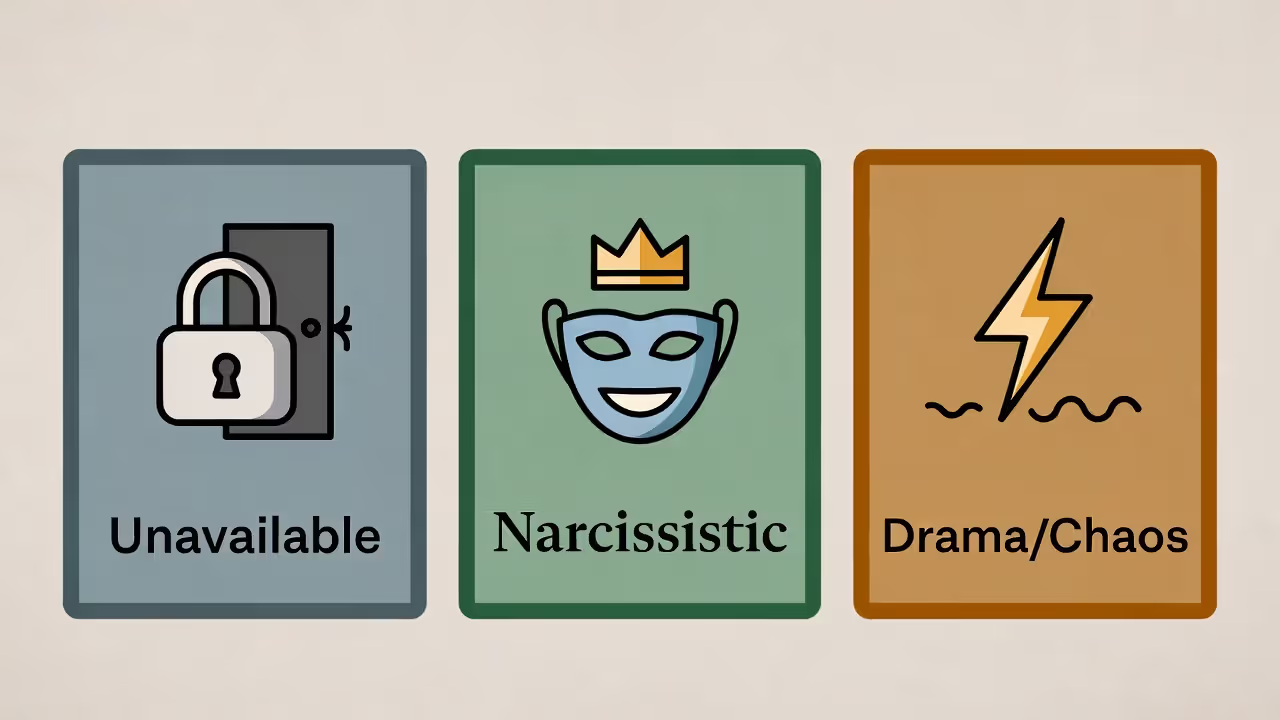
If you repeatedly attract emotionally unavailable partners — those who can't commit, won't open up, keep you at arm's length, or are literally unavailable (married, long-distance, focused on other priorities) — this pattern often traces to several sources. The question "why do I fall for emotionally unavailable men" (or partners of any gender) is one of the most common in therapy offices and online searches, reflecting how widespread this painful pattern is.
Modeling. If you had an unavailable parent, unavailability in partners feels familiar and therefore "right." The longing for connection with someone just out of reach replicates childhood experience. You learned early that love means wanting someone who can't fully show up.
Safety in distance. Unavailable partners can't get too close, which protects against the vulnerability of true intimacy. If deep down you fear being truly seen, unavailable partners are perfect — they'll never see you completely because they're never fully present. Why do I attract emotionally unavailable partners often has this protective function as part of the answer.
Perceived value. Unavailability can be misread as high value. Someone who isn't eager must be worth pursuing. Someone hard to get must be worth getting. This logic is flawed but emotionally compelling, driving pursuit of those who can't reciprocate.
Fear of success. Some people are more comfortable with longing than having. If you actually got the love you want, you'd have to face all the fears intimacy triggers. Unavailable partners let you want love while avoiding the actual experience of it.
Learning how to stop attracting the wrong partner in this pattern requires tolerating the unfamiliarity of available partners, examining what unavailability actually provides (protection, familiar dynamics), and addressing underlying intimacy fears through therapy or deep self-work.
The Narcissist Attraction Pattern
Repeatedly attracting toxic relationships with narcissistic partners — those who are self-centered, manipulative, lacking empathy, and often initially charming — is a pattern that deserves special attention. If you're asking "why do I attract toxic partners repeatedly," narcissistic dynamics are often involved.
The charm/abuse cycle. Narcissists often present extremely well initially, offering intense attention, admiration, and apparent understanding. If you have low self-worth and crave validation, this love-bombing is intoxicating. By the time the mask slips, you're attached and invested. Trauma bonding in relationships with narcissists develops through this cycle of idealization and devaluation.
Codependency. If you learned to focus on others' needs while neglecting your own, narcissists are a perfect match. They demand the focus you're trained to provide. The dynamic feels familiar, even comfortable, despite being one-sided.
Believing you can fix them. If you experienced a troubled parent, you may carry the fantasy that your love can heal someone. Narcissists seem like they need love and would change if they just received enough. This fantasy is almost always wrong, but it's compelling.
Ignoring red flags. Narcissists often display warning signs early, but these signs require certain awareness to recognize. If you don't believe you deserve good treatment, narcissistic red flags don't register as problems. The question "why do I choose unhealthy relationships" often reveals that red flags were visible but not registered as warnings.
Protecting yourself from narcissistic partners requires learning to recognize manipulation tactics, valuing your own needs, moving slowly in relationships rather than being swept up in intense beginnings, and trusting actions over words over time. Online therapy for dating issues can be particularly helpful for processing past narcissistic relationships and developing healthier selection patterns.
The Drama/Chaos Pattern
If your relationships consistently involve intense emotional volatility — passionate highs, devastating lows, constant conflict, unpredictable dynamics — this pattern might indicate:
Mistaking intensity for depth. Calm, stable love can feel boring if you're used to emotional rollercoasters. The drama feels meaningful; stability feels like absence of feeling. This is a misinterpretation — intensity often indicates dysregulation, not depth.
Addiction to activation. The nervous system can become accustomed to high activation states. Drama triggers adrenaline, cortisol, and other stress hormones. These feel uncomfortable but also energizing. Stable relationships don't provide this chemical rush.
Chaotic family origins. If your childhood home was unpredictable and dramatic, chaos feels normal. You know how to navigate crisis; you don't know how to navigate peace. Stability is unfamiliar and therefore uncomfortable.
Avoiding underlying issues. Constant relationship drama can serve as distraction from deeper problems — internal emptiness, unprocessed grief, existential anxiety. When you're always dealing with relationship crisis, you never have to face what's underneath.
Breaking this pattern involves tolerating the discomfort of calm, recognizing that intensity isn't the same as love, addressing what drama helps you avoid, and learning to find meaning and excitement in stability.
When clients tell me their relationship history and I hear the same pattern over and over — always dating narcissists, always choosing unavailable partners, always ending up in chaotic dynamics — I know we're looking at something deeper than bad luck. These patterns are communications from the unconscious, pointing us toward wounds that need attention. The partners we attract are mirrors, reflecting back what we believe about ourselves and relationships. Changing who we attract starts with changing those beliefs, which means doing the difficult internal work most people try to skip. There are no shortcuts here.
— Dr. James Chen, Psychotherapist and Author, New York Center for Relational Therapy
Breaking the Pattern: The Path to Healthier Relationships
Making the Unconscious Conscious
Author: Evan Miller;
Source: psychology10.click
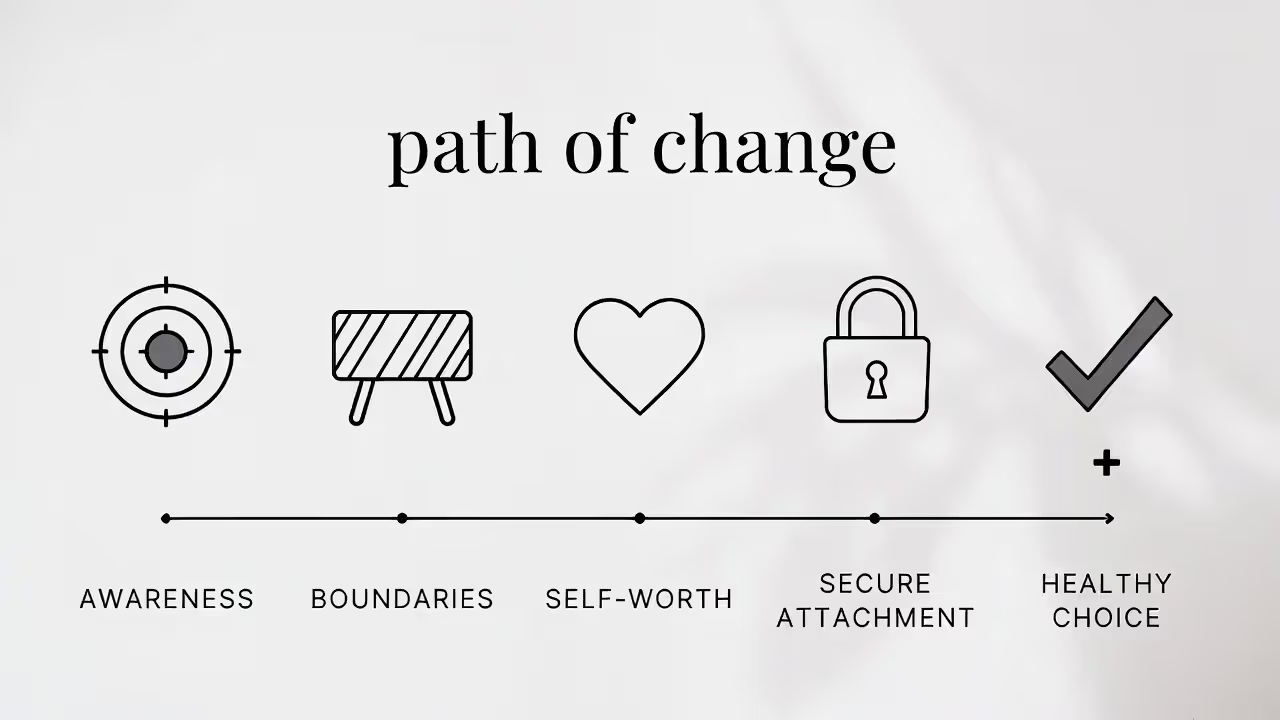
The first step in changing relationship patterns is bringing unconscious drivers into awareness. Patterns that operate outside awareness can't be changed; they simply execute automatically. Making them conscious creates choice where before there was only compulsion.
This work involves honest examination of your relationship history. Not just what happened, but the patterns across relationships: Who did you choose and why did they feel compelling? What dynamics repeated? How did relationships typically end? What role did you play?
It also involves examining your family of origin. What was modeled about relationships? How did your caregivers relate to each other and to you? What implicit messages did you receive about love, about your worth, about what to expect from intimate others?
Journaling can help with this exploration, as can therapy with a skilled clinician. The goal isn't self-blame but self-understanding. You're not looking for evidence of your failures; you're mapping the territory of your unconscious relationship patterns so you can navigate it differently.
Developing Secure Attachment (It's Possible)
Attachment styles aren't fixed destinies. While they tend to be stable, they can change through corrective experiences — particularly through relationships with secure individuals and through the therapeutic relationship itself.
This process, sometimes called "earned secure attachment," involves gradually developing new internal working models through experiences that contradict old expectations. When you consistently experience relationships where you're treated well, where others are reliably available, where your needs matter, new neural pathways form. The old patterns don't disappear, but new patterns develop alongside them.
This doesn't mean simply finding a secure partner and expecting them to fix you. It means actively working on attachment through self-awareness, through therapy, through conscious choice, and through processing the grief of what you didn't receive in childhood. Secure partners can support this work, but the work itself is yours to do.
Key elements of developing more secure attachment include learning to tolerate intimacy without overwhelming anxiety, developing comfort with healthy dependence on others, building capacity to soothe your own distress rather than relying only on others, practicing communication about needs rather than expecting mind-reading, and learning to trust gradually through observed consistency.
Building Genuine Self-Worth
Changing relationship patterns requires building self-worth that isn't dependent on external validation. This is perhaps the most challenging aspect of the work, and the most essential.
Genuine self-worth develops through multiple channels. Therapy can help identify and challenge the beliefs underlying low self-worth, often rooted in childhood experiences that taught you were inadequate or undeserving. Accomplishment and mastery contribute, though not the achievement-addiction that compensates for inner emptiness but genuine development of competence in areas that matter to you.
Self-compassion practices specifically target the harsh internal critic that maintains low self-worth. Learning to treat yourself with the kindness you'd offer a friend rewires patterns of self-attack. Mindfulness helps you observe self-critical thoughts without believing them, creating space between stimulus and response.
Boundary-setting builds self-worth behaviorally. Every time you honor your own needs, say no to mistreatment, or prioritize your wellbeing, you reinforce the message that you matter. Actions shape beliefs as much as beliefs shape actions.
Perhaps most importantly, self-worth requires grieving the validation you didn't receive and will never receive from those who should have provided it. You cannot get from current partners what you needed from parents. Trying to do so perpetuates the patterns. Letting go of that hope, while painful, frees you to build relationships on different foundations.
Learning to Tolerate Healthy Love
One of the strangest obstacles to healthy relationships is that healthy love often feels wrong to those accustomed to dysfunction. The good partner feels boring, the stability feels suspicious, the ease feels like absence of chemistry. Learning to tolerate healthy love is its own skill.
This requires recognizing that your attraction signals may be miscalibrated. What feels like passion may be anxiety. What feels like chemistry may be recognition of dysfunction. What feels boring may be peace you're unfamiliar with. You can't trust your gut when your gut was trained on dysfunction.
Instead of following feeling, you follow thinking and observation. Does this person treat me well? Are they consistent? Do they respect boundaries? Can they communicate? Are they available? These questions matter more than whether your heart races in their presence.
The feelings often follow changed behavior. As you spend time with healthy partners, as you experience consistent care, as your nervous system learns new patterns, what felt boring can begin to feel safe, even loving. This takes time and requires tolerating discomfort during the transition.

Author: Evan Miller;
Source: psychology10.click
The Role of Professional Support
While self-reflection and reading can illuminate patterns, changing them often requires professional support. A skilled therapist provides what's difficult to give yourself: an outside perspective on patterns you're too close to see, a safe relationship in which to explore attachment, the ability to process trauma safely, and guidance through the challenging work of change.
Therapy for unhealthy relationships has become increasingly accessible through digital platforms. Relationship therapy online removes barriers of scheduling, location, and sometimes cost, making professional support available to those who might not otherwise access it. Online counseling for relationship issues can be particularly effective for exploring patterns, as the convenience allows for consistent engagement over time.
Specific therapeutic approaches helpful for breaking negative relationship patterns include:
Attachment style therapy directly addresses attachment patterns and their origins, helping you understand why certain partners feel compelling and how to develop more secure attachment over time.
Trauma bonding therapy is essential for those who've experienced abusive relationships. Trauma bonding — the strong emotional attachment formed through cycles of abuse and intermittent reinforcement — requires specialized treatment to resolve.
EMDR and other trauma therapies process unresolved traumatic experiences affecting current relationships, particularly important when childhood trauma and relationships are intertwined.
Relationship coaching online offers another avenue, often focusing more on practical skills and forward-looking change rather than deep psychological exploration. Relationship coaching programs can complement therapy or serve those whose patterns don't stem from significant trauma.
The therapeutic relationship itself can be corrective — a consistent, boundaried, caring relationship that may differ from what you've experienced before. Over time, this relationship provides evidence that challenges old beliefs about self and others. Finding the best online relationship therapy for your needs may require trying several options, but the investment in finding good fit pays dividends.
Changing Behavior Even When It Feels Wrong
Ultimately, changing patterns requires changing behavior, not just understanding. Understanding why you attract unavailable partners doesn't make available partners feel more attractive. Understanding your anxious attachment doesn't automatically make you secure. Changed behavior, repeated over time, eventually changes feeling and belief.
This means making different choices even when they feel wrong: giving chances to partners who don't trigger instant chemistry, staying present in relationships that feel unfamiliarly stable, not pursuing partners who create anxiety-as-excitement, communicating needs directly rather than hoping to be understood, leaving relationships that activate old patterns rather than trying to make them work.
These choices feel uncomfortable because they're unfamiliar. The discomfort isn't evidence that you're making mistakes — it's evidence that you're doing something new. Over time, as new patterns establish, the discomfort diminishes and different choices begin to feel more natural.
Frequently Asked Questions
Conclusion: From Understanding to Transformation
The patterns that bring you wrong partners aren't random misfortune — they're meaningful communications from your unconscious, pointing toward wounds that need attention, beliefs that need updating, and developmental needs that weren't met. Understanding these patterns doesn't immediately change them, but it creates the possibility of change that pure repetition never provides.
You're not broken because you keep attracting the wrong partners. You're carrying adaptations that once made sense, beliefs formed when you were too young to evaluate them, and attachment patterns shaped by caregivers you didn't choose. These aren't character flaws — they're psychological inheritance that can be transformed through conscious effort.
The transformation isn't easy. It requires facing painful truths about your history, grieving what you didn't receive and won't receive from those who should have provided it, tolerating the discomfort of unfamiliar healthy dynamics, and making different choices even when they feel wrong. It requires patience with a process that takes years rather than weeks, and often requires professional support to navigate safely.
But the transformation is possible. Attachment can become more secure. Self-worth can develop from internal foundations rather than external validation. The unconscious patterns that guided you toward pain can be brought into awareness and gradually modified. Different relationships — healthy ones — can become possible and eventually preferable.
The partners you've attracted reflect where you've been, not where you must stay. Understanding why you chose them is the first step; doing the work to choose differently is the journey. That journey may be the most important one you ever take — not just for your romantic life, but for your relationship with yourself.
You deserve love that doesn't recreate your wounds. You deserve partners who can see you and cherish what they see. You deserve relationships that feel like home without replicating the unsafety of your actual home. These aren't fantasies for other people — they're possibilities you can create through understanding, work, and the willingness to become someone new while honoring who you've been.
Related Stories
Read more

Read more




The content on psychology10.click is provided for general informational and inspirational purposes only. It is intended to share evidence-based insights and perspectives on psychology, relationships, emotions, and human behavior, and should not be considered professional psychological, medical, therapeutic, or counseling advice.
All information, articles, and materials presented on this website are for general educational purposes only. Individual experiences, emotional responses, mental health needs, and relationship dynamics may vary, and outcomes may differ from person to person.
Psychology10.click makes no representations or warranties regarding the accuracy, completeness, or reliability of the content provided and is not responsible for any errors or omissions, or for decisions or actions taken based on the information presented on this website. Readers are encouraged to seek qualified professional support when dealing with personal mental health or relationship concerns.