

The Pursuit of Perfect Timing: How Misaligned Life Stages Impact Love
Timing in Relationships and How Life Stages Affect Love

Content
Content
Love, in its essence, is often celebrated as a force that can transcend all barriers—cultural differences, physical distance, socioeconomic disparities, and even time itself. Romantic narratives throughout history have told us that when two people are meant to be together, nothing can stand in their way. "Love conquers all," we're told, and if the connection is strong enough, any obstacle can be overcome through devotion and commitment.
However, there's one critical element that love, no matter how profound or genuine, often struggles to overcome: timing. Finding someone with whom you share mutual attraction, deep emotional resonance, compatible values, and genuine affection is a rare and beautiful occurrence—but love is far more than just a matter of chemistry and connection. Timing and life stages play a crucial, often underappreciated role in determining whether a relationship will flourish, struggle, or ultimately fail.
Misaligned life stages can put immense strain on even the strongest of connections, creating friction, frustration, and feelings of being pulled in different directions. Two people who genuinely love each other may find themselves wanting fundamentally different things at the same moment in time—not because their love is deficient, but because their life circumstances, developmental needs, and future visions don't currently align. This reality leaves many wondering: Can love truly conquer all, or is lasting partnership fundamentally a matter of meeting the right person at the right time?
In this comprehensive exploration, we delve into the psychology of love and relationships, examining how different life stages and personal circumstances profoundly impact romantic connections. From mismatched career aspirations to varying levels of emotional readiness, from conflicting desires for stability versus adventure to the poignant "right person, wrong time" phenomenon, we analyze the various ways that timing can create friction in relationships. We also provide practical, research-informed strategies for navigating these challenges and making thoughtful decisions about when to persist and when to let go. Whether you're currently in a relationship, contemplating a new one, or reflecting on past loves that didn't work out, this guide will help you recognize the crucial importance of timing in the pursuit of lasting love.

Author: Sophie Daniels;
Source: psychology10.click
The Power of Timing: Why Life Stages Matter in Relationships
Relationships, much like the individuals who comprise them, have their own timelines, developmental phases, and requirements for growth. The trajectory of a romantic relationship is influenced not only by the personalities, attachment styles, and behaviors of the people involved but also by a complex web of external factors: career paths and professional demands, family commitments and obligations, individual psychological development, financial circumstances, health considerations, and the fundamental desire for stability, growth, or change.
When these factors are not in reasonable alignment between partners, they can create persistent tension, chronic misunderstandings, and unmet expectations that gradually erode even the most loving connection. Understanding how life stages influence relationships is essential for anyone seeking to build lasting partnership—or trying to understand why a previous relationship, despite genuine love, couldn't survive.
Understanding Life Stages
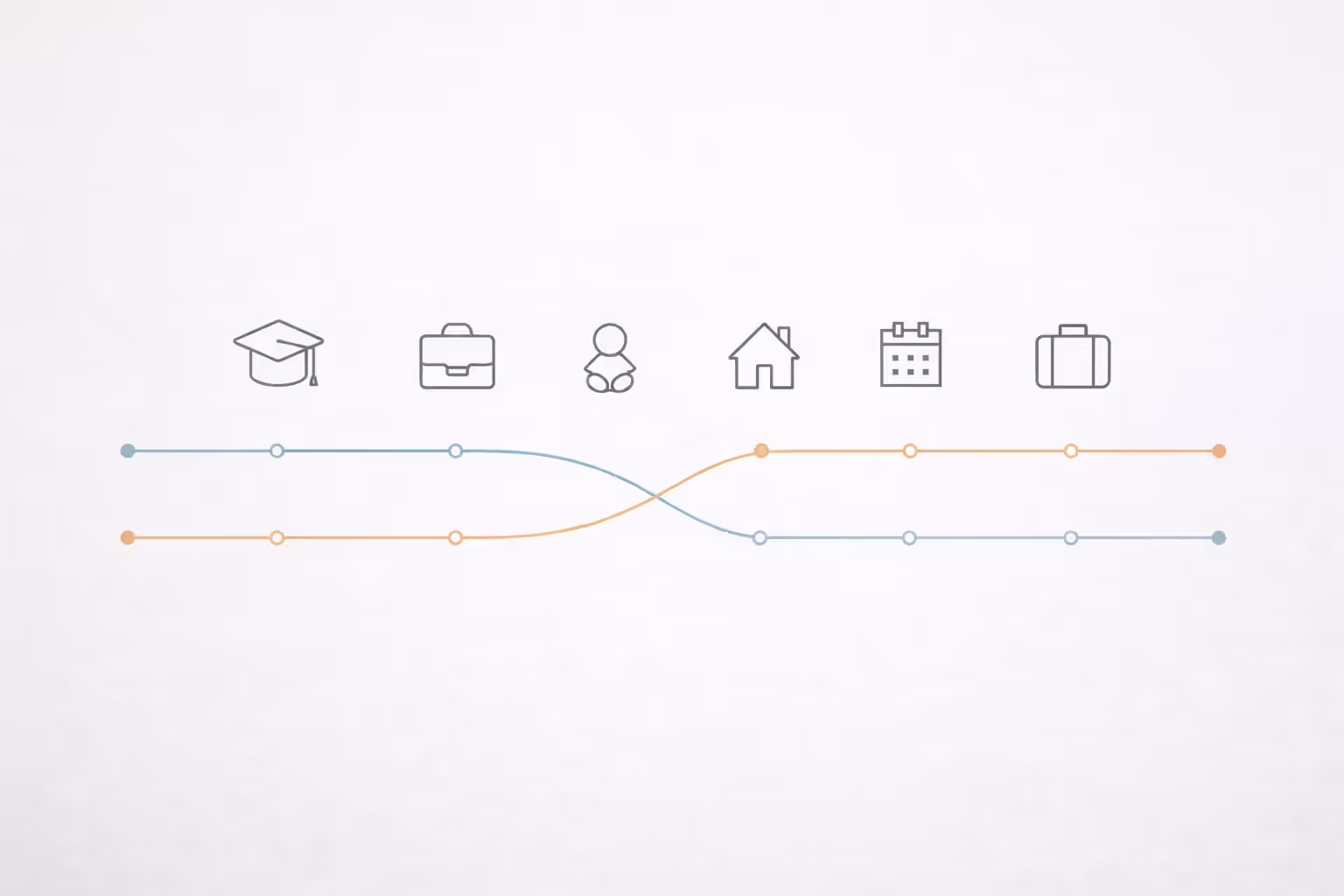
A "life stage" refers to a distinct period in a person's life characterized by particular goals, responsibilities, psychological tasks, and developmental milestones. Psychologists and developmental theorists have long recognized that human life unfolds through a series of phases, each with its own challenges, priorities, and opportunities for growth.
Author: Sophie Daniels;
Source: psychology10.click
Common life stages that impact relationships include:
- Educational pursuits: High school, college, graduate studies, or professional training periods characterized by identity exploration, skill development, and preparation for adult life
- Early career establishment: The initial years of working life focused on finding one's professional footing, building competence, and establishing financial independence
- Intense career-building: A phase of ambitious professional advancement, often involving long hours, travel, major responsibilities, and significant career investments
- Desire for romantic commitment: A period when partnership, marriage, and building a shared life become primary priorities
- Family formation: Starting a family, pregnancy, and the early years of parenthood with their intensive demands
- Active parenting: The years of raising children with their ongoing responsibilities and family-centered focus
- Midlife reflection: A period of reassessment, often involving questions about meaning, legacy, and whether one's life is on the desired track
- Empty nest transition: When children leave home and couples must rediscover their relationship and individual identities
- Retirement and later life: A stage focused on leisure, legacy, health management, and making meaning of one's life journey
Each stage comes with its own priorities, values, time demands, and psychological needs. When two individuals are at significantly different stages, their expectations for the relationship—and their capacity to invest in it—may fundamentally diverge.
Timing in relationships is not about finding someone who is perfect, but about finding someone whose life is moving in a direction compatible with yours. Love provides the motivation, but timing provides the possibility.
— Dr. John Gottman
Why Timing is So Crucial
Timing matters in relationships for several interconnected reasons that go beyond simple scheduling conflicts:
Availability and Willingness to Commit: An individual who is focused on self-discovery, career establishment, healing from past wounds, or pursuing independent goals may not be ready—or able—to commit fully to a relationship, regardless of how deeply they love their partner. Their psychological and practical resources are directed elsewhere. This can result in one partner feeling undervalued, deprioritized, or consistently disappointed despite the other's genuine affection.
Emotional Readiness and Capacity: Being in different stages of emotional development significantly impacts a couple's ability to connect deeply, communicate effectively, and navigate conflicts constructively. If one partner is focused on self-healing, processing past traumas, or developing basic emotional regulation skills, they may not be equipped to meet the emotional demands of an intimate relationship—not from lack of love, but from lack of current capacity.
Long-Term Goals and Life Vision: When life stages don't align, fundamental long-term goals like marriage, children, geographic location, lifestyle preferences, and life priorities can become persistent points of contention. Compromises in these areas often leave neither partner truly satisfied, creating a foundation of unmet needs that undermines relationship stability over time.
Personal Growth and Identity Development: The period in which a person is actively figuring out their identity, values, and life direction may not be conducive to forming a lasting partnership. As people grow through different life stages, their needs, desires, and even core values can shift substantially—sometimes putting them at odds with a partner whose development is on a different trajectory.
Resource Allocation: Each life stage demands different allocations of time, energy, attention, and resources. Someone in an intensive career-building phase may have little left over for relationship nurturing. A new parent's resources are necessarily directed toward their child. These practical realities affect what partners can actually give to each other, regardless of their intentions.
Understanding the role of life stages helps couples recognize why love alone—however genuine and deep—may not be sufficient to sustain a relationship. Timing shapes not only our priorities but also our emotional capacity, practical availability, and fundamental readiness for partnership.
Why Life Stages Matter in Relationships
The Psychology of Timing in Love
Beyond the practical considerations of life stages, timing in relationships has deep psychological dimensions that affect how we form, maintain, and experience romantic connections.
Attachment Theory and Readiness
Attachment theory, developed by John Bowlby and expanded by subsequent researchers, provides crucial insights into why timing matters so much in relationships. Our attachment styles—formed primarily in early childhood but modified by later experiences—affect our readiness for intimate connection.
Attachment styles and timing:
- Secure attachment: People with secure attachment are generally more ready for healthy relationships at any life stage, though they still need appropriate life circumstances
- Anxious attachment: Those with anxious attachment may rush into relationships before they're ready, or struggle when partners are unavailable due to life stage demands
- Avoidant attachment: Avoidantly attached individuals may use life stage demands as reasons to avoid intimacy, or genuinely struggle to prioritize relationships alongside other goals
- Disorganized attachment: Those with disorganized attachment may experience particular difficulty with timing, oscillating between desperate pursuit and frightened withdrawal
Someone who is actively working on healing attachment wounds may not be ready for a committed relationship, regardless of how compatible they might be with a potential partner in other respects.
Erikson's Stages of Psychosocial Development
Erik Erikson's theory of psychosocial development offers another lens for understanding timing in relationships. Erikson proposed that individuals move through eight stages of development, each characterized by a central psychological conflict that must be resolved.
Relevant stages for adult relationships:
- Identity vs. Role Confusion (adolescence): The task of establishing identity typically must be substantially completed before healthy intimacy is possible
- Intimacy vs. Isolation (young adulthood): This stage focuses specifically on forming intimate relationships—but requires a foundation of identity
- Generativity vs. Stagnation (middle adulthood): The focus shifts to contributing to future generations and society
- Integrity vs. Despair (late adulthood): Reflection on life and finding meaning become central
According to Erikson, attempting intimacy before establishing identity leads to difficulties—one cannot fully share oneself with another before knowing who that self is. This developmental perspective helps explain why relationships formed too early in psychological development often struggle.
The Role of Individual Readiness
Beyond formal developmental frameworks, individual readiness for relationship encompasses multiple dimensions:
Psychological readiness factors:
- Self-knowledge: Understanding one's own needs, patterns, values, and areas for growth—without this foundation, we may enter relationships for the wrong reasons or with unrealistic expectations that doom the partnership from the start
- Emotional regulation: The ability to manage strong emotions without being overwhelmed or acting destructively toward partners—this skill develops over time and through experience
- Past relationship processing: Having sufficiently worked through previous relationships, learned their lessons, and released the emotional charge they carry—unprocessed past relationships intrude on present ones
- Realistic expectations: Understanding what relationships actually require versus romantic idealization that sets partnerships up for inevitable disappointment
- Commitment capacity: The psychological ability to choose one person and foreclose other options without excessive regret or wandering attention
- Conflict skills: The ability to navigate disagreement constructively without either avoiding all conflict or becoming destructive
- Independence: Having a solid sense of self that doesn't depend entirely on the relationship for identity, worth, or emotional stability
When partners differ significantly in these readiness dimensions, the relationship faces challenges that no amount of love can easily overcome. One partner may be fully ready to build a life together while the other is still doing fundamental developmental work on themselves.
Developmental Timing and Relationship Patterns
Research suggests that the timing of relationship formation can have lasting effects on relationship patterns and outcomes:
Early relationship formation: Couples who form during late adolescence or early adulthood may grow together—or may grow apart as they continue individual development. The relationship becomes part of identity formation rather than a choice made from established identity, which can create both deep bonding and challenges as individuals change.
Post-crisis relationship formation: Relationships begun during or immediately after personal crises (divorce, job loss, bereavement, illness) face particular challenges as one or both partners may not be in optimal condition for healthy relationship formation. The relationship may be meeting crisis needs rather than long-term compatibility needs.
Later-life relationship formation: Couples who come together later in life bring more established identities and life patterns, which can create both stability and challenges in adapting to partnership. There's less time for gradual mutual adaptation.
Understanding these patterns can help couples recognize the particular challenges associated with their relationship's timing of origin and address them more consciously.
Common Scenarios of Misaligned Life Stages
Misaligned life stages manifest in numerous ways, from differences in emotional readiness to mismatched career aspirations to conflicting desires for stability versus adventure. Understanding these common scenarios helps couples recognize their own situations and the psychological dynamics at play.
The Career vs. Relationship Dilemma
This is perhaps the most frequently cited example of misaligned life stages in contemporary relationships. When one partner is deeply focused on building their career—perhaps traveling frequently for work, putting in long hours, pursuing advanced degrees, or investing heavily in professional advancement—they may lack the time, energy, or emotional bandwidth to invest adequately in a relationship.
Meanwhile, the other partner, who may be at a stage where they want more togetherness, deeper emotional connection, or readiness to settle down, can feel consistently neglected, deprioritized, or unimportant despite knowing intellectually that they're loved.
Psychological dynamics:
- Resentment accumulation: The partner seeking more attention and commitment may develop growing resentment toward the career-focused partner's priorities, feeling that work always comes first
- Guilt and internal conflict: The career-focused partner may experience significant guilt for not meeting their partner's emotional needs, creating internal pressure that can actually hinder their professional performance
- Competing identities: Each partner may struggle with whether their relationship identity or their individual identity (professional, independent) should take precedence
- Different time horizons: The career-focused partner may think in terms of "once I establish myself, then I can focus on us," while the other partner is living in the present need for connection
- Validation needs: The career-focused partner may derive significant self-worth from professional achievement, making it psychologically difficult to deprioritize work
The challenge of balancing career and love is not about finding the perfect equilibrium—it's about finding a partner who understands that the balance point shifts throughout life, and who is willing to renegotiate as circumstances change.
— Dr. Esther Perel
Different Levels of Emotional Readiness
Sometimes, love finds us when we least expect it—and when we may be least prepared for it. A profound connection may develop during a period of personal upheaval, grief, healing from a previous relationship, identity crisis, or major life transition. In such cases, one partner may be emotionally ready to invest fully in a relationship, while the other is still working through their own psychological processes.
Psychological dynamics:
- Unbalanced emotional labor: The more emotionally ready partner often provides substantially more support than they receive, leading to exhaustion and resentment
- Push-pull dynamics: The less ready partner may oscillate between intimacy and withdrawal, creating confusion and instability in the relationship
- Rescue fantasies: The emotionally ready partner may fall into believing that their love can "heal" their partner, setting up both for disappointment
- Shame and inadequacy: The less ready partner may feel shame about their limitations, making it harder to communicate openly about their needs
- Timing pressure: External pressure to "be ready" can actually slow genuine psychological development
Conflicting Desires for Stability vs. Adventure
One partner may be at a life stage where they crave stability—buying a home, settling into a steady job, building predictable routines and a secure foundation—while the other is in a phase of seeking adventure, novelty, travel, or even relocation for new experiences and growth.
Psychological dynamics:
- Projection of fears: Each partner may project their own fears onto the other—the adventure-seeker fearing being "trapped," the stability-seeker fearing being "abandoned"
- Value judgments: Each may subtly or overtly judge the other's desires as inferior—seeing stability as "boring" or adventure as "irresponsible"
- Identity threat: Compromising on these fundamental orientations can feel like compromising one's core identity
- Different relationships to security: These preferences often reflect deeper differences in attachment style and relationship to uncertainty
- Temporal mismatch: One partner may believe "we can settle down later" while the other feels "if not now, when?"
Age and Stage Mismatches
Age gaps in relationships are not inherently problematic—many couples with significant age differences build happy, lasting partnerships. However, age gaps can become challenging when they coincide with being in very different life stages, creating misalignment in priorities, timelines, and life visions.
Psychological dynamics:
- Different paces and pressures: A younger partner may feel overwhelmed by pressure to "grow up" faster than feels natural, while an older partner may feel impatient waiting for milestones the younger partner isn't ready for
- Social circle challenges: Partners may struggle to integrate social circles where friends and family are at very different life stages
- Power dynamics: Age gaps can create power imbalances related to life experience, financial resources, or emotional development
- Biological timing: Particularly for couples wanting children, biological timelines may create pressure that affects the relationship
- Different cultural references: Partners may find they have fewer shared cultural touchpoints, affecting everyday connection
The "Right Person, Wrong Time" Phenomenon
Perhaps the most emotionally poignant scenario is when two people who seem genuinely compatible—who share values, enjoy each other's company, communicate well, and feel deep love—meet at a time when circumstances make it impossible to sustain or build the relationship they might otherwise have.
This could be due to geographic separation without the possibility of relocation, one partner going through a significant personal crisis that requires all their resources, fundamental differences in timeline for major decisions, or simply being in life stages where their paths don't converge despite their compatibility.
Psychological dynamics:
- Anticipatory grief: Both partners may grieve the relationship they can see would have been possible under different circumstances
- Lingering "what ifs": Unresolved feelings and unanswered questions can persist for years, affecting future relationships
- Difficulty with closure: The absence of a clear villain or irreconcilable difference makes it hard to achieve clean closure
- Idealization risk: The relationship may become idealized in memory, making real relationships compare unfavorably
- Hope as obstacle: Lingering hope that circumstances will eventually align can prevent both individuals from fully committing to new relationships

Author: Sophie Daniels;
Source: psychology10.click
The Neuroscience of Love and Timing
Understanding the brain science behind love helps explain why timing issues are so challenging and why we can't simply "decide" to make love work regardless of circumstances.
Brain Chemistry and Relationship Stages
Romantic relationships involve distinct neurochemical phases that interact with life stages in important ways:
Limerence and early attraction: The early stage of romantic love involves surges of dopamine, norepinephrine, and reduced serotonin—creating the obsessive, euphoric experience of new love. This neurochemical cocktail can make us overlook timing problems that will later become significant.
Attachment formation: As relationships mature, oxytocin and vasopressin become more prominent, supporting pair bonding and long-term attachment. This process requires time and consistent positive interaction—resources that life stage demands may limit.
Stress hormones: Life stage pressures (career demands, financial stress, family responsibilities) elevate cortisol and other stress hormones, which can interfere with the neurochemistry of bonding and make relationship nurturing more difficult.
The brain's prioritization: The brain allocates limited resources to different demands. When survival-related concerns (career establishment, financial security) are pressing, the brain may deprioritize relationship investment regardless of conscious intentions.
Why We Can't Just "Choose" to Make It Work
Understanding brain science helps explain why willpower alone often can't overcome timing misalignments:
- Neurochemical states affect our capacity for connection, patience, and generosity
- Stress from life circumstances directly impairs relationship functioning
- The brain's reward systems may be oriented toward life stage priorities rather than relationship nurturing
- Emotional regulation capacity—crucial for relationships—is affected by overall life demands
This doesn't mean relationships are purely biological—conscious choice matters enormously. But it explains why genuinely loving partners can still find their relationship failing due to timing issues.

Author: Sophie Daniels;
Source: psychology10.click
Strategies for Navigating Misaligned Life Stages
Strategies for Navigating Misaligned Life Stages in Love
While misaligned life stages can pose significant challenges, they don't always spell the end of a relationship. With conscious effort, open communication, strategic compromise, and genuine willingness to adapt, it is possible to navigate these differences and find workable common ground. The key is approaching these challenges with both realism about the difficulties and commitment to working through them.
Open and Honest Communication
The foundation of navigating mismatched life stages is clear, honest, and empathetic communication. Each partner must be willing to articulate their current priorities, concerns, needs, and hopes for the future. Equally important is listening without defensiveness to understand the other person's perspective, even when it differs from your own.
Communication practices:
- Regular check-ins: Set aside dedicated time to discuss your respective goals and assess whether the relationship is meeting both partners' current needs
- "I" statements: Express feelings without blame—"I feel worried about our future when we have different timelines for having children" rather than "You're not committed to our family"
- Validation: Acknowledge each other's feelings and perspectives as legitimate, even when you don't fully agree with the conclusions
- Future visioning: Explicitly discuss where you each see yourselves in one, five, and ten years—and honestly assess whether those visions are compatible
- Assumption checking: Regularly verify that you understand what your partner actually wants, rather than assuming based on past conversations
Compromise Without Resentment
Finding middle ground is crucial for navigating timing differences, but compromise should never feel like one partner is sacrificing their fundamental needs to please the other. Resentful compromise—where one partner agrees but harbors ongoing frustration—ultimately undermines relationships rather than saving them. True compromise involves creating solutions that genuinely respect both partners' priorities and life stages.
Effective compromise principles:
- Identify non-negotiables: Each partner should honestly share their must-haves versus areas where flexibility is possible
- Create timelines: Agree on specific timeframes for reevaluating decisions—"We'll revisit the moving question in one year" provides structure while maintaining openness
- Ensure reciprocity: Compromise should flow in both directions over time; if one partner is always the one adapting, resentment will build
- Check for genuine acceptance: Before finalizing a compromise, each partner should honestly assess whether they can live with it without ongoing resentment
- Build in review points: Acknowledge that compromises may need adjustment as circumstances change
Embrace Temporary Separation if Beneficial
If you're dealing with a particularly challenging misalignment—such as one partner needing to relocate for education or career advancement—temporary geographical separation might be a viable option. Long-distance relationships are genuinely difficult and not right for everyone, but they can provide space for each person to focus on stage-appropriate goals without feeling they're neglecting the relationship.
Sometimes the most loving choice is to give each other space to grow separately, trusting that the growth will ultimately serve the relationship. Timing isn't just about being together—it's about being together in ways that allow both people to thrive.
— Dr. Sue Johnson
Long-distance considerations:
- Clear expectations: Discuss communication frequency, visit schedules, and long-term plans explicitly
- Quality focus: Make the most of time together by prioritizing connection over logistics
- Regular reassessment: Schedule periodic conversations to evaluate whether the arrangement is still working
- End date: If possible, establish a target date for reunification to provide hope and structure
- Individual growth: Use the time apart for genuine personal development, not just waiting
Accept That Change is Inevitable
It's important to recognize that life stages are inherently fluid. The fact that you and your partner are in different places now doesn't mean you always will be. People grow, circumstances shift, and life is full of unexpected developments. If you believe that the core of your relationship is fundamentally strong—that you share deep compatibility in values and genuine love—consider adopting a mindset of flexibility and patience.
Cultivating patience:
- Present focus: Appreciate what's working in your relationship now rather than fixating entirely on future misalignments
- Celebrate progress: When you successfully navigate a difficult conversation or reach a workable compromise, acknowledge it as meaningful progress
- Individual development: Use this time for personal growth that will ultimately benefit both you and your relationship
- Trust in process: Recognize that some tensions resolve naturally as life stages evolve
- Avoid ultimatums: Unless you've genuinely reached a dealbreaker, avoid forcing immediate resolution of issues that might resolve over time
Know When to Walk Away
Sometimes, despite all efforts, genuine love, and good intentions, the timing simply doesn't align in a way that allows the relationship to thrive. It's important—and ultimately loving—to recognize when holding on is causing more harm than good for both people involved.
Signs it may be time to end the relationship:
- Persistent feelings of frustration, resentment, or sadness that don't respond to efforts to address them
- Fundamental life goals that are genuinely incompatible and cannot be compromised without one partner abandoning their core needs
- Repeated conversations about timing issues that go unresolved with no movement toward compromise
- A pattern where one partner consistently sacrifices their needs while the other doesn't reciprocate
- Loss of hope, excitement, or positive feeling about the relationship's future
- Recognition that you're staying primarily from fear of being alone rather than genuine belief in the relationship
Ending a relationship due to timing doesn't mean the love wasn't real, valuable, or meaningful. Sometimes, letting go is the most loving thing you can do—for both yourself and your partner. It allows both people to find relationships where timing aligns better, or to return to each other later if circumstances genuinely change.
When Timing Aligns Later: The Possibility of Reunion
Some relationships that end due to timing ultimately reunite when circumstances change. While this shouldn't be counted on—and shouldn't prevent moving forward with life—it's a real phenomenon worth understanding.
Factors That Support Later Reunion
Successful reunions after timing-related separations share certain characteristics:
- Both individuals have genuinely grown and developed during the separation, bringing new maturity and perspective to the relationship
- The timing issues that caused the original separation have actually resolved, not just faded from immediate concern
- Neither person has formed deep commitments that would be harmed by reunion
- The original compatibility and connection remain relevant to who both people have become
- Reunion is based on present reality and current compatibility, not nostalgia for the past or avoidance of moving forward
- Both people have done the internal work necessary for successful partnership
Cautions About Hoping for Reunion
While reunion is possible, maintaining hope for it carries significant risks:
- Living in hope for a past relationship prevents fully engaging with current life opportunities
- People and circumstances change in unpredictable ways; the relationship might not work even with better timing
- Idealization of the past relationship can prevent seeing its actual limitations and incompatibilities
- Waiting can become an avoidance mechanism that prevents doing the work of building new relationships
- The other person may move forward while you remain stuck
Years can pass in a state of limbo that serves neither person's well-bein

Author: Sophie Daniels;
Source: psychology10.click
Cultural Perspectives on Love and Timing
The relationship between love and timing is understood differently across cultures, and these perspectives can influence how couples navigate timing challenges.
Western Romantic Idealism
Western cultures, particularly American culture, tend to emphasize romantic love as the primary basis for partnership and often promote the idea that "true love" should overcome all obstacles. This cultural narrative can make timing-related relationship difficulties feel like failures of love rather than practical incompatibilities.
Implications of Western romantic idealism:
- Tendency to believe love should be sufficient to solve timing problems
- Guilt when practical considerations influence relationship decisions
- Difficulty accepting that good relationships can fail due to circumstances
- Pressure to "make it work" regardless of life stage alignment
- Less cultural support for prioritizing practical compatibility alongside romantic connection
Collectivist Cultural Perspectives
Many collectivist cultures place greater emphasis on family involvement in partner selection, practical compatibility, and life stage appropriateness. These perspectives can offer different wisdom about timing:
Alternative cultural perspectives:
- Recognition that love can grow within a practically suitable relationship
- Family and community input on timing appropriateness
- Less stigma attached to ending relationships for practical reasons
- Greater acceptance that individual desires must be balanced with life circumstances
- Understanding that partnership serves purposes beyond individual romantic fulfillment
Integrating Multiple Perspectives
The healthiest approach may integrate insights from multiple cultural perspectives:
- Valuing romantic love and genuine connection as important
- Also recognizing the legitimate role of practical considerations including timing
- Avoiding both the extreme of ignoring timing for love and the extreme of ignoring love for practicality
- Building relationships that satisfy both emotional and practical needs
- Accepting that different relationships may emphasize different elements
Assessing Your Own Relationship's Timing Challenges
For couples currently navigating timing issues, structured assessment can help clarify the situation and guide decision-making.
Questions for Individual Reflection
Before discussing timing issues with a partner, each person benefits from honest self-reflection:
Understanding your current life stage:
- What are my primary priorities and goals right now?
- What developmental tasks am I working on (establishing career, healing, exploring identity, building security)?
- How much time and energy do I realistically have available for a relationship?
- What do I genuinely need from a partner at this stage of my life?
- Am I ready for the level of commitment my partner wants, and if not, what would need to change?
Assessing your relationship hopes:
- What do I want this relationship to look like in one year? Five years? Ten years?
- What are my non-negotiables for a long-term partnership?
- Where am I genuinely willing to compromise, and where am I not?
- Am I staying in this relationship because it's right for me, or for other reasons (fear, convenience, guilt)?
- If the timing issues weren't present, would this be the right person for me?
Questions for Couple Discussion
After individual reflection, couples can benefit from structured discussion:
Alignment assessment:
- Where are we each at in our life stages, and how does this affect our relationship?
- What are the specific timing-related challenges we're facing?
- Are these challenges temporary (likely to resolve over time) or fundamental (reflecting different life visions)?
- What compromises are each of us willing to make, and what are our limits?
- Do we have compatible timelines for major life decisions (marriage, children, career moves, location)?
Decision-making discussion:
- What would need to change for this relationship to work long-term?
- Are those changes realistic and achievable within acceptable timeframes?
- What would it mean for each of us if we ended this relationship due to timing?
- What would it mean for each of us if we stayed together despite timing challenges?
- Are we both genuinely committed to working through these issues, or is one person more invested than the other?
Warning Signs That Timing Issues May Be Insurmountable
While many timing challenges can be navigated successfully, certain patterns suggest that the relationship may not be sustainable:
Serious warning signs:
- One partner consistently feels they're sacrificing their fundamental needs for the relationship
- The same timing issues recur repeatedly without progress toward resolution
- One or both partners have lost hope that circumstances will ever align
- Resentment has built up to the point where it colors most interactions
- Partners have stopped honestly communicating about timing issues because conversations are too painful
- External support (friends, family, therapists) consistently advises ending the relationship
- One partner is waiting for the other to change in ways the other has shown no sign of changing
- The relationship requires one partner to abandon core life goals
Building Timing-Aware Relationships from the Start
For those not yet in relationships, or early in dating, considering timing from the beginning can prevent future heartache.
Early Dating Considerations
While it's not romantic to focus too heavily on practical matters during early dating, some attention to timing alignment is wise:
Early assessment factors:
- Is this person at a similar life stage, or can I see our stages converging?
- Do our stated goals for the near and medium-term future seem compatible?
- Does this person have the capacity (time, energy, emotional availability) for the kind of relationship I want?
- Are there obvious timing barriers (geographic plans, career trajectories) that would create major challenges?
- Is this person genuinely ready for a relationship, or are they still working through issues that need resolution first?
Having Timing Conversations Early
While deep conversations about life goals aren't typically first-date material, they should happen relatively early in relationships:
Appropriate timing for life stage discussions:
- Once genuine interest is established (typically within the first few months)
- Before significant emotional investment makes it harder to walk away if incompatible
- When considering becoming exclusive or official
- Before major decisions that assume the relationship will continue
- Any time one partner's circumstances are about to change significantly
Red Flags for Timing Incompatibility
Certain early signs suggest timing may become a serious issue:
Warning signs in early dating:
- Partner is clearly at a very different life stage with very different priorities
- Partner expresses uncertainty about wanting the same things you want
- Partner is still heavily involved in processing a previous relationship
- Partner's life circumstances are about to change dramatically in ways that would affect the relationship
- Partner has previously ended relationships due to similar timing issues
- You find yourself hoping the partner will change their current life priorities
The Role of Professional Support
Sometimes couples benefit from professional guidance in navigating timing challenges.
When to Seek Couples Therapy
Couples therapy can be valuable when:
- Communication about timing issues has broken down
- The same conversations repeat without resolution
- One or both partners are considering ending the relationship
- Resentment has built up significantly
- Partners need help developing compromises
- The relationship is important enough to both people to invest in professional support
Individual Therapy for Timing-Related Challenges
Individual therapy can help when:
- You're struggling to clarify your own life stage needs and priorities
- Past patterns are affecting your current relationship decisions
- You're having difficulty accepting necessary but painful relationship realities
- Anxiety or fear is driving your relationship decisions
- You need support processing a relationship that ended due to timing
Conclusion: Timing is Everything, But It's Not the Only Thing
Timing is Everything, But It's Not the Only Thing
The interplay between love and timing is complex, nuanced, and deeply human. While misaligned life stages can create significant obstacles to relationship success, they also provide opportunities for personal growth, deepened self-understanding, and greater appreciation of what lasting partnership actually requires.
The key is approaching timing challenges with honesty about the difficulties, patience with the process, and willingness to adapt while also maintaining clarity about your own fundamental needs and limits. Not every relationship can or should survive timing misalignments—sometimes the most loving choice is to release each other to find partnerships where circumstances align better. But many relationships can navigate these challenges successfully when both partners are committed to the work.
In the end, lasting relationships are not just about finding the right person—they're about finding a person with whom you can grow through life's stages together, adapting to each other's changing needs and circumstances while maintaining the core connection that brought you together. Perfect timing may never fully exist; what matters is two people who are willing to work with the timing they have.
Whether you're currently navigating timing challenges in your relationship, reflecting on a love that didn't work out due to circumstances beyond your control, or hoping to meet someone whose life stage aligns with yours, remember: timing doesn't diminish the value of genuine connection. Love is shaped by time and circumstance, but it's also shaped by choice, effort, and the willingness to evolve. The pursuit of perfect timing may never yield flawless results, but it can teach us profound lessons about what it truly means to love and be loved—imperfectly, yet wholeheartedly.
The wisdom about love and timing is ultimately this: honor both the feelings and the facts. Love that is real deserves respect and consideration, but so do the practical realities of life stages and circumstances. The goal is not to sacrifice one for the other, but to find the path—whether together or apart—that allows both people to build lives of meaning, connection, and fulfillment.
This article provides general information about relationships and life stages and is intended for educational purposes. Individual relationship situations are unique and complex. If you're struggling with significant relationship challenges, consider consulting with a licensed therapist or counselor who specializes in couples and relationship issues.
Frequently Asked Questions
Related Stories

Read more
Read more




The content on psychology10.click is provided for general informational and inspirational purposes only. It is intended to share evidence-based insights and perspectives on psychology, relationships, emotions, and human behavior, and should not be considered professional psychological, medical, therapeutic, or counseling advice.
All information, articles, and materials presented on this website are for general educational purposes only. Individual experiences, emotional responses, mental health needs, and relationship dynamics may vary, and outcomes may differ from person to person.
Psychology10.click makes no representations or warranties regarding the accuracy, completeness, or reliability of the content provided and is not responsible for any errors or omissions, or for decisions or actions taken based on the information presented on this website. Readers are encouraged to seek qualified professional support when dealing with personal mental health or relationship concerns.