

Love Languages Aren’t Enough: Unlocking the Real Communication Code
Love Languages Guide for Stronger Relationships

Content
Content
The concept of love languages has become immensely popular as a tool for understanding and improving relationships, offering couples a seemingly straightforward framework for expressing and receiving affection in ways that resonate most deeply with their partners. Dr. Gary Chapman's influential book "The 5 Love Languages," first introduced in 1992, has sold millions of copies worldwide and is frequently referenced in relationship advice columns, therapy sessions, couples' workshops, and countless social media discussions about romantic partnerships. The idea at its core is elegantly simple: everyone has a primary way of expressing and receiving love, and understanding these preferences—both your own and your partner's—can significantly enhance relationship satisfaction, reduce misunderstandings, and create deeper emotional connection.
However, while love languages offer genuinely valuable insight into how partners can show appreciation and affection, they are not a panacea for the complex challenges that relationships inevitably face. Communication in intimate relationships is far more complex, layered, and nuanced than any single framework can capture. It encompasses not only expressions of love and appreciation but also the navigation of conflict, the processing of difficult emotions, the repair of ruptures, the building of trust over time, and the ongoing negotiation of needs, boundaries, and shared meaning. To truly unlock what we might call "the real communication code," partners must delve deeper into emotional dynamics, learn how to navigate conflict constructively, respond sensitively to non-verbal cues, understand each other's attachment patterns, and build a robust foundation of mutual respect, empathy, and genuine understanding.
This comprehensive exploration examines why love languages, while useful, represent only one piece of a much larger puzzle, and outlines strategies for developing a more comprehensive communication framework that fosters genuine understanding, lasting connection, and relationship resilience through life's inevitable challenges.
The Allure and Limitations of Love Languages
Love languages have become a go-to framework for couples seeking to better understand each other's needs and improve their connection. The five love languages—Words of Affirmation, Acts of Service, Receiving Gifts, Quality Time, and Physical Touch—simplify complex emotional experiences into identifiable, actionable categories. This approach helps individuals articulate how they prefer to give and receive love, making it easier for partners to meet each other's emotional needs in ways that feel meaningful and recognizable.
The Appeal of the Love Language Framework
The enduring popularity of love languages stems from their simplicity, accessibility, and intuitive appeal. They provide a clear, easy-to-understand structure for grasping a partner's preferences, thereby reducing misunderstandings and offering concrete actions couples can take to improve their relationship. In a world where relationship advice can often feel vague or overwhelming, love languages offer something refreshingly specific and implementable.
The framework's appeal rests on several key strengths:
- Simplicity and memorability: Five categories are easy to remember and discuss, making the framework accessible to anyone regardless of their background in psychology or relationship science
- Actionable guidance: Each love language suggests specific behaviors that partners can implement immediately, providing a sense of empowerment and direction
- Shared vocabulary: The framework gives couples a common language for discussing emotional needs, reducing the awkwardness that can accompany such conversations
- Validation of differences: By suggesting that people legitimately differ in how they experience love, the framework normalizes these differences rather than framing them as problems
- Self-awareness promotion: The process of identifying one's own love language encourages valuable self-reflection about emotional needs and preferences
- Mutual understanding: Learning a partner's love language fosters curiosity about their inner world and demonstrates investment in understanding them
For example, if one partner values Words of Affirmation, knowing this helps the other partner focus on verbal expressions of love, appreciation, and encouragement. Similarly, if someone prioritizes Acts of Service, doing household chores, running errands, or planning a special activity can be a more impactful expression of affection than verbal compliments might be. This targeted approach can make expressions of love feel more meaningful and recognizable to the receiving partner.
The Limitations of Love Languages
However, while love languages are a useful starting point for improving relationship dynamics, they are far from a comprehensive solution for the complex challenges of relationship communication. The framework, despite its popularity, has significant limitations that couples should understand.
Love languages are a helpful tool for expressing affection, but they don't address the deeper skills needed for relationship success: emotional regulation, conflict resolution, repair after ruptures, and the ability to truly understand your partner's inner world.
— Dr. John Gottman
Love languages do not adequately address several critical aspects of relationship communication:
- Emotional nuances: The complexity of emotions that go beyond expressing love, such as anger, frustration, fear, sadness, shame, or insecurity, and how to communicate about these more difficult feelings
- Conflict dynamics: How partners navigate disagreements, misunderstandings, hurt feelings, or periods of emotional disconnection—situations where simply speaking someone's love language is insufficient
- Contextual sensitivity: The impact of external factors like work stress, financial pressure, life transitions, family dynamics, and individual mental health on communication patterns and emotional availability
- Attachment patterns: The underlying attachment styles that shape how individuals approach intimacy, respond to perceived threats, and regulate emotions in relationships
- Repair and reconnection: How couples rebuild connection after conflict or disconnection, which requires skills beyond expressing affection
- Growth and change: How communication needs and preferences evolve over time as individuals and relationships mature and face new challenges
Additionally, the love languages framework has been criticized for lacking robust empirical support. While the concepts resonate intuitively with many couples, scientific research has not consistently demonstrated that matching love languages improves relationship satisfaction more than other factors like overall effort, responsiveness, and emotional intelligence.
In essence, love languages help couples understand one dimension of how to express love, but they don't provide tools for navigating the broader, more complex landscape of relationship communication. To truly thrive, couples need a more nuanced, comprehensive approach that addresses the full spectrum of communication challenges they will inevitably face.
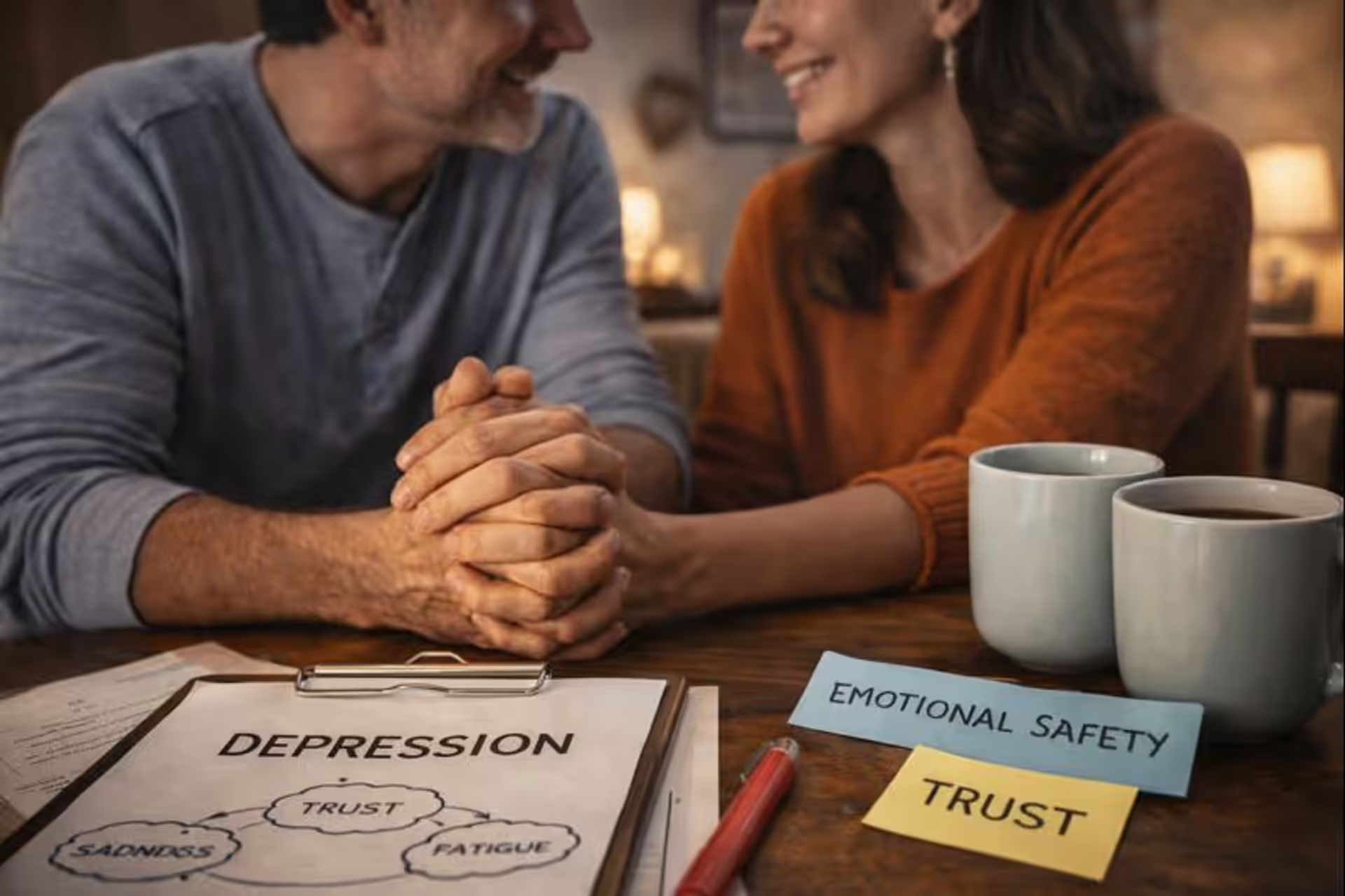
Couple holding hands at dusk.

Author: Evan Miller;
Source: psychology10.click
The Real Communication Code: Beyond Love Languages
The real communication code encompasses a deeper, more comprehensive understanding of each other's emotional worlds, conflict patterns, attachment needs, and unspoken longings. It goes significantly beyond knowing a partner's love language and involves cultivating emotional intelligence, honing active listening skills, understanding attachment dynamics, and mastering the art of expressing oneself authentically and constructively even during difficult conversations.
What is the Real Communication Code?
The real communication code is a dynamic, multifaceted framework for relationship communication that integrates insights from decades of relationship research, attachment theory, emotional intelligence science, and clinical practice with couples. Rather than a simple categorization system, it represents an ongoing practice of deepening understanding and connection.
The real communication code includes several interconnected components:
- Emotional Intelligence (EQ): The ability to identify, understand, express, and regulate emotions in oneself, combined with the capacity to accurately perceive and respond to emotions in others
- Attachment Awareness: Understanding how early relationship experiences shape current patterns of relating, including responses to intimacy, conflict, and perceived threats to the relationship
- Conflict Resolution Skills: Strategies for addressing disagreements in ways that foster understanding and intimacy rather than creating resentment, distance, or escalating negativity
- Non-Verbal Communication Literacy: Awareness of and ability to accurately read body language, facial expressions, tone of voice, and other non-verbal signals that convey emotional information
- Empathy and Validation: The capacity to genuinely understand a partner's perspective, validate their feelings as understandable, and communicate that understanding effectively—even when you disagree with their conclusions
- Repair Skills: The ability to recognize when connection has been damaged and take effective action to repair the relationship and restore trust
Mastering these interconnected skills enables couples to connect on a profoundly deeper level than love languages alone can facilitate, and to communicate effectively even in the most difficult situations—during conflict, stress, disappointment, or major life transitions.
Understanding Emotional Bids and Responses
One of the core components of the real communication code is recognizing and responding to emotional bids—a concept that emerges from decades of rigorous relationship research. Coined by Dr. John Gottman, a renowned relationship researcher whose work has transformed our understanding of what makes relationships succeed or fail, emotional bids are attempts to connect with a partner, to get their attention, affection, support, or engagement. They can be as simple as asking, "How was your day?" or as subtle as a sigh that indicates the need for comfort, or as complex as sharing a vulnerable fear or hope.
Types of Emotional Bids:
Emotional bids can be verbal or non-verbal and are often remarkably subtle—easy to miss if partners aren't attuned to each other. Some common examples include:
- Statements seeking interest or engagement: "I read an interesting article today" or "You won't believe what happened at work"
- Requests for attention: "Look at this!" or "Come here for a second"
- Expressions of vulnerability: "I feel overwhelmed right now" or "I'm worried about something"
- Bids for physical connection: Reaching for a hand, moving closer, or initiating a hug
- Requests for help or support: "Can you help me with this?" or "I could use your advice"
- Sharing experiences: "This sunset is beautiful" or "That was a great meal"
- Humor and playfulness: Making a joke, being silly together, or referencing shared memories
- Non-verbal signals: A sigh, a meaningful look, moving into a partner's space, or changes in posture or expression
Turning Towards vs. Turning Away:
Gottman's extensive research, which has followed couples over decades and can predict divorce with remarkable accuracy, demonstrates that successful relationships are built on partners consistently "turning towards" emotional bids rather than turning away or turning against them.
- Turning towards: Acknowledging and responding to the bid, even if it's just with a nod, brief comment, or moment of attention. This communicates that the partner matters and their attempt to connect has been received.
- Turning away: Missing or ignoring the bid, often due to distraction, preoccupation, or simply not recognizing it as a bid for connection. While usually unintentional, repeated turning away erodes the relationship over time.
- Turning against: Responding to the bid with irritation, hostility, or rejection. This is the most damaging response and quickly erodes trust and willingness to reach out.
Couples who consistently turn towards each other's bids—even in small, seemingly insignificant moments—build what Gottman calls an "emotional bank account" that helps them weather larger challenges. Research shows that couples who turn towards bids around 86% of the time are significantly more likely to remain happily together, while couples who turn towards only around 33% of the time are much more likely to divorce.
By incorporating this awareness into their interactions, couples can create a culture of responsiveness and emotional availability that goes far beyond simply speaking each other's love language.
Attachment Styles: The Blueprint for Communication
Attachment theory, originally developed by psychologist John Bowlby and expanded by researcher Mary Ainsworth, explains how early relationships with caregivers shape our expectations, behaviors, and emotional responses in adult relationships. Our attachment style—formed through thousands of interactions in our earliest relationships—becomes a kind of internal working model that influences how we approach intimacy, how we respond to conflict, how we handle emotional vulnerability, and what we expect from close relationships.
The Four Attachment Styles
Secure Attachment: Individuals with secure attachment are generally comfortable with both intimacy and autonomy. They can communicate their needs openly and effectively, tolerate temporary disconnection without excessive anxiety, and trust that their partner will be responsive and available. They tend to have positive views of both themselves and others, believing they are worthy of love and that others can be trusted. Securely attached individuals make up roughly 50-60% of the population.

Author: Evan Miller;
Source: psychology10.click
Anxious Attachment (also called Anxious-Preoccupied): Individuals with anxious attachment deeply crave closeness and connection but simultaneously fear rejection or abandonment. This can lead to patterns of clinginess, excessive reassurance-seeking, hypervigilance to signs of partner disengagement, and difficulty self-soothing when feeling disconnected. They tend to have positive views of others but more negative views of themselves, wondering if they're truly worthy of love.
Avoidant Attachment (also called Dismissive-Avoidant): Individuals with avoidant attachment prioritize independence and self-sufficiency, sometimes to the point of emotional distancing. They may become uncomfortable when relationships become too close or when partners express strong emotional needs. They tend to withdraw emotionally during conflict or stress and may minimize the importance of close relationships. They often have positive views of themselves but more guarded views of others.
Fearful-Avoidant Attachment (also called Disorganized): Individuals with fearful-avoidant attachment desire intimacy but simultaneously fear getting hurt, resulting in conflicting, sometimes chaotic behaviors. They may alternate between pursuing closeness and pushing partners away, struggle with emotional regulation, and find relationships both compelling and frightening. This style often develops in response to early experiences that were both needed and frightening.
How Attachment Styles Influence Communication
Understanding attachment styles helps couples decode patterns of behavior that may otherwise seem confusing, irrational, or hurtful. What looks like "neediness" in an anxiously attached partner is often a desperate attempt to secure connection and manage overwhelming fear of abandonment. What looks like "coldness" in an avoidantly attached partner is often a protective strategy developed in response to early experiences where emotional needs weren't met.
When partners understand each other's attachment needs, behaviors that seemed frustrating or hurtful suddenly make sense. The anxious partner isn't being 'needy'—they're seeking security. The avoidant partner isn't being 'cold'—they're protecting themselves in the only way they know how.
— Dr. Sue Johnson
Attachment-informed communication recognizes several important dynamics:
- Different responses to disconnection: An anxiously attached partner may interpret a period of silence or distance as a sign of rejection or impending abandonment, while an avoidantly attached partner may experience the same silence as a necessary and comfortable break. Neither perception is "wrong," but understanding these different experiences can prevent escalating cycles of pursuit and withdrawal.
- Conflict triggers: Anxiously attached individuals often become distressed when they perceive emotional unavailability, while avoidantly attached individuals often become distressed when they feel pressured for more closeness or emotional expression than feels comfortable.
- Underlying needs: Beneath the surface behaviors, all attachment styles share common human needs for connection, security, and acceptance—they simply developed different strategies for managing these needs based on early experiences.
- Potential for growth: Attachment styles, while relatively stable, can shift toward security through consistent experiences of responsive, emotionally available relationships—including with a romantic partner. This "earned security" represents significant healing.
Recognizing these attachment dynamics helps partners respond to each other's underlying emotional needs rather than reacting to surface behaviors, creating opportunities for deeper understanding and healing.
The Role of Conflict Resolution in Relationship Communication
Emotional connection and intimacy
Conflict is inevitable in any close relationship—indeed, the complete absence of conflict often indicates emotional disengagement rather than harmony. How couples handle conflict is one of the most powerful predictors of relationship success and longevity. Effective conflict resolution is a key component of the real communication code and goes far beyond simply avoiding arguments, suppressing disagreements, or "agreeing to disagree" without genuine resolution.
Common Destructive Conflict Patterns
According to Gottman's extensive research, there are four particularly harmful communication patterns—known as the "Four Horsemen of the Apocalypse"—that strongly predict relationship breakdown when they become habitual:
Criticism: Attacking a partner's character, personality, or fundamental being rather than addressing a specific behavior or situation. Criticism often uses absolute language like "always" or "never" and implies that something is globally wrong with the partner. Example: "You never think about anyone but yourself. You're so selfish" (versus addressing a specific behavior).
Defensiveness: Responding to perceived attacks or complaints with counterattacks, justifications, excuses, or playing the victim. While understandable as a self-protective response, defensiveness blocks genuine communication and prevents partners from hearing each other's concerns. It communicates that the partner's perspective doesn't matter.
Contempt: Displaying disrespect, superiority, or disgust toward a partner, often through sarcasm, mockery, eye-rolling, name-calling, or hostile humor. Contempt conveys that the partner is beneath consideration or respect. Research shows that contempt is the single strongest predictor of divorce and is profoundly damaging to relationships.
Stonewalling: Shutting down, withdrawing completely from the interaction, or becoming emotionally unreachable. While sometimes a response to feeling overwhelmed (especially common in avoidantly attached individuals), habitual stonewalling leaves partners feeling abandoned and unable to resolve issues. It typically occurs after prolonged exposure to the other horsemen.
Effective Conflict Resolution Strategies
To move beyond these destructive patterns and toward constructive conflict resolution, couples can adopt healthier communication strategies that address disagreements while protecting the relationship:
Using "I" Statements: Expressing feelings and needs without blaming or attacking. For example, "I feel hurt when plans change suddenly because I had been looking forward to our evening together" instead of "You always cancel on me. You obviously don't care about spending time with me."
Soft Startups: Beginning difficult conversations gently rather than with criticism or contempt. Research shows that conversations typically end the way they begin—harsh startups lead to harsh outcomes, while gentle startups allow for productive discussion.
Taking Breaks When Needed: Recognizing when emotions have become too intense for productive conversation (what Gottman calls "flooding") and agreeing to pause the conversation temporarily. The break should be at least 20 minutes—the time needed for physiological arousal to decrease—and should include a commitment to return to the conversation later.
Active Listening: Fully focusing on understanding the partner's perspective before responding, including reflecting back what you've heard to confirm understanding. Active listening communicates respect and genuine interest in the partner's experience.
Finding the Valid Point: Even in disagreements, looking for what's valid or understandable in the partner's perspective. This doesn't mean agreeing with everything, but acknowledging that their feelings and perspective make sense from their point of view.
Repair Attempts: Taking action to de-escalate tension during conflict through humor, affection, acknowledgment, or other gestures that communicate caring even amid disagreement. Successful couples make repair attempts frequently, and—crucially—their partners accept these repair attempts.
These strategies foster a sense of safety and mutual respect that makes it possible to address even significant disagreements without damaging the relationship. The goal isn't to eliminate conflict but to engage with it in ways that ultimately strengthen rather than erode connection.

Author: Evan Miller;
Source: psychology10.click
Empathy and Emotional Intelligence: The Keys to True Connection
Empathy—the ability to understand and share the feelings of another person—is foundational for effective relationship communication. It involves not just hearing your partner's words, but genuinely grasping the emotions, needs, meanings, and intentions behind them. Empathy is what transforms communication from mere information exchange into genuine emotional connection.
How Empathy Enhances Communication
Empathy helps partners feel truly seen, heard, understood, and valued. It creates the emotional safety necessary for authentic self-expression and vulnerability. The difference between empathic and non-empathic responses is often the difference between connection and disconnection.
Consider the difference between these responses to a partner expressing stress about work:
- Non-empathic response: "Well, you should just talk to your boss about it" (immediately offering solutions without acknowledging feelings)
- Slightly better but still limited: "I'm sorry you feel that way" (acknowledging feelings exist but not demonstrating understanding of them)
- Empathic response: "That sounds really overwhelming. It makes complete sense that you'd feel stressed when you're being given more responsibility without the support you need. That's a really difficult position to be in." (demonstrating understanding of both the situation and the emotional experience)
The empathic response validates the partner's emotions as understandable given their circumstances, communicates that their feelings matter, and creates space for them to feel supported without immediately jumping to problem-solving. This doesn't mean solutions are never appropriate—but they're most helpful after empathy has been established.
Developing Empathy in Relationships
Empathy is both a natural human capacity and a skill that can be deliberately cultivated and strengthened through practice. Partners can actively develop their empathic abilities:
Perspective-Taking: Deliberately trying to see situations from the partner's point of view, considering their history, sensitivities, current stressors, and how the situation might appear from their vantage point. This requires temporarily setting aside your own perspective and genuinely entering your partner's experience.
Non-Judgmental Listening: Resisting the impulse to judge, criticize, correct, or immediately offer solutions when a partner shares something. Simply being present with their experience and communicating acceptance of their feelings—even if you might see the situation differently.
Reflective Listening: Reflecting back what the partner has said to confirm understanding and communicate that you're genuinely trying to grasp their experience. This includes reflecting both content ("So your colleague took credit for your work in the meeting") and emotions ("and that felt really unfair and frustrating").
Curiosity Over Certainty: Approaching the partner's experience with genuine curiosity rather than assumptions. Asking questions to understand better rather than assuming you already know what they feel or need.
Validating Before Problem-Solving: Ensuring that the partner feels fully heard and understood before moving into advice, solutions, or your own perspective. Often, being truly heard is what partners most need.
Empathy, combined with broader emotional intelligence, allows couples to navigate even the most challenging conversations with grace, compassion, and connection.
Non-Verbal Communication: The Silent Language of Love
Non-verbal communication—including body language, facial expressions, eye contact, tone of voice, physical proximity, and touch—comprises a significant portion of human interaction. Research suggests that non-verbal elements may convey more emotional information than words alone. While words convey the explicit content of a message, non-verbal cues reveal the emotional context, the relationship dynamics, and often the deeper truth of what's being communicated.
Reading and Responding to Non-Verbal Cues
Being able to accurately interpret and respond to non-verbal signals is crucial for effective relationship communication. Partners who are attuned to each other's non-verbal communication can often sense shifts in mood, unspoken needs, or brewing concerns before they're verbalized—allowing for earlier and gentler intervention.
Key non-verbal dimensions to attend to:
- Posture and body orientation: A partner's crossed arms may indicate defensiveness, self-protection, or discomfort, while leaning forward suggests engagement, interest, and openness. Turning the body toward someone signals interest; turning away suggests disengagement.
- Facial expressions: The face conveys enormous emotional information. Micro-expressions—brief, involuntary facial expressions—can reveal emotions that a partner may be trying to hide or may not even be consciously aware of feeling.
- Eye contact: Eye contact can convey trust, openness, intimacy, and attention, while avoiding eye contact might signal anxiety, shame, discomfort, avoidance, or deception. However, cultural and individual differences affect eye contact norms.
- Tone of voice: How something is said often matters more than what is said. Tone conveys emotional information including warmth, irritation, sincerity, sarcasm, anxiety, or affection that may contradict or amplify the literal words.
- Touch: Physical touch is a powerful non-verbal communicator. Gentle, appropriate touch can convey support, affection, and connection, while absence of touch or pulling away can signal distance or displeasure.
- Physical distance: How close partners stand or sit to each other communicates comfort with intimacy and current emotional closeness or distance.
How Non-Verbal Cues Impact Relationship Dynamics
When verbal and non-verbal cues align, the message is clear and consistent—the partner can trust what they're receiving. However, when there's a mismatch—such as saying "I'm fine" while looking away, crossing arms, and sighing—the non-verbal cues tend to carry more weight and reveal the truer emotional state. Partners pick up on these discrepancies, often unconsciously, which can create confusion, mistrust, or concern.
The most important thing in communication is hearing what isn't said. Non-verbal cues often reveal the emotional truth that words may obscure or deny. Partners who learn to read and respond to these signals access a much deeper level of connection.
— Peter Drucker
Understanding and compassionately addressing these discrepancies—rather than simply accepting the verbal statement at face value—can prevent miscommunication and build stronger, more authentic connection. For example, gently noting "You say you're fine, but you seem a bit down. Want to talk about it?" demonstrates attunement and invites deeper sharing.
Building a Shared Vocabulary for Deeper Communication
Couples who thrive over the long term often develop their own "communication shorthand"—a shared language that includes inside jokes, pet names, unique ways of expressing affection, code words for complex feelings, and references to shared experiences that outsiders wouldn't understand. This shared vocabulary fosters intimacy, creates a sense of "us," and makes each partner feel special and uniquely understood.
Creating a Shared Vocabulary
A shared vocabulary develops organically over time through shared experiences, but couples can also intentionally cultivate it:
Naming Recurring Feelings or Situations: Creating labels for complex emotions, recurring dynamics, or shared experiences. For example, calling a recurring disagreement "the Saturday Morning Syndrome" can diffuse tension and provide a humorous, affectionate context for addressing it. Or having a code word that means "I'm feeling overwhelmed and need some space but I still love you."
Developing Personal Rituals: Small, consistent gestures that become meaningful through repetition—a particular way of saying goodbye, a morning routine of connection, a nightly check-in, or special ways of celebrating good news. These rituals create predictable moments of connection that strengthen the relationship fabric.
Inside Jokes and References: Humor that draws on shared history and experiences creates moments of connection and reinforces the unique bond between partners. These references communicate "We have a history together. We know each other in ways others don't."
Terms of Endearment: Unique nicknames or affectionate terms that belong only to the relationship create a sense of specialness and intimacy.
Shorthand for Complex Communications: Developing abbreviated ways to communicate complex needs or states. For example, a couple might develop a scale of 1-10 for stress levels, or a word that means "I need to talk about something difficult."
This shared language becomes a form of intimate communication that deepens the emotional bond over time, creates a sense of couple identity, and provides efficient ways to communicate complex emotional information.
Contextual Awareness: Sensitivity to Life's External Influences
No relationship exists in a vacuum, isolated from the broader circumstances of life. External factors—including work stress, financial pressures, family dynamics, health issues, major life transitions, societal events, and countless other influences—can heavily impact how partners communicate and interact. A couple who communicates beautifully during calm, low-stress periods may struggle significantly during times of external pressure.
The Impact of External Stressors on Communication
Stress, in particular, can amplify misunderstandings, reduce emotional resources for patience and empathy, and trigger negative communication patterns that wouldn't emerge during calmer times. When people are stressed, they often become more reactive, less patient, more likely to perceive threats, and less able to regulate their emotions effectively.
Stress affects communication through several mechanisms:
- Reduced emotional bandwidth: Stress consumes psychological resources, leaving less capacity for patience, empathy, and thoughtful responding
- Increased reactivity: Stressed individuals are more likely to react defensively or critically to perceived slights
- Spillover effects: Stress from one domain (like work) spills over into other relationships, causing partners to bear the brunt of frustrations they didn't cause
- Misattribution: Partners may misinterpret stress-related behaviors as relationship problems rather than recognizing their external source
- Decreased bids and responses: Stressed individuals may make fewer bids for connection and be less responsive to their partner's bids
For example, a partner who is overwhelmed at work might respond curtly to a simple question, which the other partner interprets as disinterest, hostility, or a sign of relationship problems. Without contextual awareness, this can trigger defensive responses and escalating negativity. With contextual awareness, the partner can recognize that the curtness is about work stress, not about them or the relationship.

Author: Evan Miller;
Source: psychology10.click
Developing Contextual Sensitivity
To build contextual awareness and prevent external stressors from damaging the relationship, partners can:
Check In Regularly: Asking open-ended questions like "How's work going?" or "Is there anything stressing you out lately?" or "How are you really doing?" These check-ins create space for partners to share what's affecting them before it spills into the relationship.
Give Each Other Grace: Recognizing when a partner's negative behavior might be more about their own stress, fatigue, or struggles than about the relationship. This doesn't mean accepting poor treatment, but rather not immediately personalizing every negative moment.
Communicate About Stressors Proactively: Letting partners know when you're going through a particularly stressful period, what you need during that time, and that any irritability isn't about them.
Adjust Expectations During Difficult Periods: Recognizing that communication and connection may look different during high-stress periods, and being patient with temporary struggles.
Create Stress-Relief Rituals Together: Developing shared ways to decompress and support each other through stressful periods—whether that's a daily walk, a weekly date night, or simply checking in each evening.
By being attuned to the broader context of each other's lives, couples can respond more empathetically, avoid unnecessary conflict, and support each other through life's inevitable challenges.
Communicating During Times of Stress and Change
Major life changes—such as moving, changing jobs, having a child, experiencing loss, facing illness, or navigating other significant transitions—can destabilize even the strongest, most communicatively skilled relationships. During these times, when emotional resources are stretched thin and familiar patterns are disrupted, effective communication becomes simultaneously more difficult and more essential.
Strategies for Communicating During Stressful Times
Prioritize Open Dialogue: Regularly checking in about how each person is coping, what they need, and how they're experiencing the transition. These conversations should be approached with curiosity and compassion rather than problem-solving urgency.
Acknowledge the Impact of Change: Validating each other's experiences and emotions during transitions, recognizing that both partners may be struggling even if they express it differently. Avoid comparative suffering ("You think you have it bad—I'm dealing with...").
Lower Expectations Temporarily: Recognizing that during major transitions, relationship maintenance may need to take a slightly different form. Perfect communication isn't possible when resources are depleted; good-enough communication that maintains connection is the realistic goal.
Maintain Connection Rituals: Even amid chaos, preserving some small rituals of connection helps couples maintain their bond. This might be a brief morning check-in, a hug before bed, or a weekly cup of coffee together.
Be Explicit About Needs: During stressful times, partners have less capacity to intuit each other's needs. Being more direct about what you need ("I need some quiet time to decompress" or "I need you to just listen right now, not offer solutions") helps partners support each other effectively.
Seek External Support: Recognizing when the stress exceeds what the couple can manage alone and seeking help—whether from friends, family, individual therapy, couples counseling, or support groups appropriate to the specific challenge.
Look for Silver Linings Together: While not minimizing the genuine difficulty of transitions, also noticing and sharing moments of grace, growth, or unexpected positives that emerge.
By maintaining open communication and seeking support when needed, couples can emerge from stressful transitions not just intact but potentially even stronger, having weathered the storm together.
Integrating Love Languages into a Broader Communication Strategy
Real Communication
While love languages are a helpful tool for expressing affection and appreciation, they reach their full potential when integrated into a more comprehensive communication strategy that includes emotional intelligence, empathy, conflict resolution skills, attachment awareness, and contextual sensitivity. Love languages become one valuable tool in a much larger toolkit.
Combining Love Languages with the Real Communication Code
Use Love Languages to Show Regular Appreciation: Continue speaking your partner's love language consistently, especially during good times. This builds the emotional bank account that sustains the relationship through harder times.
Address Deeper Emotional Needs: Recognize that love languages address how to express appreciation, but other skills are needed to respond to the full spectrum of partner emotions—fear, sadness, anger, shame, anxiety, and vulnerability all require empathic attunement, not just expressions of love.
Navigate Conflict with Skill and Compassion: Understand that during conflict, love languages may be insufficient. A partner whose love language is Words of Affirmation still needs respectful conflict engagement, not just compliments. Conflict resolution skills must complement love language awareness.
Recognize How Attachment Affects Love Language Reception: An anxiously attached partner may need more frequent expressions of love in their love language, while an avoidantly attached partner might feel overwhelmed by too much. Understanding attachment dynamics helps calibrate love language expression.
Adapt to Context and Stress: Recognize that love language needs and capacities may shift during stress. A partner who usually values Quality Time might need more space during high-stress periods. Flexibility and attunement matter more than rigid adherence to identified preferences.
Use Love Languages for Repair: After conflict or disconnection, speaking a partner's love language can be part of repair—but shouldn't substitute for actual acknowledgment of what happened and genuine reconnection.
By combining love languages with a holistic communication strategy, couples build resilient relationships that thrive in both good times and bad, that can weather conflict and stress, and that deepen over time rather than stagnating.
FAQ: Understanding Love Languages and Deep Communication
Conclusion: The Path to Mastering Real Communication
Love languages are a valuable starting point for expressing affection, providing couples with a framework for understanding and meeting each other's preferences for receiving love. Their simplicity and accessibility have helped millions of couples improve their relationships, and they remain a useful tool in the relationship toolkit.
However, love languages are not a substitute for the deeper, more challenging work of truly understanding and responding to each other's full emotional worlds, navigating conflict skillfully, building trust through consistent responsiveness, understanding attachment dynamics, and constructing a shared life rich with meaning and connection. The real communication code involves developing emotional intelligence, cultivating empathy, learning to read and respond to non-verbal cues, understanding attachment patterns, mastering conflict resolution, and maintaining the flexibility to adapt to life's changing circumstances.
By mastering this full spectrum of communication skills, couples move beyond superficial expressions of love into the territory of genuine, lasting intimacy—the kind of connection that can withstand the tests of time, change, and challenge. This deeper communication isn't a destination to be reached but an ongoing practice to be cultivated throughout the life of the relationship, with patience, commitment, and compassion for both self and partner.
The investment in developing these skills pays dividends not only in relationship satisfaction but in individual well-being, family stability, and the modeling of healthy relationships for future generations. True communication mastery is perhaps the greatest gift partners can give each other and themselves.
This article provides general information about relationship communication and is not intended as professional therapy or counseling. If you are experiencing significant relationship difficulties, consider seeking support from a qualified couples therapist or relationship counselor who can provide personalized guidance for your specific situation.
Related Stories

Read more
Read more




The content on psychology10.click is provided for general informational and inspirational purposes only. It is intended to share evidence-based insights and perspectives on psychology, relationships, emotions, and human behavior, and should not be considered professional psychological, medical, therapeutic, or counseling advice.
All information, articles, and materials presented on this website are for general educational purposes only. Individual experiences, emotional responses, mental health needs, and relationship dynamics may vary, and outcomes may differ from person to person.
Psychology10.click makes no representations or warranties regarding the accuracy, completeness, or reliability of the content provided and is not responsible for any errors or omissions, or for decisions or actions taken based on the information presented on this website. Readers are encouraged to seek qualified professional support when dealing with personal mental health or relationship concerns.