

When Motivation is a Myth: Surviving the Dark Days of Depression
Depression and Motivation on the Darkest Days

Depression is often misunderstood as a state of sadness or a temporary feeling of “being down.” But for those who struggle with it, depression is a much more complex and debilitating experience that reaches into every corner of life, affecting thoughts, emotions, physical health, and everyday functioning in profound ways. It is a condition that goes beyond sadness, transforming the most basic activities into Herculean tasks and stripping away the joy and meaning that once made life worth living. One of the most insidious aspects of depression is the erosion of motivation—that fundamental drive that propels us forward, helps us pursue our goals, and gives us reason to engage with the world around us.
In a world that often emphasizes positive thinking and the power of willpower, those grappling with depression are left to wonder: What do you do when motivation itself feels like a myth? When the advice to “just try harder” or “stay positive” feels not only unhelpful but almost cruel in its disconnection from your reality? This article delves into the nature of depression, why motivation becomes a scarce resource during depressive episodes, and how to survive and cope on those dark days when even getting out of bed seems impossible. We will explore practical strategies grounded in psychological research, offer insights into the neuroscience of depression, and discuss ways to navigate the realities of this condition with compassion, patience, and resilience.
Understanding Depression: More Than Just “Feeling Sad”
Before addressing the issue of motivation, it is essential to understand what depression really is and how it differs from ordinary sadness or disappointment. Depression is not merely a transient feeling of unhappiness that passes with time or a bad mood that can be shaken off with distraction or positive thinking. It is a complex mental health disorder characterized by a variety of symptoms that can affect nearly every aspect of life, from the way you think and feel to how you eat, sleep, and relate to others. Understanding depression as a legitimate medical condition—rather than a personal weakness or character flaw—is the first step toward approaching it with the seriousness and compassion it deserves.
The opposite of depression is not happiness, but vitality.
— Andrew Solomon
The clinical criteria for major depressive disorder (MDD), as outlined in the Diagnostic and Statistical Manual of Mental Disorders (DSM-5), include a range of symptoms that must be present for a minimum of two weeks and cause significant impairment in daily functioning. These symptoms include persistent depressed mood characterized by prolonged sadness, emptiness, or irritability; loss of interest or pleasure in activities once enjoyed; fatigue and low energy even after rest; sleep disturbances including insomnia or oversleeping; changes in appetite and weight; feelings of worthlessness or excessive guilt; difficulty concentrating and making decisions; psychomotor agitation or retardation; and recurrent thoughts of death or suicide. To qualify as major depressive disorder, at least five of these symptoms must be present, and they must represent a change from previous functioning.
Key Symptoms of Major Depressive Disorder
The following table provides an overview of the primary symptoms of major depressive disorder, their manifestations, and how they impact daily functioning.
| Symptom | How It Manifests | Impact on Daily Life |
| Persistent Depressed Mood | Prolonged sadness, emptiness, hopelessness, or irritability lasting most of the day | Difficulty engaging with others; reduced quality of life; social withdrawal |
| Loss of Interest | Lack of pleasure in activities once enjoyed, including hobbies, socializing, and intimacy | Abandonment of hobbies; strained relationships; loss of sense of self |
| Fatigue | Persistent exhaustion that does not improve with rest; feeling physically heavy | Difficulty completing basic tasks; reduced work performance; inability to exercise |
| Sleep Disturbances | Insomnia, early morning waking, or excessive sleeping (hypersomnia) | Worsened mood; impaired cognitive function; disrupted daily schedule |
| Cognitive Difficulties | Trouble concentrating, remembering, and making decisions | Poor work or academic performance; difficulty managing responsibilities |
| Feelings of Worthlessness | Excessive guilt, self-criticism, and feelings of being a burden to others | Low self-esteem; reluctance to seek help; social isolation |
Author: Marcus Reed;
Source: psychology10.click
The Role of Motivation in Depression
Among the many symptoms of depression, a lack of motivation is one of the most pervasive and debilitating, affecting virtually every aspect of daily life. Motivation is the psychological drive that compels us to act, pursue goals, and engage with the world around us. It is the force that gets us out of bed in the morning, helps us complete tasks at work, and encourages us to maintain relationships and pursue our interests. During depression, this drive often evaporates completely, making even the simplest tasks feel insurmountable and draining all sense of purpose and direction from life.
Why Depression Drains Motivation
Depression affects the brain’s ability to regulate mood, energy, and reward in fundamental ways that directly undermine motivation. Neurotransmitters like serotonin, dopamine, and norepinephrine—often referred to as the brain’s “feel-good” chemicals—are disrupted in people with depression. Dopamine, in particular, is closely linked to motivation and reward-seeking behavior, playing a crucial role in the brain’s reward circuit that makes activities feel pleasurable and worth pursuing. When dopamine levels are low or the brain’s dopamine system is not functioning properly, activities that would normally feel pleasurable or satisfying become devoid of meaning or appeal. The anticipation of reward that normally motivates behavior simply does not occur.
Additionally, depression often brings with it a sense of hopelessness and a pervasive feeling of futility that further undermines motivation. Thoughts like “What’s the point?” or “Why bother?” become deeply ingrained, making it incredibly difficult to muster up the energy to engage in daily activities. This cognitive component of depression interacts with the neurochemical changes to create a powerful barrier to action. Even when someone logically knows they should do something, the emotional and motivational systems of the brain are not providing the push needed to actually do it. This creates a vicious cycle: the more one avoids activities due to lack of motivation, the worse depression becomes, leading to even lower motivation and deeper withdrawal from life.
The Myth of Motivation: Why Traditional Advice Falls Short
The self-help industry is filled with motivational quotes, pep talks, and productivity hacks that promise to boost energy and get you moving. Bookstores are lined with titles promising to unlock your potential and help you achieve your goals through willpower and positive thinking. While these strategies can be helpful for someone dealing with mild apathy, temporary discouragement, or ordinary procrastination, they often miss the mark entirely when it comes to depression. Telling someone who is severely depressed to “just push through” or “think positively” is not only unhelpful but can be actively harmful, increasing feelings of shame and inadequacy when the person cannot follow this advice.
The Problem with “Just Do It”
One of the most common pieces of advice for overcoming a lack of motivation is to simply force yourself to act, based on the idea that action will create momentum and motivation will follow. This approach, while sometimes effective for healthy individuals facing temporary low motivation, fundamentally misunderstands the nature of depression. In depression, it is akin to asking someone with a broken leg to run a marathon—the underlying system that would allow them to follow this advice is not functioning properly. People with depression are not merely lazy or unmotivated in the ordinary sense; their brains are functioning differently in ways that make initiating action extraordinarily difficult.
The neural pathways responsible for motivation and reward are impaired in depression, making it incredibly difficult to initiate even basic activities like showering, eating, or getting dressed. This is why traditional advice like “just do it” can feel so invalidating to someone with depression. They may have tried countless times to “just do it” and failed, leading them to conclude that they are weak, lazy, or fundamentally broken. In reality, they are fighting against neurological changes that make action genuinely more difficult than it is for someone without depression. Understanding this distinction is crucial for both those with depression and those who want to support them.

Author: Marcus Reed;
Source: psychology10.click
Toxic Positivity and the Happiness Trap
The cultural emphasis on positive thinking can also backfire dramatically for those struggling with depression. Messages like “Choose happiness” or “Smile, it gets better” ignore the complexity of depression and place the burden of recovery solely on the individual, as if they could simply decide to feel better and make it so. This is known as toxic positivity—the belief that people should maintain a positive mindset regardless of their circumstances, and that negative emotions are always to be avoided or overcome through sheer force of will. For someone struggling with depression, this kind of advice can increase feelings of shame and self-blame rather than providing genuine help.
A person with depression may wonder, “If happiness is a choice, why can’t I just choose to feel better?” This mindset overlooks the biological, psychological, and environmental factors that contribute to depression, making it feel like a personal failure rather than a legitimate mental health condition that requires proper treatment and support. The reality is that depression is not a choice, and recovery is not simply a matter of choosing to be happy. Acknowledging this truth is not pessimistic or defeatist—it is the foundation for approaching depression with the understanding and strategies that actually help.
Surviving the Dark Days: Practical Strategies for Coping Without Motivation
So, what can you do when motivation is non-existent? How do you survive the dark days when even the most basic tasks seem overwhelming? The strategies that follow are not about forcing yourself to feel motivated or pretending that depression is not as serious as it is. Instead, they are about meeting yourself where you are, with compassion and realism, and finding ways to navigate even the most difficult periods with small, manageable steps that honor your current capacity while still maintaining some connection to life and self-care.
Redefine Success: Start Small, Really Small
When you are struggling with depression, your capacity for daily activities is significantly diminished compared to your normal functioning. What used to be simple—like brushing your teeth, preparing a meal, or answering an email—can feel monumental, requiring more energy and effort than you have available. On these days, it is crucial to redefine what success looks like. Instead of expecting yourself to tackle a full to-do list or maintain your usual productivity, focus on micro-tasks that are achievable even in your depleted state. These tiny acts of self-care may seem insignificant, but they represent a commitment to your well-being, no matter how small, and serve as reminders that you are still trying, even when every part of you wants to give up.
Examples of micro-tasks that can constitute success on difficult days include:
- Instead of committing to a full shower, aim to wash your face or brush your hair. Even this small act of hygiene can help you feel slightly more human and connected to your body.
- If preparing a full meal feels impossible, eat a handful of nuts, a piece of fruit, or even just drink a glass of water. Nourishing your body in any small way counts as taking care of yourself.
- If getting dressed feels overwhelming, start by changing into a fresh pair of socks or putting on a clean shirt. You do not have to get fully dressed to have accomplished something.
- If leaving the house is too much, simply open a window or step onto a balcony for a moment of fresh air. Any connection to the outside world is worthwhile.
- If you cannot bring yourself to talk to anyone, send a brief text message to a friend or family member letting them know you are thinking of them. This maintains connection without requiring the energy of conversation.
Embrace the Concept of Non-Zero Days
The idea of non-zero days comes from the notion that doing something—anything at all—is always better than doing nothing. On days when motivation is absent and depression feels overwhelming, aim for the smallest possible win that keeps the day from being a complete zero. This could be anything from sending a text to a friend, folding one piece of laundry, reading a single page of a book, or stepping outside for five minutes. The goal is not to achieve productivity in any conventional sense but to break the cycle of complete inertia that depression creates.
Even the smallest action creates a ripple effect, showing your brain that you are capable of making choices and taking steps, no matter how small. This interrupts the narrative of complete helplessness that depression often creates and provides a tiny foundation on which to build. Over time, these small actions can accumulate, creating momentum that makes slightly larger actions possible. But even if they do not—even if each day remains just barely a non-zero day—that is still vastly better than surrendering completely to inaction.

Author: Marcus Reed;
Source: psychology10.click
Create Bare Minimum Routines
Depression often disrupts routines, making it difficult to maintain any sense of structure in daily life. The executive function required to plan activities, make decisions, and organize your time is impaired, leaving you adrift without the anchors that normally structure your day. On days when motivation is lacking, it can help to have a bare minimum routine already in place—a predetermined set of tasks that includes the most basic activities required to keep you functioning, like eating something, drinking water, and brushing your teeth. Having this routine written down somewhere visible means you do not have to use depleted mental energy deciding what to do.
On the darkest days, aim to complete just one or two items on your bare minimum list. If that is all you can manage, it is still an achievement worth acknowledging. The routine provides structure without demanding too much, and it ensures that your most basic needs are being met even when you cannot muster the energy for anything beyond survival. Over time, as depression lifts or you have better days, you can add to this routine, but always have that baseline to fall back on when things are at their worst.
Use External Supports to Your Advantage
When internal motivation is absent, it becomes essential to rely on external supports that can provide structure and accountability. This could be anything from setting alarms and reminders on your phone to enlisting the help of a friend or family member for regular check-ins. For example, ask a trusted friend to send you a daily text asking how you are doing, or schedule a regular walk with a neighbor or family member. Having external prompts and commitments can help bridge the gap when your own motivation is depleted, providing reasons to act that do not depend on internal drive.
External supports can also include professional resources such as therapists, support groups, or crisis lines that provide accountability and connection. Some people find it helpful to have a therapist or counselor who they know they will need to report to, which creates external motivation to maintain basic self-care or complete small goals. The key is recognizing that asking for help and relying on external structures is not a sign of weakness but a practical strategy for managing a condition that impairs your ability to motivate yourself internally.
Lower the Bar Without Guilt
Depression has a way of making people feel guilty for doing less or being less productive than usual, comparing their current functioning to what they could accomplish before depression took hold or to what others seem to manage easily. It is crucial to remember that lowering the bar during a depressive episode is not a sign of weakness or laziness; it is an act of self-compassion and practical wisdom. Your energy, focus, and emotional bandwidth are significantly reduced by the illness, so it is entirely appropriate to have lower expectations for yourself during this time.
If you typically go to the gym for an hour, consider a ten-minute stretch or even just standing up and moving around your room instead. If you usually cook elaborate meals, settle for a simple sandwich, some crackers with cheese, or even just a protein bar. Lowering the bar means meeting yourself where you actually are and acknowledging that your current capacity is different from your usual capacity—and that this difference is okay. It is not permanent, and it does not define you. It is simply the reality of living with a serious illness that requires accommodation and compassion.
Develop Emergency Kits for Dark Days
Preparing a mental health emergency kit for those days when motivation and energy are at rock bottom can provide crucial support when you are least able to think clearly or take care of yourself. This kit could include a playlist of soothing or uplifting music that has helped you before, a list of comforting movies or TV shows that provide distraction without demanding too much, a collection of favorite quotes or affirmations that remind you of your worth, a list of supportive friends or family members to call, and pre-packaged, easy-to-make meals that require minimal preparation. Having these items prepared in advance means you do not have to use up precious energy deciding what to do or how to cope when you are at your lowest.
Shift from Feeling to Doing
When motivation is low, we often wait for the feeling of motivation to kick in before taking action, assuming that we need to feel like doing something in order to do it. But during depression, that feeling may never come, and waiting for it only prolongs inaction and deepens the cycle of withdrawal. Instead of waiting until you feel like doing something, try doing it anyway, even in the smallest possible way. This approach, known as behavioral activation, is based on the research-supported idea that action can precede and create motivation, rather than the other way around.
Start by choosing one small, manageable task and commit to doing it, even if you feel no desire or energy. For example, if you need to get out of bed, focus first just on sitting up. If you need to eat, focus on putting food on a plate, then worry about actually eating it. The goal is to take one small action and see it through, which can sometimes trigger a slight shift in energy and mood that makes the next small action a bit more possible. This is not about forcing yourself through a marathon of tasks but about taking the tiniest possible step and seeing where it leads.
Practice Radical Self-Compassion
When depression takes hold, the inner critic often becomes louder and more vicious than ever. You might find yourself thinking, “Why can’t I just do this?” or “I’m so useless for not getting anything done” or “Everyone else manages to function, what’s wrong with me?” This harsh self-talk only deepens the cycle of depression, adding shame and self-blame to an already heavy burden. Instead of joining in with the inner critic, practice radical self-compassion. This means treating yourself with the same kindness, understanding, and patience that you would offer a dear friend who was struggling with a serious illness.
Self-compassion is simply giving the same kindness to ourselves that we would give to others.
— Christopher Germer
When your inner critic pipes up, counter it with a compassionate response: “I’m struggling right now, and that’s okay. I’m doing the best I can with what I have.” Remind yourself that depression is a real and legitimate condition, not a personal failing or a character flaw. You would not berate yourself for not running with a broken leg; do not berate yourself for struggling to function with a brain that is not working properly. Self-compassion is not self-indulgence or making excuses—it is the foundation for healing and the most effective way to reduce the additional suffering that self-criticism creates.
Seek Professional Support When Needed
Sometimes, self-help strategies are not enough, and that is okay. Depression is a serious condition that often requires professional intervention to treat effectively. If you find yourself struggling to manage your symptoms despite your best efforts, reach out to a mental health professional. Therapy, particularly cognitive behavioral therapy and behavioral activation, has strong evidence for treating depression. Medication, including antidepressants, can be life-changing for many people, helping to correct the neurochemical imbalances that underlie depression. Often, a combination of therapy and medication is more effective than either alone.
Seeking professional help is not a sign of weakness or failure—it is a sign of strength and self-awareness. Just as you would see a doctor for a physical illness, seeing a mental health professional for depression is an appropriate and responsible response to a medical condition. If you are unsure where to start, your primary care doctor can provide referrals, or you can contact your insurance company for a list of covered providers. Many communities also have low-cost mental health clinics, and online therapy options have made treatment more accessible than ever.
Understanding the Neuroscience: Why Your Brain Works Against You
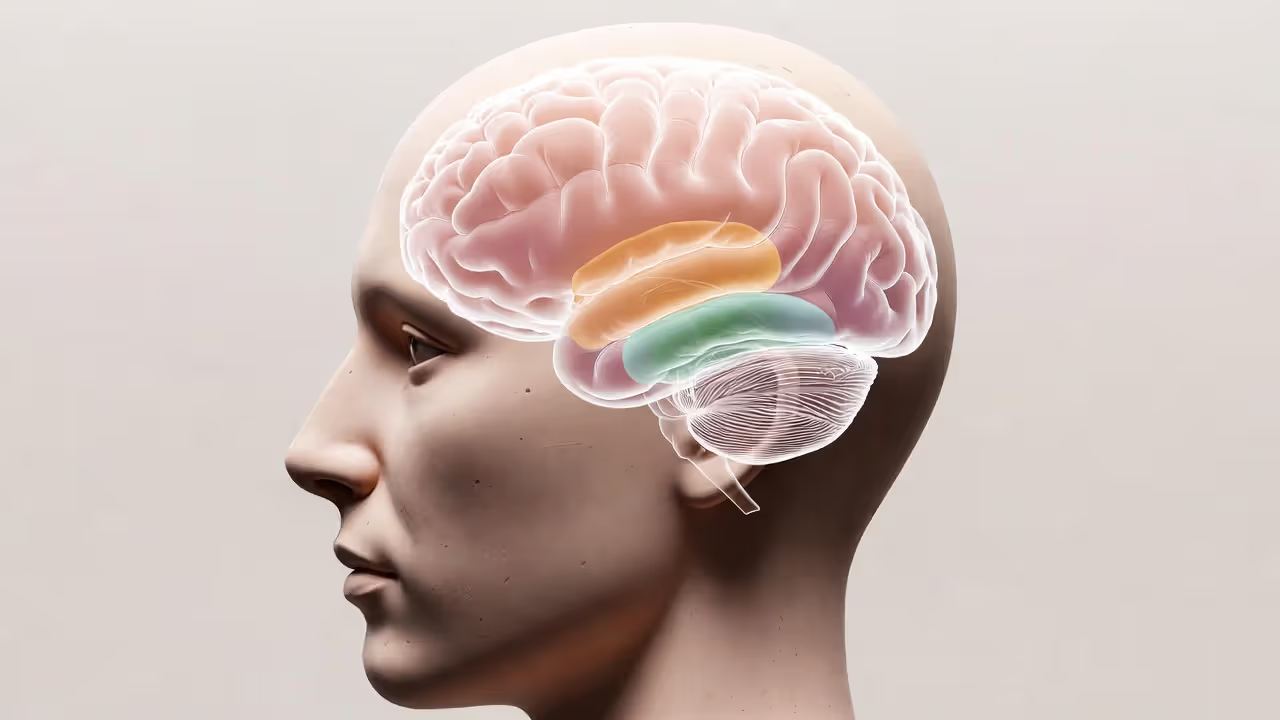
One of the most important things to understand about depression and motivation is that the struggle is not a matter of willpower or character—it is fundamentally a matter of brain chemistry and function. Modern neuroscience has revealed that depression involves significant changes in how the brain processes information, regulates mood, and generates the motivation to act. The prefrontal cortex, which is responsible for planning, decision-making, and initiating goal-directed behavior, often shows reduced activity in depression. Meanwhile, the amygdala, which processes fear and negative emotions, is often hyperactive, creating a brain state that is primed for threat detection and withdrawal rather than engagement and action.
The brain’s reward circuitry, centered on structures like the nucleus accumbens and ventral tegmental area, is also profoundly affected by depression. In a healthy brain, these circuits generate feelings of anticipation and pleasure that motivate us to pursue goals and engage in activities. In depression, this reward circuitry is blunted, meaning that the brain does not produce the normal signals that make activities feel worth doing. This is why someone with depression can intellectually know that an activity would be good for them while feeling absolutely no motivation to do it—the cognitive understanding is intact, but the emotional and motivational drive is absent. Understanding this neuroscience can help reduce self-blame and provide a more accurate picture of what someone with depression is actually dealing with.
The Importance of Human Connection During Dark Times
Depression often creates a powerful urge to isolate, to withdraw from the world and from the people who care about us. This isolation feels protective—it removes the energy demands of social interaction and the perceived burden of hiding our struggle from others. However, isolation almost always makes depression worse over time, cutting us off from one of the most powerful sources of support and healing: human connection. Research consistently shows that social support is one of the strongest protective factors against depression and one of the most important elements of recovery.
Even when motivation is at its lowest and you feel like you have nothing to offer in social interactions, maintaining some form of connection is important. This does not have to mean attending parties or having deep conversations—even brief, low-demand interactions can help. A text message to a friend, a few minutes of conversation with a family member, or simply being in the same room as another person can provide connection without overwhelming your limited resources. If face-to-face interaction feels impossible, online communities and support groups can provide a sense of connection from the safety of your home. The key is to resist the pull toward complete isolation, even in small ways, and to let at least some people know what you are going through so they can offer support.

Author: Marcus Reed;
Source: psychology10.click
Moving Forward: Living with Depression, Not Fighting Against It
Depression is a complex and often chronic condition that may not have a simple or immediate solution. While overcoming the lack of motivation is challenging, it is important to remember that survival is a victory in itself. If all you did today was get through it—if you made it to the end of the day still breathing, still here—that is an achievement worth acknowledging. Depression tells you that you are worthless, that your efforts do not matter, that things will never get better. Surviving another day is a direct refutation of those lies, proof that you are stronger than the illness even when you do not feel strong at all. Every day you survive depression is a day you have won, regardless of what you accomplished or failed to accomplish by external measures.
By reframing success, focusing on small steps, and practicing self-compassion, it is possible to navigate the dark days with a little more grace and resilience. Remember, motivation may be a myth on those days, but your worth and effort are not. Surviving is a testament to your strength, even when it does not feel like it. The fact that you are still here, still trying, still reading articles about how to cope, demonstrates a resilience that depression cannot take from you.
If you or someone you know is struggling with severe depression or thoughts of self-harm, seek help immediately. Reach out to a mental health professional or crisis hotline. There is support available, and you do not have to face this alone. Through patience, persistence, and the right support, you can learn to live with depression—even when motivation is a distant memory. And in doing so, you create space for hope and healing to eventually re-enter your life.
Frequently Asked Questions
Related Stories

Read more
Read more




The content on psychology10.click is provided for general informational and inspirational purposes only. It is intended to share evidence-based insights and perspectives on psychology, relationships, emotions, and human behavior, and should not be considered professional psychological, medical, therapeutic, or counseling advice.
All information, articles, and materials presented on this website are for general educational purposes only. Individual experiences, emotional responses, mental health needs, and relationship dynamics may vary, and outcomes may differ from person to person.
Psychology10.click makes no representations or warranties regarding the accuracy, completeness, or reliability of the content provided and is not responsible for any errors or omissions, or for decisions or actions taken based on the information presented on this website. Readers are encouraged to seek qualified professional support when dealing with personal mental health or relationship concerns.