
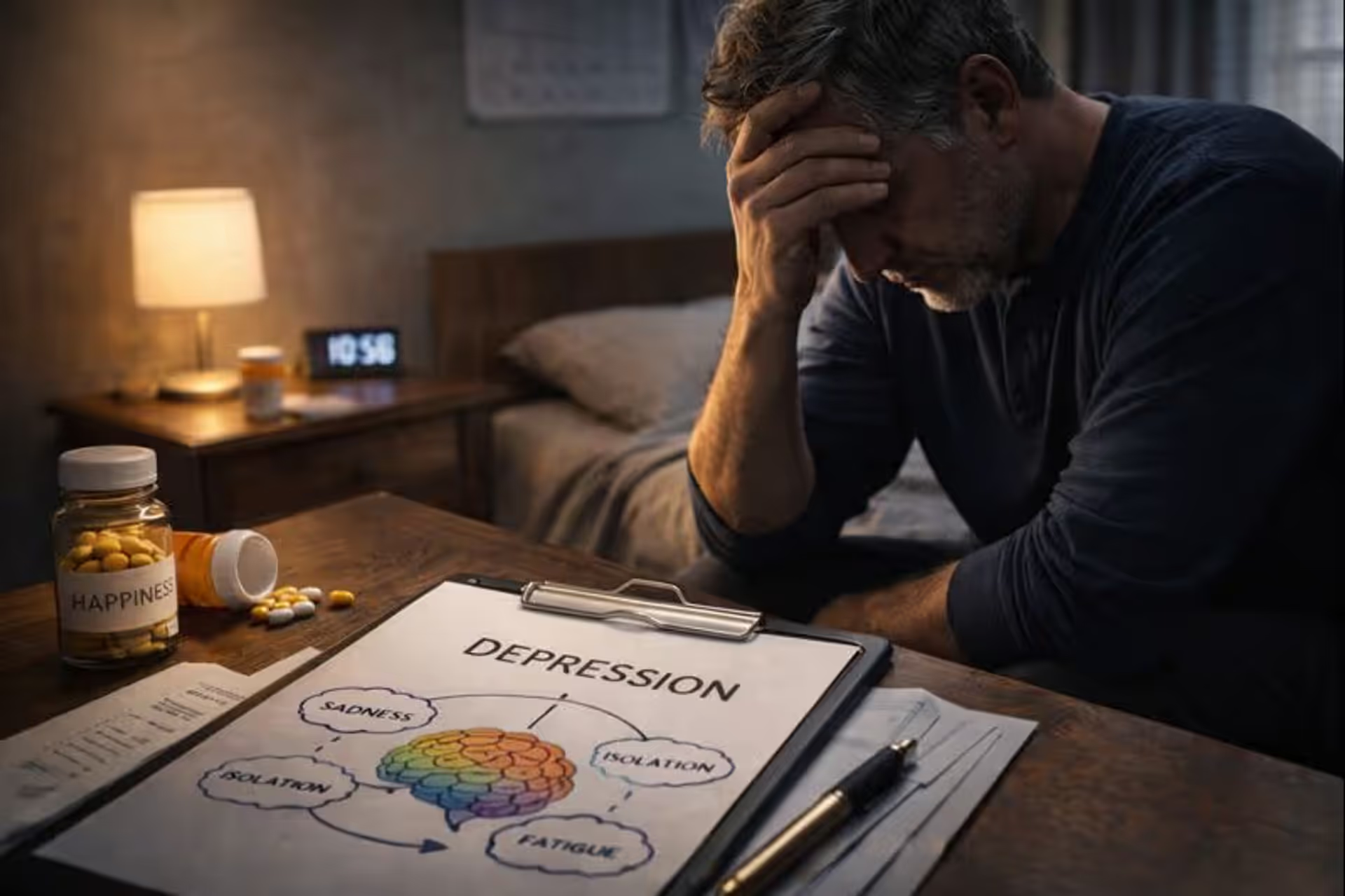

There is a quiet devastation that settles into the bones of someone living with depression—a heaviness that transcends the ordinary valleys of human emotion. When someone mentions feeling depressed, well-meaning friends and family often respond with suggestions to "cheer up," "think positive," or "just get out more." These responses, though typically rooted in genuine care, reveal a profound misunderstanding of what depression actually entails. Depression is not sadness wearing a different coat. It is not a mood that lifts with a sunny afternoon or a good night's sleep. It is a legitimate medical condition that rewires the brain's architecture, distorts perception, and fundamentally alters how a person experiences existence itself.
The conflation of depression with ordinary sadness has done immeasurable harm to those who suffer from this condition. It minimizes their struggle, delays their access to depression help, and perpetuates a stigma that keeps countless individuals trapped in silent suffering. Understanding the distinction between sadness and clinical depression is not merely an academic exercise—it is an essential step toward fostering compassion, encouraging treatment-seeking behavior, and ultimately saving lives. This comprehensive exploration aims to illuminate the multifaceted nature of depression, dismantle pervasive myths, and provide a roadmap toward genuine healing and sustained mental wellness.
Throughout this article, we will examine the full spectrum of depressive symptoms, explore the biological, psychological, and social factors that contribute to the condition, address the damaging role of stigma, and outline the evidence-based treatment approaches that offer real hope for recovery. Whether you are personally struggling, supporting someone who is, or simply seeking deeper understanding, this guide provides the knowledge foundation necessary for meaningful engagement with one of the most prevalent and misunderstood conditions of our time.
The Fundamental Distinction: Sadness Versus Clinical Depression
Sadness belongs to the universal repertoire of human emotions. It arrives in response to loss, disappointment, rejection, or the countless small griefs that punctuate daily life. A person experiencing sadness can typically identify the catalyst—a broken relationship, a missed opportunity, the death of a beloved pet, a cherished dream unrealized. The emotional weight, though sometimes crushing in the moment, eventually dissipates. Life's pleasures gradually reassert themselves. Laughter returns. Connection feels possible again. The fundamental capacity for joy remains intact, even if temporarily obscured.
Depression operates according to entirely different rules. According to the National Institute of Mental Health (NIMH), major depressive disorder involves persistent feelings of sadness, emptiness, or hopelessness that last for at least two weeks and significantly impair daily functioning. But this clinical definition, while accurate, barely scratches the surface of the lived experience. Depression is not simply sadness that overstays its welcome—it is a fundamental shift in how the brain processes information, experiences pleasure, and generates motivation. It represents a systemic breakdown of the neurological and psychological systems that typically enable engagement with life.
Depression is the flaw in love.
— Andrew Solomon, The Noonday Demo
Where sadness coexists with hope, depression often obliterates it entirely. Where sadness allows for distraction and momentary relief, depression infiltrates every waking moment with a gray film that dulls colors, mutes sounds, and transforms formerly beloved activities into exhausting obligations. The depressed individual may not even feel sad in any recognizable sense—instead, they describe numbness, emptiness, or a profound disconnection from their own lives, as though watching themselves from behind thick glass. This phenomenological distinction matters enormously: many people fail to recognize their depression precisely because it does not match their expectations of what "feeling depressed" should entail.
The temporal dimension further distinguishes these experiences. Sadness is inherently time-limited. Even profound grief, while never fully resolved, gradually transforms and integrates into ongoing life. Depression, by contrast, seems to exist outside time—a perpetual present of suffering that stretches endlessly in both directions, making it impossible to remember feeling any other way or to imagine ever feeling different. This temporal distortion contributes to hopelessness, as the depressed individual cannot access memories of better times or envision a future worth living for.
Beyond the Emotional: The Full Spectrum of Depressive Symptoms
Popular understanding tends to reduce depression to its emotional components—the crying, the melancholy, the visible distress. Yet depression manifests across cognitive, physical, and behavioral dimensions in ways that often go unrecognized by both sufferers and observers. A comprehensive understanding of mental health requires acknowledging this symptom complexity. Many individuals experiencing depression fail to seek help because their experience does not match the stereotypical image of constant crying and overt despair. Recognizing the full symptom spectrum enables earlier identification and intervention.
Emotional and Mood-Related Symptoms
The emotional landscape of depression extends far beyond sadness. Many individuals experience what clinicians call anhedonia—the inability to derive pleasure from activities that once brought joy. A passionate gardener suddenly abandons their plants. A devoted parent feels nothing when their child achieves something remarkable. A music lover listens to favorite songs and feels only emptiness where appreciation once lived. This pleasure deficit represents one of depression's cruelest features: it does not simply add suffering but subtracts the very experiences that make life worth living. Without access to pleasure, the motivation to engage with life collapses, creating a downward spiral of withdrawal and deepening depression.
Irritability frequently accompanies depression, particularly in men and adolescents, though this presentation often goes undiagnosed because it does not match stereotypical expectations. The depressed individual may snap at loved ones, experience road rage, or feel perpetually on edge and easily provoked. This irritability stems from the cognitive and emotional resources that depression depletes—when simply existing requires enormous effort, minor frustrations become unbearable provocations. Relationships suffer as loved ones bear the brunt of this irritability without understanding its source, often leading to conflict that further isolates the depressed individual.
Guilt and worthlessness constitute another emotional hallmark of depression. The depressed mind excels at self-condemnation, transforming ordinary mistakes into evidence of fundamental inadequacy. Past failures replay endlessly on an internal loop. Present circumstances become personal indictments. The individual may believe they burden everyone around them, that they contribute nothing of value to their families or communities, that their absence would improve others' lives—a dangerous thought pattern that can escalate toward suicidal ideation. This guilt often extends to the depression itself, as individuals blame themselves for being unable to "snap out of it," adding another layer of suffering atop the already unbearable.
Hopelessness pervades the depressive experience in ways that distinguish it from ordinary pessimism. This is not simply expecting bad outcomes—it is a profound certainty that nothing will ever improve, that suffering is permanent, and that efforts toward change are ultimately futile. This hopelessness represents one of depression's most dangerous features, as it undermines engagement with treatment and increases suicide risk. Recognizing hopelessness as a symptom rather than an accurate assessment of reality becomes crucial for both sufferers and supporters.
Cognitive Symptoms: When Thinking Itself Becomes Difficult
Depression fundamentally impairs cognitive function in ways that ripple through professional performance, decision-making, and daily task completion. Concentration deteriorates markedly. Reading a book, following a conversation, or completing work assignments becomes exhausting labor rather than automatic process. The individual may read the same paragraph repeatedly without retaining its content, or find their mind wandering during important meetings despite genuine effort to focus. Short-term memory falters. The individual forgets appointments, misplaces essential items, and struggles to retain new information that would normally be absorbed effortlessly.
Decision-making capacity diminishes as well, sometimes to a degree that observers find difficult to comprehend. Choices that once seemed straightforward—what to eat for dinner, which route to take to work, how to respond to an email, whether to accept a social invitation—become paralyzing dilemmas that consume disproportionate energy. This executive dysfunction stems from depression's impact on the prefrontal cortex, the brain region responsible for planning, prioritizing, and executing goal-directed behavior. When this system falters, even simple decisions feel overwhelming, and complex planning becomes virtually impossible.
Perhaps most insidiously, depression distorts thought patterns themselves. Cognitive distortions—systematic errors in thinking—become the depressed mind's default operating system:
- Catastrophizing: Assuming the worst possible outcome in any situation, regardless of probability or evidence
- All-or-nothing thinking: Viewing experiences in absolute terms with no middle ground—if something is not perfect, it is a complete failure
- Mental filtering: Focusing exclusively on negative aspects while ignoring or dismissing positives
- Personalization: Attributing external events to personal failing, as though everything bad that happens is somehow one's fault
- Fortune telling: Predicting negative outcomes with unwarranted certainty, then treating these predictions as established facts
- Disqualifying the positive: Finding reasons why positive experiences "don't count" or were merely flukes
These distortions feel like clear-eyed assessments of reality rather than symptoms of illness, which makes them particularly resistant to challenge. The depressed individual genuinely believes their bleak interpretations represent truth, not pathology. Attempts by others to offer alternative perspectives often feel dismissive or naive, as though the supporter simply does not understand how things really are. This creates a significant barrier to both self-help and professional treatment, as cognitive distortions must be recognized before they can be addressed.

Author: Evan Miller;
Source: psychology10.click
Physical Symptoms: The Body Bears the Burden
Depression inhabits the body as thoroughly as it inhabits the mind, manifesting in ways that often bring individuals to medical attention before they recognize their emotional symptoms. Sleep disturbances rank among the most common physical manifestations—insomnia that leaves individuals staring at ceilings for hours, or hypersomnia that transforms sleep into an escape mechanism, with some sufferers sleeping twelve, fourteen, or even sixteen hours daily yet waking exhausted. Sleep architecture itself changes in depression, with alterations in REM patterns and decreased restorative deep sleep. This sleep disruption then exacerbates other symptoms, creating a feedback loop that perpetuates the depressive state.
Appetite changes frequently accompany depression, though they manifest differently across individuals. Some individuals lose all interest in food, dropping weight rapidly as eating feels pointless or physically unappealing. Food loses its taste; the effort required to prepare and consume meals exceeds available energy. Others turn to food for comfort, engaging in emotional eating patterns that contribute to weight gain and subsequent self-criticism. Neither pattern reflects conscious choice—both emerge from depression's disruption of the brain systems regulating hunger, satiety, and reward. Significant weight changes in either direction warrant attention as potential depression indicators.
Unexplained physical pain represents another frequently overlooked symptom that often leads individuals to seek medical care for what they do not recognize as depression. Headaches, back pain, muscle aches, joint discomfort, and digestive problems often accompany depression, sometimes serving as the primary presenting complaint when individuals seek medical attention. The relationship between depression and pain is bidirectional—chronic pain increases depression risk, while depression amplifies pain perception and decreases pain tolerance. This connection likely reflects shared neurobiological pathways, as the brain systems processing emotional and physical pain overlap substantially.
Fatigue and psychomotor changes round out the physical symptom picture in ways that significantly impact daily functioning. Depressed individuals often describe profound exhaustion unrelieved by rest—a bone-deep weariness that makes even simple tasks feel Herculean. Getting out of bed requires enormous effort. Showering feels like climbing a mountain. Walking across a room exhausts energy reserves. Some experience psychomotor retardation, moving and speaking noticeably slowly, as though operating through molasses. Others manifest psychomotor agitation, unable to sit still, constantly fidgeting, pacing, or wringing hands. Both patterns reflect depression's impact on the motor systems and should be recognized as symptoms rather than character traits.
Behavioral Symptoms: How Depression Alters Action
Depression changes what people do as surely as it changes how they feel and think, and these behavioral changes often provide the most visible evidence of the condition to outside observers. Social withdrawal typically accelerates as the condition progresses. Invitations get declined. Phone calls go unreturned. Emails pile up unanswered. The individual retreats from relationships that once provided meaning and connection, not from lack of caring but from depleted capacity for social engagement. Interactions that formerly felt energizing now feel draining; the effort required to maintain a social facade exceeds available resources.
Self-care deteriorates in ways both subtle and dramatic that reflect depression's erosion of the self-regard necessary for maintenance behaviors. Personal hygiene may suffer—showers become infrequent, laundry piles accumulate, teeth go unbrushed, hair unwashed. Living spaces fall into disarray as cleaning feels pointless and organizing requires unavailable executive function. These changes reflect neither laziness nor character failure but rather the motivational deficits inherent to depression. When simply surviving requires enormous effort, maintaining appearances becomes an unaffordable luxury. Unfortunately, deteriorating self-care often triggers shame that deepens withdrawal and delays help-seeking.
Substance use often increases as individuals seek relief from unrelenting distress through whatever means seem available. Alcohol, cannabis, prescription medications, and other substances may temporarily numb emotional pain, providing a few hours of respite from the relentless suffering. However, they ultimately exacerbate depression through their effects on brain chemistry, sleep architecture, and overall health, while potentially creating additional problems including dependence and addiction. This self-medication behavior represents an understandable, if ultimately counterproductive, attempt to manage overwhelming symptoms in the absence of more effective alternatives.
Work performance typically suffers as cognitive impairment, fatigue, and motivational deficits impact professional functioning. Tasks take longer to complete. Quality decreases. Deadlines get missed. The individual may call in sick frequently or struggle to maintain consistent attendance. These work-related difficulties often create additional stress and guilt that worsen depression, while also threatening financial security and professional advancement. In severe cases, job loss may result, removing structure and purpose from daily life while adding economic hardship to an already overwhelming burden.
The Stigma Problem: Why Depression Remains Misunderstood
Despite decades of public education campaigns, celebrity disclosures, and increased media attention, stigma surrounding depression persists with remarkable tenacity, creating barriers to treatment and recovery that compound the condition's already substantial burden. This stigma manifests in multiple forms—public stigma from others, self-stigma internalized by sufferers, and structural stigma embedded in institutions and policies. Each form creates obstacles to seeking depression help and achieving optimal outcomes, making stigma reduction an essential component of any comprehensive approach to this condition.
Public stigma encompasses the negative attitudes, stereotypes, and discriminatory behaviors directed toward individuals with depression and other mental health conditions. Research consistently demonstrates that people with mental health conditions face prejudice in employment, with studies showing decreased callback rates for job applicants who disclose mental health histories. Housing discrimination occurs when landlords refuse to rent to individuals with psychiatric histories. Healthcare itself can be compromised when providers minimize or dismiss complaints from individuals labeled with mental health diagnoses, attributing physical symptoms to psychological causes without adequate evaluation.
Social relationships suffer from public stigma as well. Friends may distance themselves, uncomfortable with the topic or uncertain how to help. Family members may express frustration or disbelief, questioning whether the depression is "real" or suggesting the individual should simply try harder. Romantic partners may withdraw emotional support or issue ultimatums. These relational consequences compound depression's inherent isolation, removing precisely the social support that recovery requires while confirming the depressed individual's fears of burdening others.
Self-stigma emerges when individuals internalize these negative societal attitudes, coming to believe that their depression reflects personal failure rather than medical illness. This internalization produces shame, reduced self-esteem, and reluctance to disclose symptoms or seek treatment. Many depressed individuals spend years suffering in silence, convinced that admitting their struggle would confirm their worthlessness, invite rejection from loved ones, or damage their professional reputations. This concealment delays treatment, allowing depression to deepen and become more entrenched, while creating additional psychological burden from the effort of maintaining a facade of normalcy.
Common misconceptions perpetuate this stigma and must be explicitly addressed:
- "Depression is a choice or character weakness." This myth ignores overwhelming evidence that depression involves neurobiological changes beyond conscious control, including alterations in brain structure, function, and chemistry that no amount of willpower can directly modify.
- "People with depression just need to try harder." This harmful belief suggests willpower alone should suffice, ignoring that depression impairs the very brain systems responsible for motivation, effort, and persistence. Telling a depressed person to try harder is like telling someone with a broken leg to walk faster.
- "Depression isn't a real illness." Brain imaging studies, genetic research, biomarker findings, and treatment response data all confirm depression's biological reality. It is as "real" as diabetes, heart disease, or any other medical condition.
- "Medication is a crutch or cop-out." Psychiatric medications address neurochemical abnormalities just as diabetes medications address insulin problems—neither represents weakness, and both represent appropriate medical treatment for medical conditions.
- "Talking about depression makes it worse." Evidence actually supports the opposite—appropriate discussion facilitates help-seeking, reduces isolation, and enables connection. Silence perpetuates suffering; conversation opens pathways to support.
Combating stigma requires sustained effort across multiple fronts: education that emphasizes depression's biological basis and treatability, contact with individuals who have recovered and can demonstrate that depression need not define one's life, language changes that separate people from their diagnoses (a person "has depression" rather than "is depressed"), and policy reforms that ensure equitable treatment of mental and physical health conditions in insurance coverage, workplace accommodations, and healthcare delivery.
Understanding the Causes: A Biopsychosocial Perspective
No single factor causes depression. Rather, the condition emerges from complex interactions among biological vulnerabilities, psychological patterns, and social circumstances. This biopsychosocial model, now standard in psychiatric understanding, explains both why depression develops and why identical treatments do not work equally well for everyone. Understanding these contributing factors helps both sufferers and supporters make sense of the condition while informing treatment selection and recovery planning.
Biological Factors
Genetics play a substantial role in depression risk, though the relationship is probabilistic rather than deterministic. Having a first-degree relative with depression approximately doubles one's likelihood of developing the condition. Twin studies suggest heritability estimates between 40% and 50%, meaning genetic factors account for roughly half of depression's causation, with environmental factors accounting for the remainder. However, no single "depression gene" exists—rather, many genetic variants each contribute small increments of risk, interacting with each other and with environmental factors in complex ways that researchers are still working to understand.
Neurochemical factors have dominated depression research and treatment development for decades. The monoamine hypothesis, which proposes that depression results from deficiencies in neurotransmitters like serotonin, norepinephrine, and dopamine, guided development of antidepressant medications and remains influential. While this model has proven overly simplistic—depression involves far more than neurotransmitter levels—neurotransmitter systems clearly participate in depression's pathophysiology. The effectiveness of medications that target these systems demonstrates their involvement, even if the precise mechanisms remain incompletely understood.
Neuroimaging research has revealed structural and functional brain differences in depressed individuals that illuminate the biological substrate of the condition. The prefrontal cortex, hippocampus, and amygdala show particular involvement. The prefrontal cortex, crucial for emotion regulation, executive function, and goal-directed behavior, often displays reduced activity and volume in depression. The hippocampus, important for memory, context processing, and stress response regulation, may shrink with prolonged depression, potentially contributing to the cognitive symptoms discussed earlier. The amygdala, the brain's alarm system, often shows hyperactivity, contributing to the heightened threat perception, anxiety, and negativity bias characteristic of depressive states.
The hypothalamic-pituitary-adrenal (HPA) axis, which governs stress response, frequently dysregulates in depression in ways that create a self-perpetuating cycle. Chronic stress elevates cortisol levels, and elevated cortisol can damage hippocampal neurons and perpetuate depressive symptoms while impairing the brain's ability to regulate the stress response itself. This stress-depression connection helps explain why adverse life events so often precede depressive episodes and why stress management plays such an important role in both treatment and prevention.
Inflammatory processes have emerged as another biological factor of considerable interest. Elevated inflammatory markers appear in many depressed individuals, and chronic inflammation may contribute to neurobiological changes underlying depression. This finding has spurred investigation of anti-inflammatory approaches as potential treatments and has also illuminated connections between depression and other inflammatory conditions including cardiovascular disease, autoimmune disorders, and chronic pain syndromes.
Psychological Factors
Early life experiences shape depression vulnerability through their impact on developing brain systems and psychological patterns in ways that persist throughout life. Childhood trauma—including abuse, neglect, household dysfunction, and loss of caregivers—substantially increases depression risk. These early adverse experiences alter stress response systems, making them more reactive and less able to return to baseline after activation. They shape attachment patterns, often creating insecure attachment styles that complicate adult relationships and reduce access to social support. They establish cognitive frameworks, often including core beliefs about oneself as unlovable, incompetent, or fundamentally flawed that serve as templates for interpreting subsequent experiences.
Cognitive styles also influence depression susceptibility independently of early experiences. Individuals prone to rumination—repetitively dwelling on negative thoughts, feelings, and problems without moving toward solution—face elevated depression risk. Rumination maintains and amplifies negative mood states while interfering with effective problem-solving. Those who exhibit learned helplessness—believing their actions cannot influence outcomes—similarly show heightened vulnerability, as this belief pattern undermines motivation to engage with challenges or seek help. Negative attributional styles, in which individuals explain bad events as personal (my fault), permanent (will never change), and pervasive (affects everything), also predispose toward depression by transforming ordinary setbacks into evidence of unchangeable inadequacy.
Personality traits interact with depression in complex ways that researchers continue to investigate. Neuroticism, characterized by tendency toward negative emotions, emotional instability, and sensitivity to threat, represents a consistent risk factor. High neuroticism individuals experience more frequent and intense negative emotions, are more likely to interpret ambiguous situations negatively, and show greater vulnerability to stress. Perfectionism, particularly when it involves harsh self-criticism for perceived failures, also increases vulnerability by setting impossible standards whose inevitable unmet expectations trigger self-condemnation. These traits likely interact with biological predispositions and environmental stressors rather than operating independently, illustrating the integrated nature of the biopsychosocial model.
Social and Environmental Factors
Social circumstances profoundly influence depression risk in ways that illuminate the condition as not purely individual but deeply connected to social context and structural factors. According to the Centers for Disease Control and Prevention (CDC), social determinants including poverty, unemployment, food insecurity, housing instability, social isolation, and discrimination all increase depression prevalence. These factors create chronic stress, limit access to resources including healthcare and healthy food, and reduce opportunities for positive experiences and achievements that buffer against depression. Economic inequality itself appears to increase depression rates across populations, suggesting that relative deprivation matters beyond absolute resource levels.
Relationship quality matters tremendously for depression risk and recovery. Social support protects against depression, while interpersonal conflict, loneliness, and lack of close relationships increase risk substantially. Marital problems, including both overt conflict and emotional disconnection, represent potent depression triggers. Loss of loved ones through death, divorce, or relationship dissolution frequently precipitates depressive episodes, particularly when losses are unexpected or involve complicated grief. Social rejection, bullying, and exclusion cause psychological wounds that can persist long after the immediate events, sometimes becoming incorporated into core beliefs about self-worth and lovability.
Life events—particularly losses and major transitions—frequently precipitate depressive episodes even in individuals without prior history. Bereavement, divorce, job loss, serious illness diagnosis, financial crisis, and relocations all carry elevated depression risk. These events matter not just because of their objective difficulty but because of how individuals appraise them and what resources they have for coping. An event that one person navigates successfully may trigger depression in another depending on its meaning, the individual's vulnerability factors, and the availability of support.
The Crucial Role of Emotional Support
While professional treatment remains essential for clinical depression, emotional support from relationships and communities provides an irreplaceable foundation for recovery that treatment alone cannot replicate. Depression isolates. It whispers that no one cares, that reaching out would burden others, that suffering in silence is the noble path. Counteracting these distortions requires consistent, patient presence from those who care—presence that demonstrates through action what depression denies through distortion.
It is hopelessness even more than pain that crushes the soul.
— William Styron, Darkness Visible
Family members and close friends occupy a unique position in the support network that professionals cannot duplicate. Their daily proximity allows them to notice changes that might escape professional observation during periodic appointments. They can provide practical assistance—preparing meals, helping with childcare, managing household tasks, accompanying the individual to appointments—that enables engagement with treatment when depression has depleted capacity for self-care. Most importantly, they can offer the unconditional acceptance that combats depression's pervasive message of worthlessness. Continued presence despite the individual's withdrawal, patience despite their irritability, caring despite their inability to reciprocate—these gifts accumulate over time, gradually eroding depression's lies about being unlovable and alone.
Effective emotional support requires navigating delicate terrain without clear maps. Supporters must validate suffering without reinforcing hopelessness—acknowledging that depression is real and painful while maintaining faith in recovery. They must encourage action without demanding impossible feats—gently suggesting a brief walk while accepting when even that feels beyond reach. They must maintain their own wellbeing while remaining present for someone whose condition may not improve for weeks or months, requiring patience that extends beyond what most relationships routinely demand. This balance challenges even the most loving relationships and often benefits from guidance and support for the supporters themselves.
Support groups—whether in-person or online—provide unique benefits that complement family support in ways that emerge from shared experience. Connecting with others who truly understand the depression experience reduces isolation and shame in ways that support from those who have not experienced depression cannot fully achieve. Hearing recovery stories offers hope grounded in reality—proof that others have survived what currently feels unsurvivable. Exchanging practical coping strategies provides concrete tools tested in the crucible of actual experience. These peer connections normalize the experience and demonstrate that depression, however overwhelming, can be survived and transcended by people who once felt as hopeless as any current sufferer.
Community-level support also matters in ways that extend beyond individual relationships. Workplaces that accommodate mental health needs, provide employee assistance programs, and foster cultures where disclosure does not risk career consequences contribute to recovery and prevention. Religious and spiritual organizations that reduce stigma, offer pastoral counseling, and provide community connection support members' mental wellness. Neighborhoods that foster connection through design and programming reduce the isolation that feeds depression. When depression is met with understanding rather than judgment across social contexts, individuals feel safer seeking help and more supported throughout recovery.
Professional Treatment: Therapy Options and Evidence-Based Approaches
Depression is highly treatable. The American Psychological Association emphasizes that effective treatments exist and that most individuals experience significant improvement with appropriate care. Understanding the range of therapy options empowers individuals to make informed decisions, advocate for themselves in healthcare settings, and persist through the trial-and-error process that sometimes characterizes treatment optimization.
Psychotherapy Approaches
Cognitive Behavioral Therapy (CBT) ranks among the most extensively researched and effective depression treatments, with decades of evidence supporting its efficacy across diverse populations and settings. CBT targets the cognitive distortions and behavioral patterns that maintain depression through systematic skill building and practice. Patients learn to identify automatic negative thoughts—the rapid, often barely conscious interpretations that trigger emotional responses. They evaluate these thoughts for accuracy, identifying the cognitive distortions involved and generating more balanced alternatives supported by evidence. They also engage in behavioral activation—gradually reintroducing pleasurable and meaningful activities despite low motivation. Research consistently demonstrates CBT's efficacy, with effects that often persist after treatment ends, providing skills that protect against relapse.
Interpersonal Therapy (IPT) focuses on relationship difficulties that contribute to depression, based on recognition that depression both emerges from and impacts interpersonal functioning. IPT addresses four primary areas: grief that has not resolved naturally, role disputes involving conflicts with significant others, role transitions requiring adaptation to major life changes, and interpersonal deficits involving longstanding difficulties forming and maintaining relationships. By improving communication skills, resolving relational conflicts, processing losses, and building social support networks, IPT reduces depressive symptoms while creating interpersonal resources that protect against relapse.
Behavioral Activation (BA) represents a focused approach that emphasizes activity engagement as the primary mechanism of change. Depression creates a vicious cycle—reduced activity leads to fewer rewarding experiences, which deepens depression, which further reduces activity, and so on in an accelerating spiral of withdrawal and deterioration. BA breaks this cycle through systematic scheduling of valued activities, careful monitoring of mood-activity relationships to identify what actually improves mood versus what depression predicts will help, and problem-solving around barriers to engagement. BA's relative simplicity makes it accessible across settings and populations, and research supports its effectiveness as either standalone treatment or component of broader interventions.
Psychodynamic therapy explores how past experiences, particularly early relationships, shape current emotional patterns and relationship difficulties. This approach may particularly benefit individuals whose depression connects to unresolved conflicts, complicated grief, longstanding relational patterns, or issues of identity and meaning that more symptom-focused approaches do not fully address. While research evidence is less extensive than for CBT, psychodynamic approaches show meaningful effectiveness for many individuals, and some evidence suggests particularly strong effects on depression's tendency toward recurrence.
Mindfulness-Based Cognitive Therapy (MBCT) combines cognitive therapy principles with mindfulness meditation practices that cultivate present-moment awareness without judgment. Originally developed for relapse prevention in individuals with recurrent depression, MBCT teaches individuals to observe their thoughts as mental events rather than literal truths, recognize depressive thought patterns early before they escalate, and disengage from rumination through attentional redirection. Research supports its efficacy, particularly for preventing recurrence in individuals with multiple prior episodes—a population at high risk for future episodes.

Author: Evan Miller;
Source: psychology10.click
Medication Options
Antidepressant medications address the neurobiological dimensions of depression by modulating neurotransmitter systems involved in mood regulation. Several medication classes exist, each working through somewhat different mechanisms that may be more or less suited to individual patients:
- Selective Serotonin Reuptake Inhibitors (SSRIs): The most commonly prescribed antidepressants, including fluoxetine (Prozac), sertraline (Zoloft), escitalopram (Lexapro), citalopram (Celexa), and paroxetine (Paxil). Generally well-tolerated with a favorable side effect profile, though common side effects include gastrointestinal symptoms, sexual dysfunction, and initial anxiety or jitteriness.
- Serotonin-Norepinephrine Reuptake Inhibitors (SNRIs): Including venlafaxine (Effexor), duloxetine (Cymbalta), and desvenlafaxine (Pristiq). May be particularly helpful when depression involves significant fatigue, pain, or inadequate response to SSRIs.
- Atypical antidepressants: A diverse category including bupropion (Wellbutrin), which works on dopamine and norepinephrine and may be preferred when sexual side effects are a concern; mirtazapine (Remeron), which can help with sleep and appetite; and others with varied mechanisms.
- Tricyclic antidepressants and MAOIs: Older medications less commonly used as first-line treatments due to side effects and, for MAOIs, dietary restrictions and drug interactions. However, they remain valuable for treatment-resistant cases and may sometimes succeed where newer medications have failed.
Medication selection involves considering symptom profile, side effect tolerability, prior treatment response, family member response to specific medications, and individual factors like other medical conditions and concurrent medications. Finding the right medication often requires patience—most antidepressants take four to six weeks to achieve full effect, and initial trials may not succeed. However, persistence typically yields an effective regimen, and options exist for those who do not respond to initial treatments.
Combined Treatment
For moderate to severe depression, combining psychotherapy and medication often produces superior outcomes to either approach alone, offering the advantages of both modalities in complementary fashion. Medication can provide symptom relief that enables engagement with therapy—when depression is severe, individuals may lack the cognitive capacity and energy that psychotherapy requires. Therapy builds skills and addresses contributing factors in ways medication cannot, providing tools for managing future symptoms and changing patterns that increase recurrence risk. Research supports combination treatment for moderate to severe depression, and clinical guidelines increasingly recommend this integrated approach.
Other Treatment Modalities
When standard treatments prove insufficient, additional options exist that offer hope for treatment-resistant cases. Electroconvulsive Therapy (ECT), despite persistent stigma rooted in historical abuses, represents one of the most effective treatments for severe depression, particularly when accompanied by psychotic features, catatonia, or imminent suicide risk requiring rapid response. Modern ECT differs dramatically from historical portrayals, with modifications including anesthesia, muscle relaxants, and precise electrical dosing that minimize side effects while preserving efficacy. For appropriate candidates, ECT can produce rapid, robust improvement when other treatments have failed.
Transcranial Magnetic Stimulation (TMS) uses magnetic fields to stimulate brain regions involved in mood regulation, particularly the prefrontal cortex. This non-invasive treatment has gained approval for treatment-resistant depression and offers an alternative for individuals who cannot tolerate medication or prefer non-pharmacological approaches. Treatment involves daily sessions over several weeks, with effects accumulating gradually.
Ketamine and its derivative esketamine represent newer options showing rapid antidepressant effects—sometimes within hours rather than weeks—that have generated considerable excitement and research attention. While long-term data remain limited and questions about optimal protocols continue, these treatments offer hope for individuals with treatment-resistant depression, particularly those with suicidal ideation requiring rapid intervention.
When to Seek Professional Help
Determining when depressed mood warrants professional attention can prove challenging, particularly since depression itself undermines accurate self-assessment and often includes beliefs that seeking help would be pointless or embarrassing. However, certain indicators clearly signal the need for professional evaluation and should prompt action regardless of the individual's own assessment of their situation.
Duration represents a key factor in distinguishing clinical depression from normal mood fluctuation. When depressed mood, loss of interest, or other symptoms persist for more than two weeks without meaningful improvement, professional consultation is warranted. Depression rarely resolves spontaneously once established, and early intervention improves outcomes while preventing the deepening and entrenchment that occur when depression goes untreated.
Functional impairment provides another important signal that depression has exceeded the bounds of normal experience. When depression interferes with work performance, relationship functioning, parenting capacity, self-care, or other important life domains, treatment becomes essential rather than optional. The inability to fulfill responsibilities, maintain important relationships, or care for oneself adequately indicates that depression has exceeded what self-help approaches can address and that professional intervention is needed.
Severity matters as well, independent of duration. Intense symptoms—overwhelming hopelessness, complete inability to experience any pleasure, severe sleep or appetite disruption, significant unintended weight change, persistent fatigue unrelieved by rest—warrant professional attention regardless of how long they have been present. These symptoms suggest a more serious depressive episode requiring active intervention rather than watchful waiting.
Suicidal thoughts demand immediate professional involvement and should be treated as psychiatric emergencies. Any thoughts of self-harm, wishes to die, sense that others would be better off without you, or active suicidal planning require urgent evaluation by qualified professionals. The National Suicide Prevention Lifeline (988) provides 24/7 crisis support for individuals in acute distress. Emergency departments can provide immediate evaluation and safety planning when risk is imminent.
Accessing professional help involves several potential pathways depending on resources, preferences, and urgency. Primary care physicians can diagnose depression, prescribe medication, provide initial counseling, and make referrals to mental health specialists when needed. Psychiatrists specialize in medication management and complex cases, offering expertise in psychopharmacology that general practitioners may lack. Psychologists, clinical social workers, and licensed professional counselors provide psychotherapy using evidence-based approaches. Community mental health centers offer services on sliding-scale fees for those with limited resources, and many areas have low-cost clinics or training clinics that provide quality care at reduced rates.
Supporting Someone with Depression
Watching someone you love struggle with depression evokes helplessness, frustration, grief, and sometimes resentment. The person you knew seems to have disappeared, replaced by someone withdrawn, irritable, or seemingly indifferent to things that once mattered. Understanding how to provide effective support benefits both the depressed individual and the relationship itself, while protecting the supporter from burnout that would compromise their ability to help.
Education forms the foundation of helpful support. Learning about depression—its symptoms, causes, and treatments—enables supporters to understand what their loved one experiences. This understanding fosters patience when symptoms cause difficult behaviors, reduces the tendency to take depression symptoms personally or interpret them as rejection, and provides a framework for recognizing progress even when improvement is gradual. Understanding that depression is a medical condition, not a choice or character flaw, transforms frustration into compassion.
Active listening without attempting to fix provides immense value that supporters often underestimate. The depressed individual often needs to express their pain without immediately receiving advice, solutions, or attempts to talk them out of their feelings. Reflecting back what you hear, acknowledging the difficulty, and simply being present communicates care more effectively than problem-solving, which can feel dismissive of the suffering being expressed. "That sounds incredibly difficult" often helps more than "Have you tried exercise?"
Encouraging professional treatment while respecting autonomy requires delicate balance between concern and control. Supporters can express concern, provide information about therapy options, offer practical assistance like researching providers or attending appointments, and gently persist when initial resistance arises. However, ultimately the decision to seek treatment belongs to the individual, and pressure that crosses into coercion typically backfires. Maintaining the relationship and continuing to offer support keeps the door open even when immediate acceptance of help is not forthcoming.
Maintaining the relationship matters even when depression makes connection difficult and one-sided. Continuing to issue invitations even when they are declined, reaching out regularly without demanding response, and finding low-pressure ways to spend time together all communicate that the relationship endures despite depression's interference. This consistency counteracts depression's message that no one cares and maintains connection that will facilitate recovery when the individual becomes ready to engage.
Setting boundaries remains essential for supporter wellbeing, even while maintaining presence and compassion. Supporting someone with depression requires significant emotional resources that deplete over time. Supporters must maintain their own self-care practices, seek their own support when needed from friends, family, or professionals, and recognize limits to what they can provide. Martyrdom benefits no one and often leads to burnout that compromises the supporter's ability to help over the long term. Loving someone with depression while maintaining one's own wellbeing requires conscious attention to both relationships.
Recovery and Long-Term Mental Wellness
Recovery from depression is possible. Most individuals who receive appropriate treatment experience significant symptom reduction, and many achieve full remission that returns them to their previous level of functioning and wellbeing. However, recovery is rarely linear—setbacks occur, progress fluctuates, and patience remains essential throughout the process. Understanding this trajectory helps both sufferers and supporters maintain hope during difficult phases while working steadily toward lasting improvement.
Relapse prevention warrants ongoing attention, particularly for individuals with recurrent depression who are at elevated risk for future episodes. According to the NIMH's comprehensive depression resources, maintaining treatment gains involves continuing therapy skills practice even after symptoms resolve, remaining alert to early warning signs that might indicate emerging episodes, addressing stress proactively before it triggers relapse, and in some cases continuing medication long-term rather than discontinuing once improvement occurs. Building a relapse prevention plan with professional guidance provides a roadmap for sustaining recovery.
Building a fulfilling life post-depression involves more than symptom management—it requires reconstructing meaning, reconnecting with values, and developing the life circumstances that support mental wellness. This process may involve career changes that align work with purpose, relationship work that repairs connections damaged during depression, lifestyle modifications that support brain health, or other substantial shifts that align life with what truly matters. Depression, while devastating, sometimes prompts reevaluation that leads to more authentic, meaningful living than existed before.
Self-compassion accelerates and sustains recovery in ways that research increasingly documents. Depression thrives on self-criticism; healing requires learning to treat oneself with the kindness, patience, and understanding typically reserved for others facing difficulty. This shift does not happen automatically—it requires deliberate practice—but it profoundly transforms the internal environment in which recovery occurs. Self-compassion does not mean lowering standards or excusing everything; it means responding to setbacks with encouragement rather than condemnation, treating oneself as a valued person deserving of care rather than a failure deserving of criticism.
A Path Forward: Hope Grounded in Reality
Depression is serious. It steals joy, impairs function, damages relationships, and in worst cases, claims lives. Minimizing its severity or pretending positivity alone can overcome it does a disservice to those who suffer. The darkness depression brings is real, and those experiencing it deserve acknowledgment rather than dismissal of their struggle.
Yet within this sobering reality lies genuine hope. Depression responds to treatment. Support helps. Recovery happens. Millions of people who once believed they would never feel anything again have rebuilt lives of meaning, connection, and even joy. Their stories do not minimize suffering—they demonstrate that suffering can end, that the darkness lifts, that what feels permanent eventually passes.
If you are struggling with depression, reaching out for depression help represents not weakness but courage. It is the first step on a path that, however long and difficult, leads somewhere better. You deserve support. You deserve treatment. You deserve a life not defined by depression's distortions but illuminated by your own recovered capacity for hope, connection, and meaning.
And if someone you love is struggling, your presence matters more than you know. Your patience through their darkness, your refusal to give up on them, your willingness to learn and grow alongside them—these gifts may prove decisive in their recovery. Depression lies to its victims, telling them no one cares. Your continued caring proves that lie wrong, again and again, until they can finally believe it.
Understanding depression beyond sadness means recognizing it as the serious, complex, treatable condition it is. It means extending compassion rather than judgment, seeking understanding rather than quick fixes, and believing in recovery even when recovery feels impossible. In this understanding lies the foundation for meaningful change—for individuals, for families, for communities, and for a society that still has much to learn about the minds it contains and the suffering it can help alleviate.