

Depression in Disguise
High-Functioning Depression Guide for Daily Life

Depression affects millions of people worldwide, yet not everyone experiences or expresses it the same way. While some individuals may exhibit classic symptoms of low energy, social withdrawal, and feelings of hopelessness that make daily functioning nearly impossible, others manage to mask their emotional struggles behind a facade of competence, productivity, and apparent success. These individuals are often referred to as "high-functioning" individuals with depression, meaning they appear to handle their daily responsibilities and maintain a successful outward life, all while silently suffering on the inside. The discrepancy between their external presentation and internal experience creates a unique set of challenges—both for the individuals themselves, who may struggle to acknowledge their condition, and for those around them who cannot see the pain hidden beneath the polished surface.
The phenomenon of high-functioning depression challenges our conventional understanding of mental illness and forces us to reconsider what depression actually looks like in practice. When most people imagine a depressed person, they picture someone who cannot get out of bed, who has stopped showering or eating properly, who has withdrawn completely from work and relationships. While this presentation certainly exists and represents a severe form of depression, it does not capture the full spectrum of how depression manifests. Many people living with significant depressive symptoms continue to perform at high levels professionally, maintain active social lives, and present themselves as capable and content—all while experiencing profound internal suffering that would qualify for clinical diagnosis if anyone could see past the mask.
In this article, we will explore the concept of high-functioning depression in depth, examining its warning signs, the psychological and social reasons why people mask their pain, and the importance of recognizing and addressing this often overlooked form of mental illness. We will investigate the neurobiological underpinnings of depression that persist regardless of functional status, the particular challenges that high-functioning individuals face in acknowledging and treating their condition, and the long-term consequences of leaving this form of depression untreated. Whether you're reading this for personal insight because you recognize yourself in this description, or to help a loved one whose struggles you suspect but cannot quite see, understanding how high-functioning depression works can offer new perspectives and foster compassion for those who are silently struggling beneath successful exteriors.
What Is High-Functioning Depression?
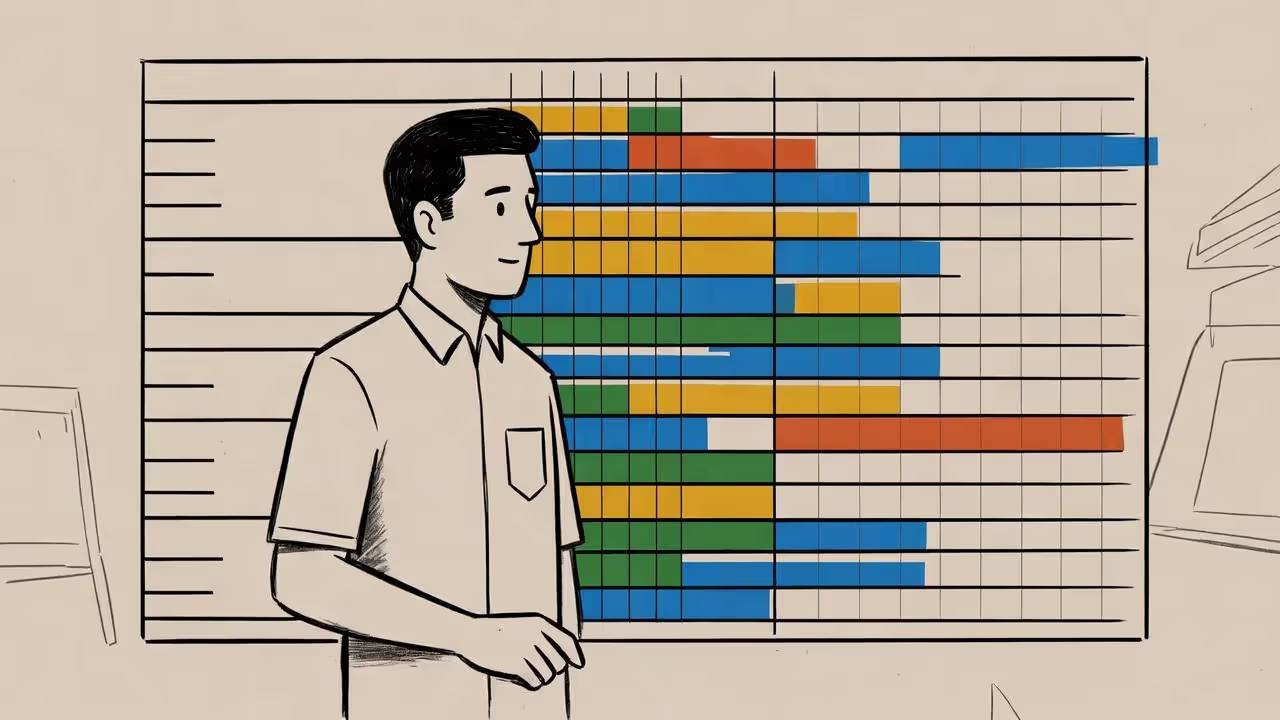
High-functioning depression, while not a formal medical diagnosis in the Diagnostic and Statistical Manual of Mental Disorders (DSM-5), is a term widely used to describe individuals who meet the clinical criteria for depression but still manage to fulfill their daily responsibilities—such as maintaining employment, engaging in social relationships, and upholding personal obligations—despite feeling emotionally burdened and experiencing significant psychological distress. The term captures an important clinical reality: that depression exists on a spectrum of severity and that functional impairment, while common in depression, is not universal or uniform across all cases.
Author: Evan Miller;
Source: psychology10.click
The concept is closely related to dysthymia, now officially called persistent depressive disorder, a long-lasting, lower-intensity form of depression characterized by a chronically depressed mood that persists for at least two years in adults. Individuals with dysthymia may never experience the severe, incapacitating episodes that characterize major depressive disorder, but they live with a persistent emotional heaviness—a grey fog that colors everything without necessarily stopping them from functioning. However, high-functioning depression can also include individuals experiencing more severe forms of depression, including major depressive disorder, while maintaining a high level of external function through sheer force of will, deeply ingrained habits of productivity, or psychological defense mechanisms that compartmentalize emotional pain away from daily tasks.
These individuals often excel in their professional or academic lives, receiving promotions, earning degrees, and achieving recognition that would seem incompatible with depression to outside observers. They maintain a social presence, attending events, engaging with friends and family, and appearing to enjoy life. They seem composed and in control, handling multiple responsibilities with apparent ease. But inside, they may be experiencing profound sadness that never fully lifts, anxiety that hums constantly beneath the surface, or hopelessness about the future that they cannot shake despite their achievements. Because their symptoms are not immediately visible—because they continue to show up and perform—high-functioning individuals with depression can often go undetected and untreated for years or even decades, the assumption being that someone who appears to be doing well must actually be doing well.
The most dangerous aspect of high-functioning depression is its invisibility. These individuals suffer in silence because their competence masks their pain, and both they and those around them mistake productivity for wellness. Achievement does not equal mental health.
— Dr. Margaret Wehrenberg
The internal experience of high-functioning depression involves a persistent disconnect between outer appearance and inner reality that can itself become a source of suffering. The person knows they are struggling but sees no reflection of that struggle in how others perceive them. Friends and colleagues tell them how well they're doing, how much they've accomplished, how together they seem—observations that feel deeply invalidating when the internal experience is one of barely holding on. This disconnect can lead to profound isolation, as the individual feels unable to reveal their true state for fear of not being believed, being told they have nothing to be depressed about, or losing the respect and admiration they have earned through their functioning. The mask of competence, initially a survival strategy, becomes a prison.
High-Functioning vs. Classic Depression
When we think of depression, we typically imagine someone who is bedridden, struggling to maintain basic self-care, and unable to handle daily responsibilities. This image reflects what might be called "classic" or severe depression—depression that has overwhelmed the individual's capacity to function and manifests in obvious, visible impairment. While this presentation certainly represents a significant portion of depression cases and demands immediate attention, high-functioning depression looks very different on the surface, even though the underlying neurobiological processes and emotional suffering may be remarkably similar.
A person with high-functioning depression may be successful in their career or academics, perhaps remarkably so. They may receive promotions, lead projects, excel in their field, and be regarded as high performers by supervisors and colleagues. Their depression does not prevent them from meeting deadlines, delivering quality work, or advancing professionally—at least not in ways that others can observe. This success may itself become a barrier to recognition of their depression, as others assume that someone performing at such a high level cannot possibly be suffering from a mental illness that is stereotypically associated with impaired function.
They may remain socially engaged, attending parties, participating in family gatherings, maintaining friendships, and appearing outwardly sociable. They laugh at jokes, contribute to conversations, remember birthdays, and show up for commitments. To casual observers—and even to closer friends—they seem like pleasant, engaged, normal people. The depression operates beneath the surface, expressing itself not through social withdrawal that others would notice but through the exhaustion felt after social events, the sense of performance and inauthenticity during interactions, and the loneliness that persists despite being surrounded by people.
From the outside, high-functioning individuals with depression may seem like they "have it all together," managing personal, professional, and financial responsibilities with apparent ease. Their homes are clean, their bills are paid, their appearance is maintained. They may even take on leadership roles, volunteer work, or additional responsibilities that speak to a capacity for managing life that seems incompatible with depression. The competence is real—these individuals truly are capable of high performance—but it coexists with genuine psychological suffering rather than replacing or disproving it.
Despite these external appearances, the internal experience of a high-functioning individual with depression is characterized by persistent sadness that colors their days, fatigue that makes every task feel like pushing through water, self-doubt that questions every accomplishment, and overwhelming feelings of inadequacy that contradict the external evidence of their success. The dissonance between how they feel internally and how they appear to others can exacerbate their sense of isolation and hopelessness. They may feel like frauds—successful on the outside but falling apart on the inside—and fear that if anyone saw who they really were beneath the competent exterior, respect would evaporate and relationships would collapse.
Why Do High-Functioning Individuals Mask Their Pain?

Author: Evan Miller;
Source: psychology10.click
There are several interconnected reasons why individuals with high-functioning depression may feel compelled to mask their pain, hiding their struggles even from people who care about them and might be able to help. These reasons are often rooted in social conditioning, cultural values, and psychological defense mechanisms that developed over years or decades, making it profoundly challenging for these individuals to seek help or even acknowledge their struggles to themselves.
Societal Expectations and Stigma
In many societies, productivity and success are highly valued—sometimes to the exclusion of almost everything else. The dominant cultural narrative equates worth with achievement, measuring people by their output rather than their experience. This ethos leads individuals to feel that their fundamental value as human beings is tied to what they accomplish, creating pressure to maintain productivity at all costs. Within this framework, admitting to feeling overwhelmed, sad, or anxious may be perceived as a sign of weakness, a character flaw, or evidence of inadequacy rather than a health condition requiring treatment.
High-functioning individuals, especially those in demanding professions like medicine, law, finance, or technology, often feel immense pressure to maintain a flawless image of competence and resilience. Their professional environments may implicitly or explicitly discourage acknowledgment of mental health struggles. Admitting that they are struggling mentally could threaten their reputation, making them seem less reliable or capable to colleagues and supervisors. It could impact job security, particularly in competitive fields where any perceived weakness might be exploited. It could affect social standing, altering how others perceive and treat them. The potential costs of disclosure feel enormous, while the benefits feel uncertain.
There remains significant stigma surrounding mental health despite progress in recent years. According to research, more than half of people with mental illness do not receive treatment, and stigma is consistently cited as a major barrier. This stigma can cause people to hide their depression, fearing judgment, pity, or altered treatment if they disclose their condition. For high-functioning individuals, the stigma may feel even more acute because they fear not being believed—being told that they can't really be depressed if they're still performing well, or that their problems are trivial compared to "real" depression that causes visible impairment.
Fear of Losing Control
Many high-functioning individuals are perfectionists or overachievers whose identities are deeply connected to their ability to maintain control over their lives and produce excellent results. Control represents safety for these individuals—a way of managing anxiety about an unpredictable world by imposing order and achieving mastery. For them, acknowledging their depression may feel like admitting a fundamental loss of control, which could be deeply uncomfortable and frightening, threatening the very foundation of their self-concept.
They may believe that by continuing to "power through"—by maintaining their performance despite their suffering—they can overcome their depression without having to confront it directly or submit to the vulnerability of asking for help. This attitude reflects both genuine resilience and problematic avoidance. While there is something admirable about persevering through difficulty, the strategy of ignoring emotional pain rarely leads to its resolution. Depression typically does not lift simply because one continues to function through it.
This attitude often leads to avoidance, where individuals try to suppress or ignore their feelings rather than addressing them head-on. Work becomes a refuge from emotional pain, a place where the rules are clear and success is measurable in ways that internal states are not. By staying busy, by filling every moment with tasks and achievements, the individual can postpone confrontation with feelings that seem overwhelming. Unfortunately, this avoidance can exacerbate depression over time, as suppressed emotions often intensify, and it increases the risk of eventual burnout or emotional breakdown when the strategy finally fails.
Emotional Detachment and Denial
Many high-functioning individuals with depression become experts at emotional detachment, learning to distance themselves from their emotions in order to cope with their responsibilities. This detachment often develops gradually over years, sometimes beginning in childhood in families where emotional expression was discouraged or where the child needed to be strong for others. The individual learns to set their feelings aside, to compartmentalize emotional pain away from the parts of themselves that need to function, and to operate on autopilot when necessary.
High-functioning depression often develops in people who learned early that their feelings were inconvenient, that they needed to be strong and capable regardless of how they felt inside. The mask becomes automatic—they may not even know they're wearing it anymore.
— Dr. Lindsay C. Gibson
They may dismiss their feelings as minor or unimportant, minimizing their significance because they haven't resulted in obvious impairment. "It's not that bad," they tell themselves, "I'm still functioning." This comparison to an imagined worse state—complete breakdown, hospitalization, inability to work—allows them to avoid taking their current pain seriously. As long as they continue to perform well in their daily lives, they can convince themselves that their emotional pain is manageable, irrelevant, or perhaps not even real.
This emotional detachment can evolve into outright denial, where individuals convince themselves that they are not "really" depressed because they are still functioning well in other areas of life. They may resist the label of depression, believing it applies only to people who cannot get out of bed, who have lost their jobs, who have stopped caring for themselves. Since they don't match that stereotype, they conclude they must not be depressed—must simply be going through a difficult period, must be tired, must be dealing with normal stress. As a result, they may avoid seeking professional help, further delaying treatment and recovery while the underlying condition persists or worsens.
Signs of High-Functioning Depression
Author: Evan Miller;
Source: psychology10.click
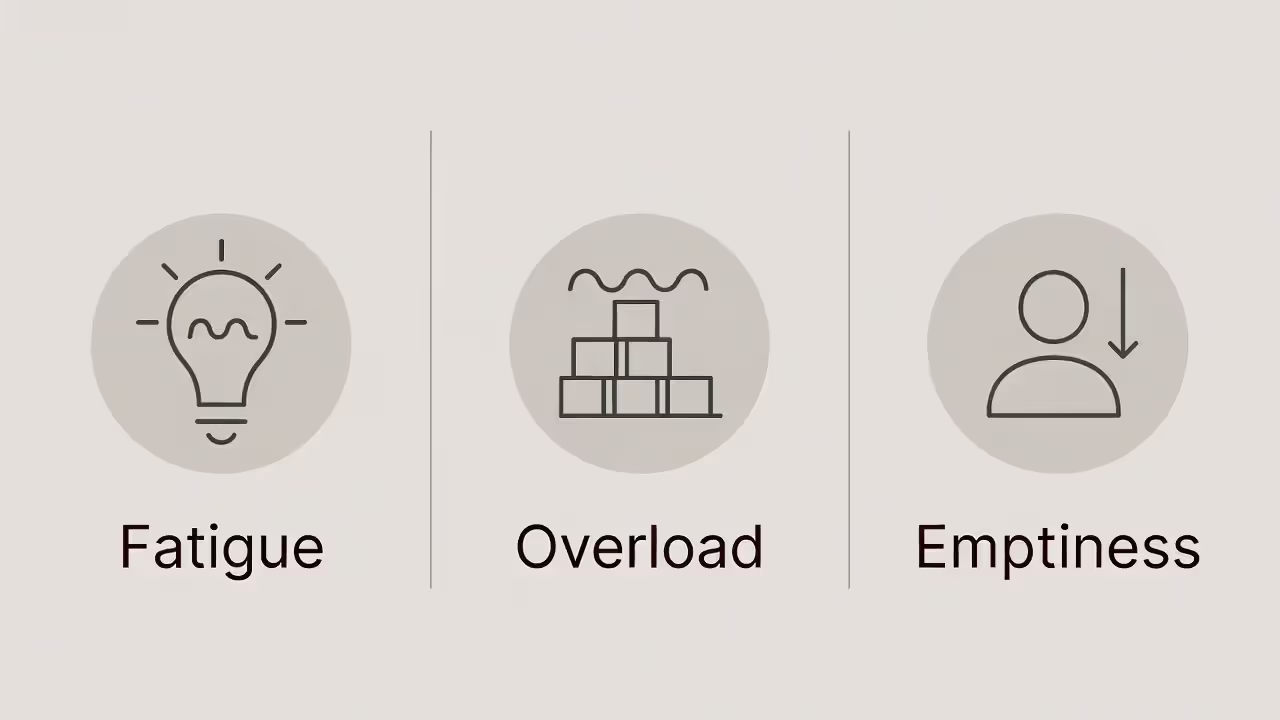
High-functioning depression can be difficult to spot because the external signs are often subtle or entirely absent—the individual continues to perform in ways that suggest wellness. However, there are several warning signs that can indicate a person is silently struggling, even if they appear to be thriving on the outside. These signs may be visible only in private moments, perceptible only to very close observers, or detectable only by the individuals themselves if they are honest with themselves about their experience.
Persistent Fatigue
One of the hallmark signs of high-functioning depression is a constant feeling of exhaustion that is disproportionate to actual activity levels. This fatigue persists even after a full night's sleep, even after weekends or vacations, even when there is no obvious physical explanation. It goes beyond mere tiredness—it's a deep, pervasive sense of weariness that lingers throughout the day and cannot be resolved through rest. The individual wakes up tired, moves through the day tired, and goes to bed tired, with no relief.
High-functioning individuals may push through this fatigue relentlessly, continuing to meet deadlines, fulfill social obligations, and maintain appearances. Their willpower overcomes their exhaustion day after day. But the effort required to maintain their performance when they feel so depleted leaves them emotionally drained, and the discrepancy between their energy levels and their output creates increasing strain. Over time, pushing through fatigue without addressing its cause accelerates the path toward burnout.
Perfectionism and Overworking
Many high-functioning individuals with depression cope by throwing themselves into their work, using productivity as both a distraction from emotional pain and a source of the external validation that their depression tells them they don't deserve. They may become perfectionists, setting unrealistically high standards for themselves in an attempt to maintain control or prove their worth to an internal critic that is never satisfied. Nothing they accomplish feels like enough; every achievement is immediately followed by a new, higher bar.
This overworking can serve as a temporary distraction from depressive symptoms—when absorbed in a challenging task, there is less mental space for sad or hopeless thoughts. However, the strategy carries significant costs. It often leads to burnout as the individual depletes their resources without replenishment. It prevents the self-reflection that might lead to insight about their depression. And it reinforces the belief that their worth depends on their productivity, making them more vulnerable to depression when they inevitably cannot maintain superhuman levels of performance.
This perfectionism can manifest in personal life as well, extending beyond work to encompass every domain. They might obsess over every detail of their appearance, home, relationships, and leisure activities. They constantly strive to present themselves as perfect to the outside world—successful, happy, in control—even if they are falling apart on the inside. The gap between the perfect image they project and the suffering they experience internally becomes another source of exhaustion and another reason they feel they cannot reveal their true state.
Emotional Numbness
People with high-functioning depression often report feeling emotionally numb or disconnected from their surroundings, as though watching their lives from behind glass. They may go through the motions of daily life—working, socializing, maintaining relationships, celebrating holidays, attending events—without feeling fully engaged or present. While they can perform the behaviors associated with happiness, they don't experience the emotions. They laugh without feeling joy, celebrate without feeling excitement, and connect without feeling closeness.
While they can appear outwardly cheerful or "fine"—learning to simulate the appropriate emotional responses—they often feel empty, hollow, or detached internally. Their smiles feel mechanical, their laughter hollow, their expressions of interest performative. This emotional numbness can be a way of coping with overwhelming sadness or anxiety—by shutting down their emotions, they protect themselves from fully experiencing their pain, allowing them to continue functioning. But this numbing is not selective; it prevents them from feeling not only pain but also joy, fulfillment, excitement, love, or genuine connection with others. Life becomes grey and flat, manageable but meaningless.
Social Withdrawal in Private
While high-functioning individuals with depression may continue to participate in social activities, maintaining the appearance of a normal social life, they often experience a deep sense of loneliness and disconnection from others that the activities do nothing to resolve. Social interaction feels effortful rather than nourishing, like a performance rather than a genuine connection. They may feel that no one truly knows them, because the person others interact with is the mask rather than the real self beneath.
After social events, they often withdraw and isolate themselves, preferring to be alone where they can drop their facade of competence and success. The energy required to maintain the mask in public leaves them depleted, and they need recovery time alone. They may cancel plans at the last minute, making excuses about work or fatigue. They may use work as a justification to avoid personal engagements, preferring the role-defined interactions of professional life to the more emotionally demanding expectations of friendship. They feel too emotionally drained to socialize genuinely, even though loneliness itself is one of the things that hurts.
Chronic Self-Doubt and Criticism
High-functioning individuals with depression often struggle with imposter syndrome—the persistent feeling that they are not as capable or successful as others perceive them to be, and that they will eventually be exposed as frauds. Despite concrete evidence of their achievements, despite promotions and praise and degrees, they may constantly doubt their abilities and attribute their success to luck, timing, or having fooled others rather than to genuine competence. They feel like they're always on the verge of failure, about to be found out, one mistake away from catastrophe.
This persistent self-doubt often creates a vicious cycle. The individual overcompensates for their perceived inadequacy by pushing themselves even harder, working longer hours, taking on more responsibilities, demanding more of themselves. This overcompensation produces achievements that still feel undeserved, while the effort depletes their resources and worsens their depression. The worse they feel, the harder they work to prove themselves; the harder they work, the more depleted they become; the more depleted, the worse they feel. Without intervention, this cycle can continue until complete collapse.
The Consequences of Ignoring High-Functioning Depression

Author: Evan Miller;
Source: psychology10.click
High-functioning depression is often misunderstood or dismissed—by others and by the individuals themselves—because the person appears to be coping well. The assumption is that if someone is still achieving, still showing up, still maintaining their responsibilities, they must not really be suffering, or at least not suffering enough to warrant serious concern. However, ignoring or failing to address this form of depression can have serious consequences that accumulate over time.
Emotional Burnout
The constant effort to maintain the appearance of competence while battling internal struggles requires enormous resources—willpower, energy, emotional reserves—that cannot be replenished when the underlying depression goes unaddressed. Over time, these resources become depleted, leading to emotional burnout. This occurs when a person's emotional capacity is exhausted, leaving them feeling overwhelmed, depleted, and unable to continue functioning at their usual level. The mask they have maintained for years becomes impossible to hold up.
Emotional burnout can manifest suddenly and dramatically, with individuals who have functioned at high levels for years suddenly finding themselves unable to get out of bed, unable to concentrate, unable to maintain even basic responsibilities. The contrast between their previous functioning and their burned-out state can be shocking to others who saw only the competent exterior. For the individual, burnout often brings both relief—the performance is finally over—and additional distress, as they confront both their depression and the consequences of having neglected it for so long.
Escalation to Severe Depression
Over time, high-functioning depression can escalate into more severe forms of depression that finally do impair functioning in visible ways. Depression is often a progressive condition when left untreated—the neurobiological changes it involves can worsen over time, and the psychological patterns it reinforces can become more entrenched. The longer someone suppresses or ignores their emotional pain, the more difficult it typically becomes to manage. The depression that was once containable may grow beyond what willpower can handle.
Without intervention, high-functioning individuals may reach a breaking point where they are no longer able to keep up appearances. The severe depressive episode that follows may involve all the classic symptoms that were previously absent: inability to work, social withdrawal, neglected self-care, perhaps even suicidal thoughts. This escalation often feels like failure to the individual, who has staked their identity on being able to push through. In reality, it represents the natural progression of an untreated illness, not a personal weakness.
Strained Relationships
Although high-functioning individuals may appear socially engaged, their emotional struggles often strain their personal relationships in ways that accumulate over time. Loved ones may feel confused about emotional distance they sense but cannot quite identify or articulate. They may feel frustrated by the individual's unavailability, their frequent cancellations, their difficulty being present even when physically there. They may notice the gap between the person's public persona and their private behavior without understanding its cause.
Partners and close family members of people with high-functioning depression often describe a sense of living with someone who is there but not there—physically present but emotionally inaccessible. The relationship suffers from an intimacy deficit that both parties feel but neither fully understands.
— Dr. Terri Orbuch
The individual's inability to open up about their depression—whether from fear of judgment, habit of concealment, or denial of the condition itself—can create a barrier between them and their support system. Relationships require emotional intimacy to thrive, and the emotional detachment that characterizes high-functioning depression makes intimacy difficult. Over time, relationships may weaken or fail, leaving the individual more isolated and their depression deepened by the loss.
Physical Health Problems
Untreated depression, including high-functioning depression, takes a significant toll on physical health through multiple pathways. The chronic stress associated with depression activates the body's stress response system in ways that, when prolonged, damage physical health. Cortisol levels remain elevated, blood pressure increases, inflammation rises, and the immune system becomes dysregulated. These changes increase susceptibility to infections, cardiovascular disease, metabolic disorders, and other physical ailments.
Additionally, the fatigue and lack of motivation that accompany depression, even high-functioning depression, can result in neglect of self-care practices that protect physical health. Exercise may decrease as the individual has barely enough energy for required tasks, let alone optional healthy activities. Diet may suffer as depression reduces appetite or promotes comfort eating. Sleep hygiene deteriorates as depression disrupts sleep patterns. Medical appointments may be skipped, symptoms ignored, preventive care neglected. The cumulative effect on physical health can be substantial, creating additional problems that compound the original depression.
How to Support Someone with High-Functioning Depression

Author: Evan Miller;
Source: psychology10.click
If you suspect that someone you care about may be struggling with high-functioning depression, approaching the situation requires sensitivity, patience, and understanding. The individual may have worked hard to hide their condition and may feel threatened by the prospect of being "discovered." They may fear judgment, pity, or altered treatment. They may not even fully recognize their depression themselves. Here are some approaches that can help:
Encourage Open Conversations
One of the most effective ways to support someone with high-functioning depression is to create a safe space for open conversations where they can share their experience without fear of judgment or dismissal. Let them know that you are there for them and that it's okay to talk about their feelings, that you won't think less of them for struggling. Avoid expressing shock or disbelief if they reveal depression—responses like "but you seem so together!" can feel invalidating and may discourage further disclosure.
By acknowledging their pain as real and legitimate—regardless of their functional status—you can help them feel less isolated and more comfortable seeking help. Sometimes simply knowing that one person sees and accepts their reality can be transformative. Listen more than you advise; validate more than you problem-solve. Your presence and acceptance may be more valuable than any specific guidance you can offer.
Offer Practical Help
High-functioning individuals may be reluctant to ask for help, even when they're struggling significantly. Asking for help may feel like an admission of inadequacy, a breach of the competent image they work to maintain. Rather than waiting for them to ask, consider offering specific, concrete assistance. Rather than "let me know if you need anything," which places the burden of asking on them, try "I'm going to the grocery store—can I pick something up for you?" or "I'd like to bring you dinner on Tuesday—does that work?"
Offering practical assistance—helping with errands, providing meals, handling specific tasks—can help relieve some of their burden without requiring them to admit they're struggling or ask for help they've been conditioned to avoid requesting. This demonstrates support through actions, not just words, and may feel more acceptable to someone who has difficulty receiving help.
Encourage Professional Help
While your support is valuable, depression typically requires professional treatment to fully resolve. Encourage your loved one to seek professional help from a therapist, counselor, or psychiatrist. Therapy can provide them with tools to manage their symptoms, improve emotional regulation, challenge the distorted thinking that maintains depression, and address the root causes of their condition. Medication, when appropriate, can help correct the neurobiological imbalances that contribute to depression.
Remind them that seeking help is a sign of strength and wisdom, not weakness or failure. Taking care of one's mental health requires the same courage as taking care of physical health—we wouldn't consider someone weak for seeing a doctor about a broken bone. Depression is an illness, not a character flaw, and treating it is a reasonable, responsible action. Offer to help them find a therapist, or to accompany them to their first appointment if that would make it easier.
Be Patient and Understanding
Remember that healing from depression takes time—there is no quick fix, no overnight transformation. Your loved one may have good days and bad days; they may seem to improve and then relapse; they may take two steps forward and one step back. Be patient with their process, understanding that recovery is rarely linear. Offer consistent support without pushing them to "snap out of it" or recover according to your timeline.
Avoid expressing frustration if they don't improve as quickly as you hope or if they continue behaviors you find concerning. Your frustration, however understandable, may be interpreted as confirmation of their fear that they are a burden or disappointment. Instead, communicate continued care and confidence in their ability to recover, even when the path is difficult.
How to Address Your Own High-Functioning Depression

Author: Evan Miller;
Source: psychology10.click
If you recognize yourself in the description of high-functioning depression, know that you are not alone. Many highly capable people struggle with depression while continuing to perform at impressive levels. Your depression is real, valid, and treatable—regardless of how well you continue to function. Here are steps you can take to address your mental health:
Acknowledge Your Struggles
The first step in addressing high-functioning depression is to acknowledge that you're struggling—to yourself, without minimizing or dismissing your experience. This may be difficult if you've spent years suppressing your emotions, convincing yourself that you don't have "real" depression because you're still functioning, or defining your worth by your productivity. But recognizing and validating your feelings is essential for your healing journey.
Your depression is not less real or less important because you've continued to achieve. If anything, the effort required to maintain your performance while depressed speaks to the severity of the challenge you've been facing. You deserve help and care regardless of your functional status. Acknowledging your depression is not admitting weakness—it's recognizing reality and taking the first step toward change.
Seek Professional Therapy
Seeking help from a mental health professional is one of the most effective ways to address depression. A therapist can provide objective perspective on your condition, helping you see patterns and possibilities that are invisible from inside your experience. They can offer evidence-based treatments like cognitive-behavioral therapy (CBT), which addresses the distorted thinking that maintains depression, or other therapeutic modalities suited to your specific situation.
A licensed therapist can help you explore the underlying issues contributing to your depression—childhood experiences, relationship patterns, beliefs about yourself and your worth—and work with you to create a tailored treatment plan. For some individuals, medication may also be helpful; a psychiatrist can evaluate whether this is appropriate and prescribe if so. There is no shame in any form of treatment that helps you recover.
Practice Self-Compassion
High-functioning individuals often struggle with perfectionism and harsh self-criticism, holding themselves to standards they would never apply to others. Practicing self-compassion—treating yourself with the same kindness you would offer a struggling friend—is key to addressing depression. This means acknowledging your pain as valid, recognizing your common humanity with others who struggle, and responding to yourself with warmth rather than criticism.
Allow yourself to rest when needed, without interpreting rest as laziness. Acknowledge your accomplishments without immediately raising the bar higher. Speak to yourself as you would to someone you love. You are worthy of care and kindness both from others and from yourself—not because of what you achieve, but simply because you are a human being who is struggling and deserves compassion.
Create a Support Network
Surround yourself with people who care about you and who can accept your full reality—not just the competent facade you've shown the world. This may mean gradually opening up to trusted friends or family members about your experience, allowing them to see and support the person you actually are. It might include joining a support group where you can connect with others who understand high-functioning depression from the inside.
Having a network of supportive individuals can make a significant difference in your recovery journey, helping you feel less alone in your struggle. You don't have to reveal everything to everyone, but having at least a few people who know and accept your truth creates space for genuine connection and support. Recovery is easier when you're not doing it entirely alone.
The Importance of Recognizing High-Functioning Depression

Author: Evan Miller;
Source: psychology10.click
High-functioning depression is often overlooked because it doesn't fit the stereotypical image of someone who is struggling. The competent exterior, the continued achievements, the maintained responsibilities—all of these create an assumption of wellness that hides the suffering beneath. However, the pain experienced by individuals with high-functioning depression is real, significant, and potentially as severe as any other form of depression. The consequences of leaving it untreated—burnout, escalation, relationship damage, physical health decline—are equally real.
Recognizing the signs of high-functioning depression, whether in yourself or a loved one, is the first step toward healing and recovery. This recognition requires looking past surface appearances, taking seriously complaints of fatigue or emptiness that seem inconsistent with functional status, and understanding that achievement and suffering can coexist. The most accomplished person you know may be the one who most needs support.
If you or someone you know is experiencing high-functioning depression, seeking professional help is crucial. Mental health professionals have the training and tools to address depression in all its forms, including the high-functioning presentations that may have evaded recognition for years. Treatment works—the vast majority of people with depression can achieve significant improvement with appropriate care. Remember, no one has to suffer in silence, and reaching out for support is a powerful and courageous step toward healing.
By understanding and addressing high-functioning depression, it becomes possible to improve mental health while maintaining the achievements and capabilities that high-functioning individuals value. Recovery does not mean becoming less capable—it means becoming more whole, more present, more able to experience joy and connection alongside accomplishment. Life with treated depression offers not just the absence of suffering but the possibility of genuine fulfillment, balance, and well-being that the mask of competence could never provide.
This article provides general information about high-functioning depression and is not a substitute for professional medical advice, diagnosis, or treatment. If you are experiencing symptoms of depression, please consult with a qualified healthcare provider or mental health professional for personalized evaluation and guidance. If you are having thoughts of self-harm or suicide, please contact a crisis helpline or emergency services immediately.
Frequently Asked Questions
Related Stories

Read more
Read more




The content on psychology10.click is provided for general informational and inspirational purposes only. It is intended to share evidence-based insights and perspectives on psychology, relationships, emotions, and human behavior, and should not be considered professional psychological, medical, therapeutic, or counseling advice.
All information, articles, and materials presented on this website are for general educational purposes only. Individual experiences, emotional responses, mental health needs, and relationship dynamics may vary, and outcomes may differ from person to person.
Psychology10.click makes no representations or warranties regarding the accuracy, completeness, or reliability of the content provided and is not responsible for any errors or omissions, or for decisions or actions taken based on the information presented on this website. Readers are encouraged to seek qualified professional support when dealing with personal mental health or relationship concerns.