

The endless loop of overthinking
How to Stop Overthinking with Mindfulness

It's 2 AM and you're still awake. Not because you're not tired — you're exhausted — but because your mind refuses to stop. It's replaying that conversation from three days ago, analyzing what you should have said. It's rehearsing tomorrow's meeting for the hundredth time, inventing problems that probably won't happen. It's circling back to that embarrassing moment from five years ago as if examining it one more time will somehow change it.
This is overthinking — the mental hamster wheel that spins and spins without ever getting anywhere. The exhausting loop of analysis, worry, and rumination that consumes energy without producing solutions. The voice in your head that won't stop narrating, questioning, criticizing, and predicting disasters.
You've probably tried to stop it. "Just don't think about it," people say, as if you could simply flip a switch. You've tried distracting yourself, only to find the thoughts waiting when the distraction ends. You've tried thinking your way out of overthinking, which only adds more thinking to the pile. Nothing seems to work, and the frustration of failing to control your own mind adds another layer to the mental noise.
Here's what most advice about overthinking gets wrong: it treats thoughts as the enemy to be defeated. But you cannot win a war against your own mind. The harder you fight thoughts, the stronger they become. The more you try to suppress them, the more they demand attention. This is why willpower-based approaches to overthinking consistently fail.
Mindfulness offers a different approach — not fighting thoughts but changing your relationship with them. Not stopping the mind but learning to observe it without being controlled by it. Not achieving perfect mental silence but finding peace within the noise. This isn't about becoming someone who doesn't think; it's about becoming someone who isn't imprisoned by their thinking. If you're struggling with overthinking and anxiety, this shift in approach changes everything.
Overthinking isn't actually a thinking problem — it's a relationship-with-thinking problem. The thoughts themselves aren't the issue; it's the fusion with thoughts, the belief that every mental event requires attention and response. Mindfulness doesn't stop thoughts — nothing does. What it does is create space between you and your thoughts, so you can observe them rather than be consumed by them. In that space, overthinking naturally diminishes because you're no longer feeding it with attention and resistance.
— Dr. Elena Rodriguez, Clinical Psychologist and Mindfulness Researcher, UCLA Mindful Awareness Research Center
This guide explores the psychology behind constant worrying and overthinking, why your brain gets stuck in loops, and practical mindfulness techniques for anxiety that actually work — not because they stop thoughts, but because they transform your relationship with thinking itself.
Understanding the Overthinking Mind
What Overthinking Actually Is
Overthinking isn't simply thinking a lot. Some people think extensively and productively — analyzing problems, making plans, creating ideas. Overthinking is different: it's thinking that goes nowhere, solves nothing, and generates suffering rather than solutions. Understanding excessive thinking anxiety is the first step toward addressing it.
Psychologists distinguish between productive thinking and two forms of unproductive overthinking:
Rumination — repetitive focus on past events, analyzing what happened, why it happened, what you should have done differently. Rumination masquerades as problem-solving but actually just replays negative experiences without resolution. You examine the past not to learn from it but to punish yourself with it.
Worry — repetitive focus on future threats, imagining what might go wrong, mentally rehearsing disasters. Worry masquerades as preparation but actually just generates anxiety about scenarios that usually don't occur. You plan for futures that exist only in your anxious imagination. Constant worrying and overthinking often blend together in an exhausting mental cocktail.
Both forms share ky features: they're repetitive (the same thoughts cycling endlessly), they're passive (you're not actually doing anything to address concerns), and they're negative (focused on problems, threats, and failures rather than solutions, opportunities, and successes).
The defining characteristic of overthinking is that it doesn't help. Unlike genuine reflection that produces insight, or planning that produces action, overthinking produces only more overthinking. It's mental wheel-spinning — enormous energy expenditure with no forward movement. Learning how to stop overthinking begins with recognizing this futility.
Why Your Brain Does This
Author: Amelia Hayes;
Source: psychology10.click
Understanding why overthinking happens helps in addressing it. Your brain isn't malfunctioning when it overthinks — it's doing what it evolved to do, just in an environment very different from the one that shaped it.
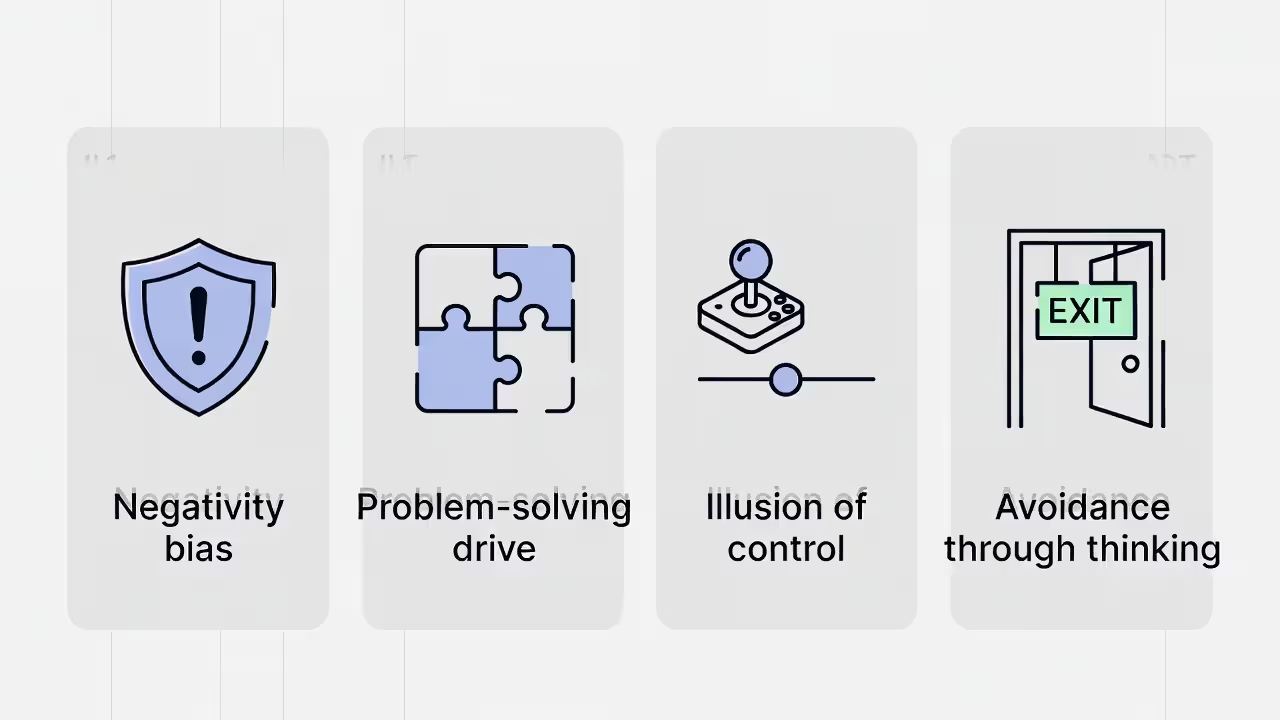
The negativity bias. Human brains evolved to prioritize threats over opportunities. Missing a threat could be fatal; missing an opportunity was merely unfortunate. This ancient wiring means your mind naturally gravitates toward what could go wrong, what might be dangerous, what you need to worry about. In a world of actual predators, this was adaptive. In modern life, it generates chronic anxiety about largely imaginary threats.
The problem-solving drive. Your brain wants to solve problems — it's a survival mechanism. When it encounters an unresolved issue, it keeps returning to it, trying to find resolution. This is helpful for solvable problems but tormenting for problems that can't be solved through thinking alone (like past events or uncertain futures). The brain doesn't distinguish well between "problem that needs more thought" and "problem that thinking can't solve."
The illusion of control. Overthinking can feel productive, like you're doing something about your concerns. This illusion is seductive — worrying feels like preparation, rumination feels like learning. Your brain mistakes mental activity for meaningful action, reinforcing the overthinking habit.
Avoidance through thinking. Paradoxically, overthinking can serve as avoidance of actual emotions or actions. Staying in your head about a relationship problem avoids actually having the difficult conversation. Analyzing endlessly postpones making a scary decision. The mind prefers the familiarity of thinking to the uncertainty of feeling or doing.
The Vicious Cycle
Overthinking tends to perpetuate itself through several feedback loops:
Overthinking causes distress, distress triggers more overthinking. The anxiety generated by worry triggers more worry. The sadness intensified by rumination triggers more rumination. You overthink because you feel bad, and you feel bad because you overthink.
Attempted suppression backfires. When you try to not think about something, you must first think about it to know what to not think about. This ironic process — studied by psychologist Daniel Wegner — means thought suppression often increases the very thoughts you're trying to suppress. The famous "don't think about a white bear" experiment demonstrated this clearly.
Negative beliefs about thinking. Many overthinkers develop beliefs that intensify the problem: "I can't control my thoughts," "There's something wrong with my brain," "I'll never be able to stop." These beliefs increase distress and decrease confidence in ability to change, perpetuating the cycle.
Sleep disruption compounds everything. Overthinking interferes with sleep; poor sleep impairs emotional regulation; impaired emotional regulation increases overthinking. The exhaustion from sleepless nights makes managing thoughts even harder.
Understanding these mechanisms helps explain why simple advice ("just stop thinking about it") fails. You're fighting against powerful psychological processes, not a simple bad habit. Effective approaches must work with these processes rather than against them.
Why Mindfulness Works for Overthinking
The Science Behind Mindfulness

Author: Amelia Hayes;
Source: psychology10.click
Mindfulness — the practice of paying attention to present-moment experience with openness and without judgment — has substantial research support for reducing overthinking, anxiety, and related conditions. Mindfulness for overthinkingisn't just popular wisdom; it's backed by neuroscience.
Neurological changes. Brain imaging studies show that regular mindfulness practice changes brain structure and function. The prefrontal cortex (involved in executive function and emotional regulation) shows increased activity and connectivity. The amygdala (the brain's alarm system) shows reduced reactivity. The default mode network (active during mind-wandering and self-referential thinking) shows altered patterns associated with less rumination.
Reduced emotional reactivity. Mindfulness training decreases the intensity of emotional reactions to negative stimuli. This means the thoughts that trigger overthinking produce less distress, reducing the fuel that feeds the cycle. Stop overthinking anxiety becomes possible when the emotional charge around thoughts diminishes.
Improved attention control. Mindfulness meditation is essentially attention training. Practitioners develop stronger ability to notice when attention has wandered and redirect it intentionally. This skill directly addresses the "getting lost in thought" that characterizes overthinking.
Decentering/defusion. Perhaps most importantly, mindfulness develops the ability to observe thoughts as mental events rather than facts requiring response. This shift — seeing thoughts rather than seeing through thoughts — changes everything about the overthinking dynamic. Learning how to calm an overactive mind depends largely on this skill.
Mindfulness vs. Fighting Thoughts
The mindfulness approach to overthinking differs fundamentally from the "stop thinking" approach:
| Fighting Thoughts | Mindfulness Approach |
| Treats thoughts as enemies | Treats thoughts as passing events |
| Goal: eliminate thoughts | Goal: change relationship with thoughts |
| Uses suppression and distraction | Uses observation and acceptance |
| Creates internal struggle | Creates internal peace |
| Often increases thought frequency | Often decreases thought frequency |
| Exhausting | Sustainable |
Mindfulness for anxiety and overthinking works not because it stops the mind but because it stops the struggle with the mind. When you stop fighting thoughts, much of their power dissolves. When you stop believing every thought requires attention, most thoughts pass without consequence.
This doesn't mean you become passive or that all thoughts should be ignored. It means developing the wisdom to recognize which thoughts deserve engagement and which should be allowed to pass — and the skill to choose rather than react automatically.
Core Mindfulness Techniques That Actually Work
The Foundation: Present-Moment Awareness
All mindfulness techniques build on one fundamental skill: bringing attention to present-moment experience. This sounds simple but is surprisingly difficult for minds trained to live in past and future.
Why present-moment focus helps overthinking:
Overthinking always concerns the non-present — past events you're ruminating about or future scenarios you're worrying about. The present moment, right now, is usually okay. When you're truly in the present, you're not overthinking by definition. Present-moment awareness doesn't suppress thoughts about past and future; it simply offers attention an alternative place to rest.
Basic present-moment practice:
Right now, pause and notice: What do you actually experience in this moment? The sensation of your body against the chair. The temperature of the air. Sounds in your environment. The feeling of breathing. This is the present moment — not the narrative about it, but the direct experience of it.
When thoughts about past or future arise (they will), simply notice them as thoughts and return attention to present experience. No frustration, no self-criticism, just gentle redirection. This redirection is the practice — not achieving perfect presence, but noticing wandering and returning, again and again.
Breath Awareness: The Anchor

Author: Amelia Hayes;
Source: psychology10.click
The breath serves as an ideal anchor for attention because it's always present, always available, and connects you immediately to the present moment. Mindfulness meditation for anxiety often begins with breath awareness because it provides a concrete focus for scattered attention.
Basic breath awareness practice:
Find a comfortable position and close your eyes (or soften your gaze downward). Bring attention to the physical sensations of breathing — not controlling the breath, just observing it. Notice where you feel breath most prominently: perhaps the rise and fall of your chest, the expansion of your belly, or the sensation of air at your nostrils.
Stay with these sensations. When you notice your mind has wandered — to thoughts, plans, worries, memories — simply note that wandering has occurred and gently return attention to breath. No judgment about the wandering; the noticing and returning is the practice.
Start with 5 minutes daily and gradually extend. The goal isn't to achieve some special state but to practice the skill of attention direction and the habit of present-moment awareness.
Common challenges:
"My mind wanders constantly." This is normal and expected. The practice isn't maintaining perfect focus; it's noticing wandering and returning. Every time you notice wandering, you're succeeding, not failing.
"I can't stop thinking." You're not trying to stop thinking. Thoughts will arise — let them. The practice is not engaging with them, not following them, just observing them pass while maintaining breath awareness as primary focus.
"I feel more anxious." Sometimes sitting quietly makes you aware of anxiety that was already present but obscured by distraction. This can feel like meditation is causing anxiety, but it's actually revealing what was already there. With continued practice, this typically diminishes.
Cognitive Defusion: Unhooking from Thoughts
Cognitive defusion, a technique from Acceptance and Commitment Therapy (ACT), specifically addresses the "fusion" with thoughts that drives overthinking. When you're fused with a thought, you experience it as reality requiring response. Defusion creates distance, allowing you to see thoughts as just thoughts — mental events that may or may not be true, may or may not be important.
Defusion technique: Naming the story
When you notice overthinking, mentally step back and name what your mind is doing: "Ah, this is the 'I'm going to fail' story." Or "My mind is doing the 'what if everything goes wrong' thing again." This simple act of naming creates distance. You're no longer lost in the story; you're observing that your mind is telling a story.
Defusion technique: Adding "I'm having the thought that..."
When a thought grips you, add this prefix: instead of "I'm going to fail," try "I'm having the thought that I'm going to fail." Instead of "Nobody likes me," try "I notice I'm having the thought that nobody likes me." This grammatical shift changes your relationship with the thought — you're not the thought; you're someone having a thought.
Defusion technique: Silly voice
Take a troubling thought and repeat it in a silly voice — cartoon character, exaggerated accent, singing. This sounds ridiculous, but it works by making the thought harder to take seriously. You can't be terrified by a thought delivered in Mickey Mouse's voice. This technique is particularly useful for repetitive negative thoughts that have worn deep grooves in your mind.
Defusion technique: Leaves on a stream
Visualize sitting beside a gentle stream with leaves floating by. When thoughts arise, imagine placing each thought on a leaf and watching it float downstream. You're not pushing thoughts away; you're allowing them to pass naturally. Some leaves float quickly; some get stuck temporarily. Just observe, placing each thought on its leaf.
Body Scan: Grounding in Physical Sensation
The body scan is a powerful meditation for overthinking that systematically moves attention through the body, noticing physical sensations. It's particularly effective for anxiety relief because it grounds attention in concrete physical experience rather than abstract mental content. Grounding techniques for anxiety often incorporate elements of body scanning.
Basic body scan practice:
Lie down or sit comfortably. Close your eyes. Bring attention to your feet — not thinking about your feet but actually feeling them. Notice whatever sensations are present: warmth, coolness, pressure, tingling, nothing particularly notable. Just observe without trying to change anything.
Gradually move attention up through your body: lower legs, upper legs, pelvis, abdomen, chest, hands, arms, shoulders, neck, face, head. At each area, simply notice what's present. When thoughts arise, acknowledge them and return attention to physical sensation.
A full body scan might take 20-45 minutes, but shorter versions (even 5 minutes) provide benefit. The practice develops awareness of bodily experience and trains attention to stay with present-moment sensation rather than wandering to mental content. This meditation for overthinking is available through most mindfulness programs for anxiety and meditation apps.
Why body scan helps overthinking:
Physical sensations are always present-moment phenomena. When attention is genuinely on body sensation, it's not available for overthinking. The practice also increases awareness of how overthinking manifests physically — tension, shallow breathing, stomach distress — providing earlier warning signs that allow intervention before overthinking spirals.
The STOP Technique: Mindfulness in Daily Life
Author: Amelia Hayes;
Source: psychology10.click
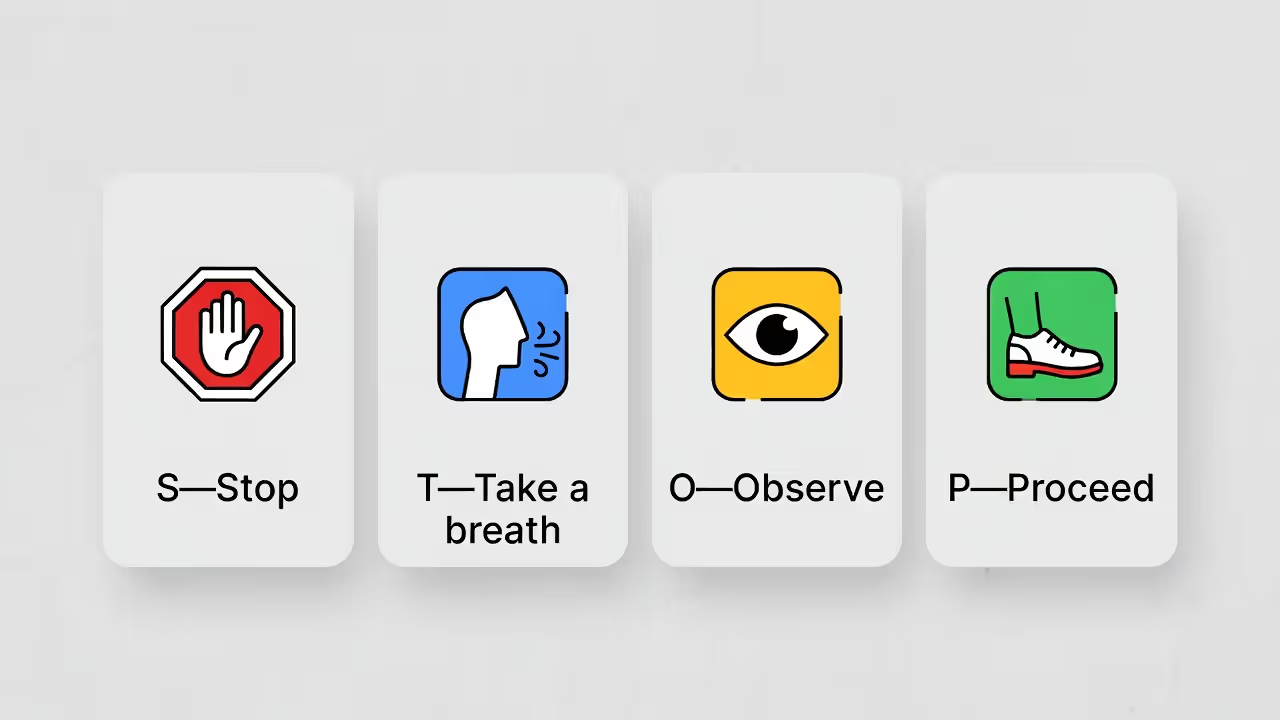
Formal meditation practice builds skills, but mindfulness for anxiety becomes most powerful when integrated into daily life. The STOP technique provides a simple structure for mindful pauses throughout the day.
S — Stop what you're doing. Pause physically.
T — Take a breath. One conscious breath, feeling it fully.
O — Observe your experience. What thoughts are present? What emotions? What physical sensations? Just notice, without judgment or need to change anything.
P — Proceed with awareness. Continue with your day, but from a slightly more conscious, present place.
Use STOP when you notice overthinking beginning, when you feel stressed, when transitioning between activities, or randomly throughout the day. Setting phone reminders can help establish the habit initially.
The most common mistake people make with mindfulness is treating it as another way to control their minds. They approach meditation hoping to finally achieve mental peace and quiet, and when thoughts keep arising, they conclude they're doing it wrong. But arising thoughts aren't failure — they're the material you practice with. Every thought that arises is an opportunity to practice not following it, not fighting it, just observing it. That's where the transformation happens. Over time, you stop being afraid of your own thoughts because you've learned they're just thoughts.
— — Dr. Michael Chang, Mindfulness-Based Cognitive Therapy Specialist, Massachusetts General Hospital
Practical Applications: Overthinking in Specific Situations
Racing Thoughts at Night
How to stop overthinking at night is one of the most common questions people ask about mental wellness. Overthinking before sleep anxiety represents one of the most frustrating experiences — exhausted but unable to sleep because your mind won't stop. The bedroom becomes associated with mental struggle, making sleep increasingly difficult. Racing thoughts anxiety help begins with understanding that fighting these thoughts often makes them worse.
Mindfulness approach to nighttime overthinking:
Accept rather than fight. The struggle to not think keeps you awake as much as the thoughts themselves. Accepting that thoughts are present, that this is just what's happening right now, reduces the additional activation that fighting creates.
Shift focus to body. Instead of trying to stop thoughts, redirect attention to physical sensation. Feel your body against the mattress. Notice the weight of blankets. Bring awareness to the feeling of breathing without controlling it. Give attention something concrete to rest on. These grounding techniques for anxiety work especially well in bed.
Use breathing exercises for overthinking. Count breaths from 1 to 10, then start over. When you lose count (you will), simply start again from 1. This gives the mind just enough engagement to reduce wandering without being stimulating. Many people fall asleep before reaching 10 multiple times. Breathing exercises for overthinking are particularly effective because they engage the parasympathetic nervous system, signaling safety to the body.
Welcome sleeplessness (paradoxically). Tell yourself it's okay to be awake, that you'll rest even without sleep. This reduces the anxiety about not sleeping that intensifies insomnia. Paradoxically, accepting wakefulness often leads to sleep more effectively than fighting for it.
Social and Relationship Overthinking
Post-social rumination — obsessively analyzing conversations, worrying about how you were perceived, replaying awkward moments — torments many overthinkers. Social situations become sources of days-long mental anguish. How to stop overthinking relationships is closely related: the same pattern that analyzes a casual conversation can destroy romantic relationships through constant doubt, analysis, and worry.
How to stop overthinking relationships begins with recognizing the pattern:
- Analyzing every text message for hidden meaning
- Constantly seeking reassurance from your partner
- Interpreting neutral events as signs of problems
- Creating imaginary conflicts through anticipation
- Replaying arguments looking for what you did wrong
Mindfulness approach to social and relationship overthinking:
Notice the pattern without judgment. When you catch yourself analyzing a social interaction or dissecting your relationship, simply notice: "Ah, my mind is reviewing that conversation again" or "I'm doing the relationship worry thing." This naming creates distance.
Ask: Is this productive? Genuine reflection after social events or about relationships can be useful. Rumination is not. If you've already examined the interaction and aren't gaining new insight, continuing serves no purpose. Acknowledge this, thank your mind for trying to help, and redirect attention.
Ground in the present. Where are you right now? Not at that party yesterday, not in an imagined future breakup, but here. What's actually happening in this moment? Let the present be more real than the memory or fantasy your mind keeps creating.
Practice self-compassion. Speak to yourself as you would to a friend: "It makes sense that social situations feel stressful. Everyone says things they later regret sometimes. You're doing fine." Compassionate self-talk interrupts the critical voice that fuels rumination.
Communicate rather than analyze. In relationships, endless mental analysis often substitutes for actual communication. Instead of spending hours wondering what your partner meant, consider simply asking them. How to calm an overactive mind in relationships often involves moving from thinking to talking.
Decision Overthinking
Author: Amelia Hayes;
Source: psychology10.click
Some overthinkers become paralyzed by decisions, endlessly weighing options, gathering more information, unable to commit. The fear of making the wrong choice leads to making no choice, which is itself a choice — often a poor one.
Mindfulness approach to decision overthinking:
Notice the avoidance function. Sometimes endless deliberation serves to avoid the finality of deciding. Staying in analysis feels safer than committing to action. Recognize when this is happening.
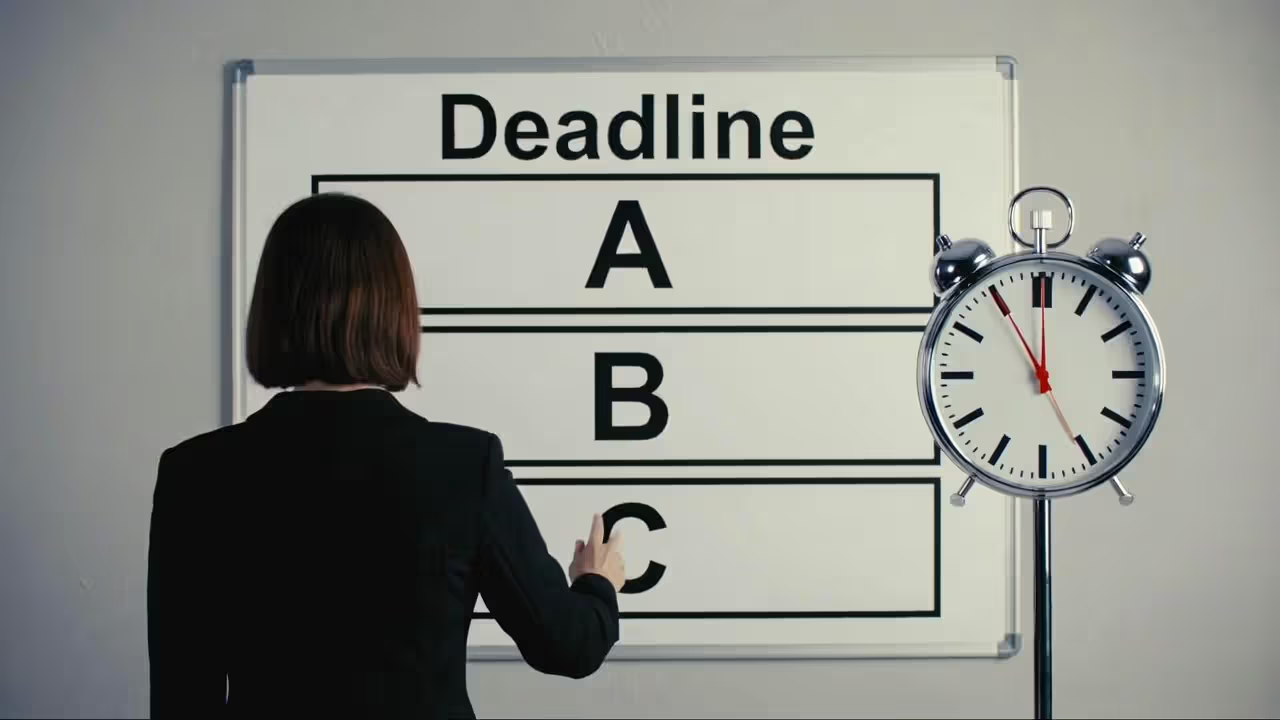
Set decision deadlines. Give yourself a defined period for consideration, then decide. More thinking beyond a certain point doesn't improve decisions; it just delays them while generating anxiety.
Accept uncertainty. Most decisions can't be made with certainty. Waiting for certainty that won't come keeps you stuck. Mindfulness helps tolerate uncertainty — accepting that you don't know how things will turn out and making the best choice available with incomplete information.
Practice with small decisions. Build decision-making confidence with low-stakes choices. Choose a restaurant quickly, pick an outfit without deliberation, respond to a simple email immediately. This builds the habit of deciding and proves that imperfect decisions are survivable.
Building a Sustainable Mindfulness Practice
Starting Small: The 5-Minute Foundation
One of the biggest mistakes in establishing mindfulness practice is starting too ambitiously. Committing to 30-minute daily meditation when you've never meditated before almost guarantees failure. Start smaller than you think necessary.
The 5-minute daily practice:
For the first two weeks, commit to just 5 minutes of breath awareness daily. That's it. Set a timer, sit comfortably, focus on breath, return attention when it wanders. Five minutes is short enough that you can always find time, brief enough that resistance is minimal, and sufficient to begin building the habit.
Why this works:
The primary goal initially isn't achieving deep meditative states; it's establishing the habit of practice. A 5-minute practice you actually do is infinitely more valuable than a 30-minute practice you don't do. Consistency matters more than duration, especially at the beginning.
After two weeks of consistent 5-minute practice, you can gradually extend — to 10 minutes, then 15, then 20. By then, you'll have established the habit and likely will have experienced enough benefit to motivate longer sessions.
Using Mindfulness Apps
Author: Amelia Hayes;
Source: psychology10.click
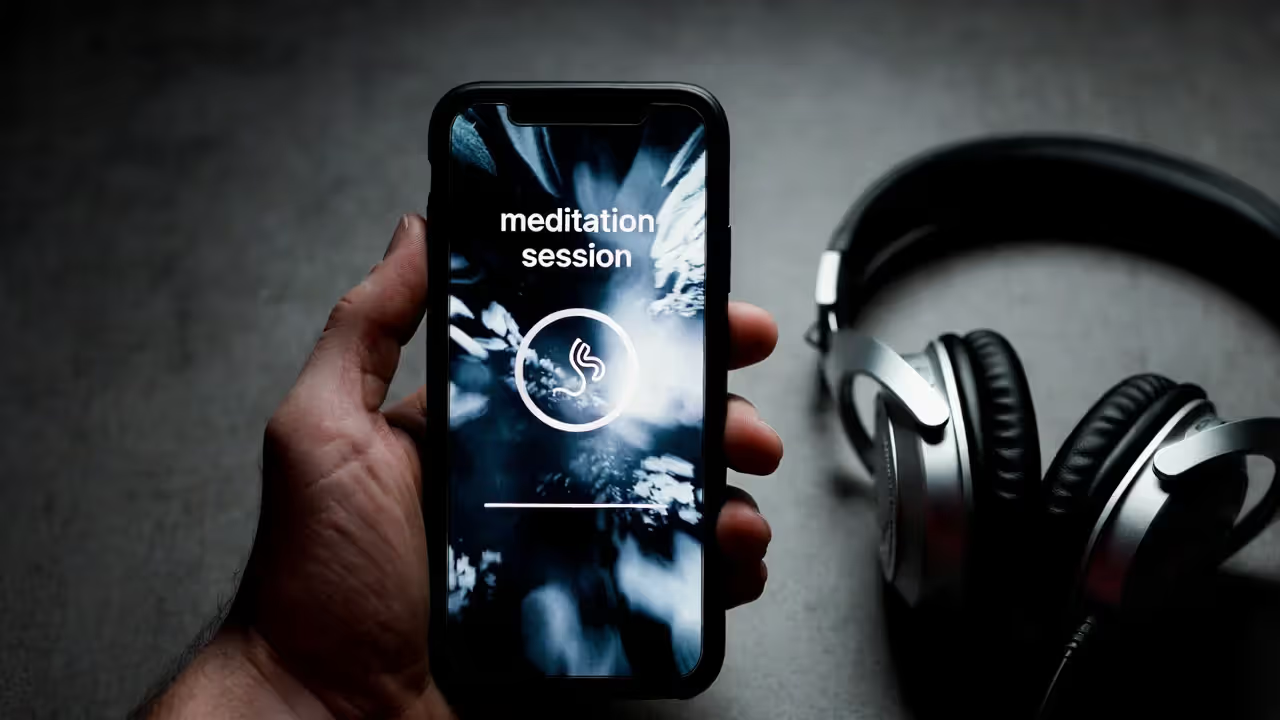
The best mindfulness apps for anxiety can be valuable tools, especially for beginners who benefit from guidance. They provide structure, instruction, and variety that support consistent practice. Meditation for anxiety online has never been more accessible.
Popular options include:
Headspace — offers beginner-friendly courses, specific programs for anxiety and sleep, and brief exercises for various situations. One of the best mindfulness apps for anxiety with structured learning paths.
Calm — known for sleep-focused content including Sleep Stories, also offers meditation for overthinking programs and breathing exercises. Excellent for those whose primary struggle is overthinking before sleep anxiety.
Insight Timer — free access to thousands of meditations from various teachers; more variety but less structured than paid apps. Great for those seeking affordable anxiety therapy online alternatives.
Ten Percent Happier — aimed at skeptics, features practical instruction from experienced teachers with less spiritual framing. Offers mindfulness exercises for racing thoughts based on scientific research.
Waking Up — philosophical depth alongside practical instruction; explores the deeper aspects of consciousness and selfhood.
These apps serve as accessible anxiety self help programs for those not ready for therapy or seeking to supplement professional treatment. Apps aren't necessary for mindfulness practice, but they lower barriers to starting and provide support for consistency. Choose based on your preferences and try a few before committing.
When to Seek Professional Support
While mindfulness techniques are powerful, they're not always sufficient alone. Consider seeking online therapy for anxiety or in-person support if:
- Overthinking significantly impairs daily functioning
- You experience panic attacks or severe anxiety
- Overthinking is accompanied by depression
- Trauma underlies your anxious patterns
- Self-guided practice isn't providing relief after consistent effort
Finding the right support:
Best online therapy for anxiety platforms like BetterHelp, Talkspace, and Cerebral offer accessible professional support. Anxiety counseling online removes barriers of scheduling and commuting, making consistent treatment more feasible. For those concerned about cost, affordable anxiety therapy online options exist through sliding scale therapists, community mental health centers, and some online platforms.
Mindfulness-Based Stress Reduction (MBSR) and Mindfulness-Based Cognitive Therapy (MBCT) are evidence-based mindfulness programs for anxiety combining mindfulness training with therapeutic support. MBSR, developed by Jon Kabat-Zinn, was originally designed for chronic pain but has strong evidence for anxiety and stress. MBCT specifically targets recurrent depression but is also effective for stop overthinking anxiety.
Mindfulness therapy online has become increasingly available, with many therapists offering virtual sessions that integrate mindfulness with cognitive behavioral approaches. Online counseling for anxiety can be just as effective as in-person therapy for many people.
Mental health coaching online provides accountability and guidance for implementing mindfulness techniques in daily life. Coaches typically focus more on practical application than deep psychological exploration. Mental health coaching online can be particularly helpful for those who need support building consistent practice but don't have clinical-level symptoms.
Cognitive Behavioral Therapy (CBT) combined with mindfulness addresses excessive thinking anxiety from multiple angles — changing thought content (CBT) and changing relationship with thoughts (mindfulness). Many therapists integrate these approaches.
Seeking professional support isn't failure; it's wisdom about matching resources to needs. Some overthinking patterns benefit from professional guidance that self-help can't provide.
Common Obstacles and How to Address Them
"I don't have time to meditate."
You have 5 minutes. If you genuinely don't have 5 minutes, your life has problems that meditation alone can't solve. Start with 5 minutes; protect that time as non-negotiable. The time investment pays returns in improved focus, better emotional regulation, and reduced time lost to overthinking.
"My mind is too busy to meditate."
A busy mind is exactly why you need meditation, not a reason you can't do it. Meditation isn't about having a calm mind; it's about training the mind toward greater calm. You don't need to be flexible to start yoga; you don't need a quiet mind to start meditating.
"Nothing happens when I meditate."
Meditation isn't about "something happening." The subtle effects — slightly more awareness, marginally less reactivity — accumulate over time rather than appearing dramatically. Trust the process; research strongly supports that regular practice produces results, even when individual sessions seem unremarkable.
"I keep forgetting to practice."
Link meditation to an existing habit: right after waking, after morning coffee, before bed. Use phone reminders. Prepare your meditation space the night before. Make practice as easy and automatic as possible.
"I tried mindfulness and it made my anxiety worse."
This sometimes happens initially, especially for trauma survivors or those with severe anxiety. Sitting quietly with your experience can feel overwhelming when you've been avoiding that experience. If mindfulness consistently worsens your state, seek guidance from a mindfulness-trained therapist who can help you practice safely. Modifications — shorter practices, eyes open, focus on external rather than internal experience — can make mindfulness accessible for those who initially struggle.
Integrating Mindfulness into Everyday Life
Informal Practice: Mindfulness Without Meditation

Author: Amelia Hayes;
Source: psychology10.click
While formal meditation builds fundamental skills, the real value of mindfulness comes from bringing awareness into daily life. Grounding techniques for anxiety and present-moment awareness can be practiced anywhere, anytime.
Mindful activities:
Turn routine activities into mindfulness practice by bringing full attention to them:
Mindful walking — feel each step, the sensation of feet meeting ground, the movement of legs, the air on skin. When mind wanders to thoughts, return to physical sensation of walking.
Mindful eating — actually taste your food. Notice texture, temperature, flavor. Chew slowly. Put down your fork between bites. Make eating a sensory experience rather than something that happens while scrolling your phone.
Mindful listening — in conversations, give full attention to the other person. Notice when your mind wanders to what you'll say next or to unrelated thoughts. Return attention to actually listening.
Mindful transitions — use transitions between activities as mini-mindfulness moments. Before entering a meeting, take one conscious breath. Before starting the car, pause and arrive mentally. Before beginning a meal, spend three breaths in presence.
The Attitude Shift: From Fighting to Observing
Beyond specific techniques, mindfulness involves a fundamental attitude shift that transforms the overthinking experience.
From fighting to allowing. Stop battling your thoughts. Let them be present without needing to do anything about them. The stance is interested observation rather than desperate resistance.
From judging to accepting. Release judgment about your thoughts ("I shouldn't think this") and about yourself ("What's wrong with me?"). Replace judgment with curiosity and acceptance.
From controlling to observing. Give up the project of controlling your mind and instead become an observer of it. Thoughts arise; you watch them. Thoughts pass; you watch that. You're not the thoughts; you're the awareness within which thoughts appear.
From believing to questioning. Not every thought is true. Not every thought is important. Not every thought requires response. Mindfulness develops the wisdom to recognize that thoughts are mental events, not necessarily facts about reality.
This attitude shift, more than any specific technique, is what finally frees overthinkers from their mental prisons. The prison was never the thoughts themselves; it was the belief that thoughts were inescapable reality that demanded engagement. When that belief dissolves, the thoughts lose their power.
Frequently Asked Questions
The promise of this guide isn't that you'll stop thinking — that's neither possible nor desirable. Thinking is how humans navigate the world, solve problems, and create meaning. The promise is something better: freedom from being controlled by your thinking.
How to stop overthinking isn't actually about stopping anything. It's about transforming your relationship with thinking from one of helpless fusion to one of conscious observation. It's about developing the space between stimulus and response where choice lives. It's about discovering that you are not your thoughts — you are the awareness in which thoughts appear.
This transformation doesn't happen overnight. It requires practice — regular, patient, consistent practice. There will be days when your mind is wild and presence feels impossible. There will be moments when you forget everything you've learned and get completely lost in rumination. This is normal, expected, part of the path. Each time you notice you've been lost and return to presence, you strengthen the capacity for presence. Each overthinking episode becomes an opportunity to practice.
The mindfulness techniques in this guide work. They're supported by research and by the experience of countless people who've found relief from the tyranny of their own minds. But they only work if you actually practice them. Reading about mindfulness doesn't change your brain; practicing mindfulness does.
Start with 5 minutes of breath awareness tomorrow morning. That's it. Five minutes of sitting, breathing, noticing when your mind wanders, returning attention to breath. Do that tomorrow, and the next day, and the day after. Let the practice teach you what reading cannot.
The overthinking mind isn't your enemy — it's a mind doing what minds do, running programs it learned for survival in a world very different from the one you live in. You don't need to defeat your mind; you need to befriend it, understand it, and gently train it toward greater peace. Mindfulness is that gentle training.
The peace you're seeking is already present, obscured by mental noise but never destroyed by it. Mindfulness doesn't create peace; it reveals the peace that's always been there, waiting beneath the chatter. That peace is your birthright, available in every moment you remember to look for it.
The practice begins now. Take one conscious breath. Feel it fully. Welcome to the present moment — the only moment where peace is ever found.
Related Stories

Read more

Read more




The content on psychology10.click is provided for general informational and inspirational purposes only. It is intended to share evidence-based insights and perspectives on psychology, relationships, emotions, and human behavior, and should not be considered professional psychological, medical, therapeutic, or counseling advice.
All information, articles, and materials presented on this website are for general educational purposes only. Individual experiences, emotional responses, mental health needs, and relationship dynamics may vary, and outcomes may differ from person to person.
Psychology10.click makes no representations or warranties regarding the accuracy, completeness, or reliability of the content provided and is not responsible for any errors or omissions, or for decisions or actions taken based on the information presented on this website. Readers are encouraged to seek qualified professional support when dealing with personal mental health or relationship concerns.