

Person scrolling social media and feeling anxious about others’ success
Why You Compare Yourself to Others Explained

You scroll through Instagram and see a former classmate announcing their promotion. Your stomach tightens. A friend posts photos from their tropical vacation while you're sitting in your cramped apartment. Something sinks inside you. A colleague mentions their new car, their successful side business, their perfect relationship — and suddenly your own life, which felt fine moments ago, seems inadequate, disappointing, less-than.
This is social comparison — the automatic, often unconscious process of evaluating ourselves by measuring against others. It happens dozens of times daily, triggered by conversations, social media, advertisements, even passing strangers. And almost always, we come up short in our own assessment. We compare our behind-the-scenes to everyone else's highlight reel, our ordinary Tuesday to their carefully curated moment, our messy reality to their polished performance.
Theodore Roosevelt called comparison "the thief of joy," and modern psychology has confirmed just how much it steals. Research consistently links frequent social comparison to lower self-esteem, increased anxiety and depression, reduced life satisfaction, and diminished motivation. The more we compare, the worse we feel — yet we keep comparing, caught in a pattern that damages us even as we recognize its harm.
Why do we compare ourselves to others when it causes such suffering? The answer lies deep in human psychology — in evolutionary drives, social learning, and the fundamental human need to understand ourselves in relation to others. Comparison isn't a character flaw or moral weakness; it's a deeply wired cognitive process that served important functions throughout human evolution. The problem isn't that we compare — it's that we compare in ways poorly suited to modern life, especially the social media age.
Social comparison is natural — we evaluate ourselves relative to others because it was crucial for survival. The problem is how we compare in the modern world: to curated fictions, to global pools of competitors, to impossible standards. Learning to compare wisely is essential for wellbeing.
— Dr. Rebecca Torres, Social Psychologist and Self-Esteem Researcher, University of Michigan
Understanding why you compare yourself to others is the first step toward freedom. This guide explores the psychology of comparison, how it damages wellbeing, and practical strategies to break free from the comparison trap and build genuine self-worth that doesn't depend on measuring up to others.
The Psychology of Social Comparison
Why We're Wired to Compare
Social comparison theory, developed by psychologist Leon Festinger in 1954, proposes that humans have an innate drive to evaluate their own abilities, opinions, and attributes — and that in the absence of objective standards, we do this by comparing ourselves to others.
This drive isn't arbitrary; it served crucial functions throughout human evolution:
Survival and status assessment. In ancestral environments, understanding your relative position in social hierarchies directly affected survival and reproduction. Knowing whether you were stronger or weaker than rivals, more or less skilled than competitors for resources, helped determine appropriate behavior. Comparison provided essential social intelligence.
Learning and improvement. Observing others who perform better shows us what's possible and how to improve. Comparison to slightly superior others (what psychologists call "upward comparison") can motivate growth and learning when the gap seems closable.
Belonging and fitting in. Comparing ourselves to group members helps us understand social norms and expectations. Similarity to others signals belonging; difference might signal danger or exclusion. Comparison helped our ancestors navigate complex social environments.
Reality testing. When objective measures don't exist — and for many important life domains they don't — comparing to others provides a way to assess where we stand. How do I know if my salary is good? I compare to others. How do I know if my relationship is healthy? I compare to others. Comparison serves as a substitute for absent objective standards.
These functions remain relevant today, which is why comparison persists despite its costs. The problem is that our comparison mechanisms evolved for small, stable communities where we knew our comparison targets personally and comparisons were limited by physical proximity. Nothing prepared us for comparing ourselves to millions of strangers presenting idealized versions of their lives.
Types of Social Comparison
Author: Evan Miller;
Source: psychology10.click
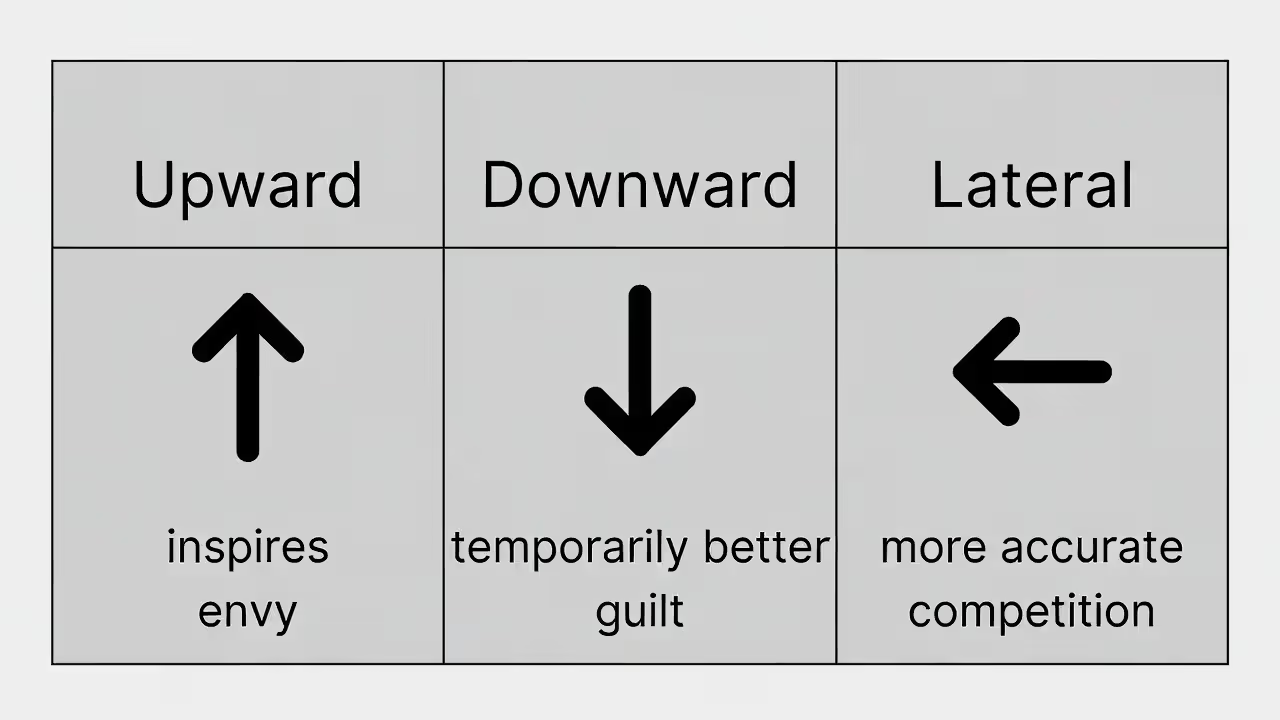
Research distinguishes several types of comparison, each with different psychological effects:
Upward comparison — comparing to those perceived as better off, more successful, more attractive, or otherwise superior. Upward comparison can inspire and motivate when the target seems achievable and the path visible. More often, especially in passive social media consumption, upward comparison produces envy, inadequacy, and diminished self-esteem.
Downward comparison — comparing to those perceived as worse off. Downward comparison often improves mood and self-evaluation temporarily ("At least I'm doing better than them"), but it can also create guilt, reduce compassion, and doesn't address underlying self-worth issues. Using others' misfortune to feel better about yourself isn't a sustainable wellbeing strategy.
Lateral comparison — comparing to similar others. This can provide accurate self-assessment and validation but may also trigger competition with peers, turning allies into rivals and collaboration into contest.
The comparison process can also be explicit (conscious, deliberate comparison) or implicit (automatic, unconscious comparison that affects mood and self-perception without awareness). Much harmful comparison happens implicitly — we scroll social media and feel worse without recognizing that comparison is the cause.
What We Compare (Everything)
The domains of comparison are virtually unlimited:
- Achievement and success: Career progress, income, accomplishments, recognition
- Relationships: Partner quality, relationship status, social popularity, family harmony
- Appearance: Physical attractiveness, body shape, aging, fashion, fitness
- Lifestyle: Travel, possessions, homes, experiences, leisure activities
- Intelligence and abilities: Skills, knowledge, talents, creativity
- Moral qualities: Goodness, generosity, ethical behavior, parenting quality
- Happiness: Life satisfaction, emotional wellbeing, apparent joy
No domain is immune. Even in areas where we excel, comparison can find someone excelling more. Even in our happiest moments, comparison can conjure someone seemingly happier. The comparison mind always finds a way to make us less-than.
The Modern Comparison Crisis
Social Media: Comparison on Steroids
While comparison is ancient, social media has dramatically intensified its frequency, scope, and psychological impact. Understanding comparison anxiety social media generates requires recognizing how these platforms systematically exploit and amplify comparison tendencies.
Unprecedented scale of comparison targets. Rather than comparing to the few dozen people in your village or workplace, you now compare to millions of strangers worldwide. The probability of finding someone more successful, attractive, or happy in any domain approaches certainty when the comparison pool includes the entire internet.
Curated highlight reels. Social media posts are heavily edited presentations of life's best moments, achievements, and angles. You compare your unfiltered daily reality to others' carefully curated performances. The comparison is inherently unfair — you're comparing your behind-the-scenes to everyone else's red carpet.
Algorithmic amplification. Platforms algorithmically surface content most likely to capture attention, which often means the most extreme, impressive, or envy-inducing content. Average lives don't go viral; exceptional ones do. Your feed becomes a highlight reel of humanity's peaks, making ordinary life seem inadequate by comparison.
Constant availability. Comparison now happens 24/7, whenever you reach for your phone. There's no escape to comparison-free zones. Every idle moment becomes an opportunity for the comparison mind to find something lacking in your life.
Quantified popularity. Likes, followers, comments, and shares provide explicit numerical comparison metrics that didn't exist before. You don't just compare your vacation to others' vacations; you compare how many people liked your vacation photo to how many liked theirs. Social validation becomes quantified and compared.
Research confirms the damage: multiple studies link heavier social media use to lower self-esteem, increased depression and anxiety, greater body dissatisfaction, and reduced life satisfaction. The relationship is particularly strong for passive consumption (scrolling and viewing) versus active engagement (posting and interacting), suggesting that comparison drives much of the harm.
The Highlight Reel Illusion
Author: Evan Miller;
Source: psychology10.click
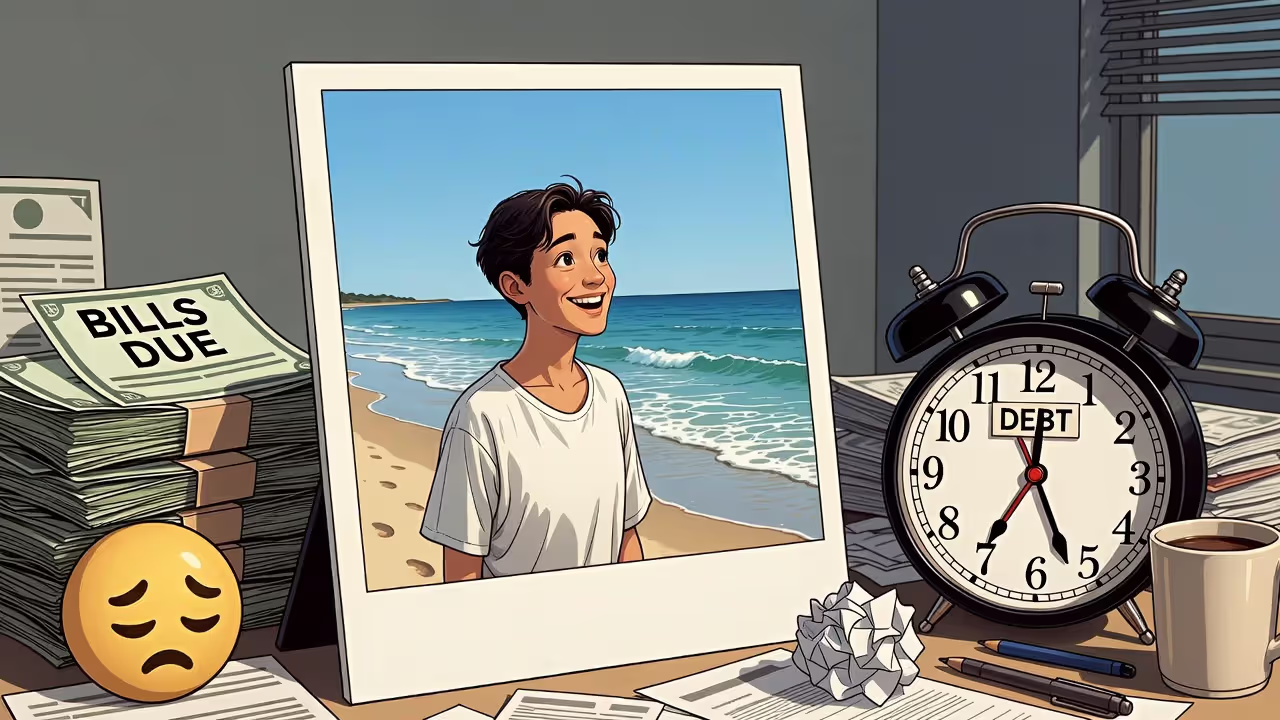
Perhaps nothing distorts modern comparison more than the highlight reel illusion — the systematic gap between how others' lives appear and how they actually are.
What you see: Vacation photos, career wins, happy couples, beautiful homes, perfect children, fit bodies, abundant social lives.
What you don't see: The credit card debt funding the vacation. The burnout behind the career win. The argument before the couple photo. The mess just outside the frame. The struggles with the children after the photo. The eating disorder maintaining the body. The loneliness between social events.
Everyone is showing their best. This isn't (usually) deception — it's normal human behavior amplified by social media incentives. People share what they're proud of, not what they're ashamed of. Good moments get posted; bad moments get hidden. The result is a systematic distortion where others' lives appear much better than they are.
You see hundreds of highlight reels but only one behind-the-scenes: yours. This asymmetry guarantees losing comparisons. You know all your failures, insecurities, and struggles while seeing only others' victories, confidence, and ease. You compare your worst self-knowledge to their best self-presentation.
The highlight reel illusion explains why comparison on social media feels so damaging even when we intellectually know posts are curated. Knowing it's a highlight reel doesn't prevent emotional comparison; we react to what we see, not what we know.
How Comparison Damages You
The Self-Esteem Erosion
The link between social comparison and self-esteem is well-established and bidirectional: comparison lowers self-esteem, and low self-esteem increases comparison. This creates a vicious cycle that progressively erodes self-worth.
Comparison defines worth externally. When you compare, you implicitly accept that your worth depends on how you measure against others. Self-esteem becomes relative rather than intrinsic — you're only okay if you're better than, or at least equal to, those around you. This external definition makes self-worth perpetually unstable because there's always someone who exceeds you in some dimension.
The goalposts always move. Comparison creates a treadmill where achievement doesn't produce lasting satisfaction. Reaching a goal just reveals new comparison targets. Getting the promotion doesn't feel good because someone got a better promotion. Buying the house just reveals nicer houses to envy. Comparison ensures you can never arrive because arrival just creates new comparisons.
Self-esteem becomes conditional. Rather than accepting yourself as inherently worthy, comparison makes worth contingent on measurement. You're only valuable when winning comparisons, which means you're constantly one unfavorable comparison away from worthlessness. This conditionality creates anxiety and insecurity that comparison then feeds.
The damage compounds over time. Years of unfavorable comparisons create deep-seated beliefs in inadequacy that persist even when comparison stops. The comparison habit rewrites your internal narrative about who you are and what you deserve.
Anxiety, Depression, and Mental Health
Beyond self-esteem, chronic comparison contributes to broader mental health problems:
Comparison anxiety. The fear of being judged as inferior, of not measuring up, of others' success revealing your failure. This anxiety can become pervasive, coloring social interactions with threat rather than connection.
Comparison-driven depression. Repeated experiences of coming up short, of never being enough, can contribute to depressive symptoms. The hopelessness of never catching up, of the gap being too large to close, feeds despair.
Envy's corrosive effects. Chronic envy — wanting what others have — is associated with lower wellbeing, reduced life satisfaction, and poorer mental health. Envy damages both your self-perception and your relationships with the people you envy.
Social anxiety amplification. Comparison fuels social anxiety by intensifying fear of negative evaluation. If you're constantly assessing your rank relative to others, social situations become performance evaluations where failure threatens status.
Research on comparison and self-esteem consistently shows these connections. A 2018 meta-analysis found that social comparison orientation — the tendency to compare frequently — correlated significantly with depression, anxiety, and lower self-esteem across dozens of studies.
Relationship Damage
Comparison doesn't just harm your relationship with yourself; it harms your relationships with others:
Envy poisons friendships. When you compare yourself to friends and come up short, their success triggers negative emotions rather than shared joy. You might distance yourself from successful friends to avoid comparison pain, or harbor resentment that undermines connection.
Comparison creates competition. Constant comparison transforms potential allies into rivals, collaboration into contest. Rather than celebrating others' wins, comparison makes their wins your losses. Communities become tournaments.
Partners become comparison objects. Comparing your relationship to others' apparent relationships, or comparing your partner to others' apparent partners, breeds dissatisfaction and prevents appreciation of what you actually have.
Judgment replaces compassion. Downward comparison — feeling better by viewing others as worse — reduces compassion and connection. When others' struggles become your self-esteem boost, you lose capacity for genuine empathy.
Paralysis and Diminished Motivation

Author: Evan Miller;
Source: psychology10.click
Paradoxically, while mild comparison can motivate improvement, excessive comparison often produces paralysis:
The gap feels too large. When comparison reveals vast distances between where you are and where others seem to be, the gap can feel unbridgeable. Rather than motivating action, it triggers hopelessness and giving up.
Imposter syndrome intensifies. Comparing yourself to successful others while discounting your own achievements feeds imposter syndrome — the feeling that you don't belong, haven't earned your place, and will eventually be exposed as inadequate. Imposter syndrome comparison creates paralysis through fear of being revealed as inferior.
Perfectionism prevents starting. If others' results look so polished and you can't achieve that from the start, why begin? Comparison to finished products discourages initiating the messy process that produces them.
Action feels pointless. If someone will always be better, if success just reveals new competitions, what's the point of trying? Comparison can undermine the motivation it's supposed to provide.
Why You Can't Just Stop Comparing
Understanding why you compare yourself to others helps, but understanding alone doesn't stop the behavior. Comparison persists for several reasons:
It's Automatic
Much comparison happens automatically, below conscious awareness. You don't decide to compare; your brain does it without asking. By the time you notice the comparison, you've already processed it emotionally. Stopping automatic processes requires more than willpower — it requires retraining attention and response patterns.
It's Culturally Reinforced
Modern culture constantly encourages comparison:
- Advertising works by making you feel inadequate so you'll buy products to close the gap
- Educational systems rank and grade, training comparison from childhood
- Workplaces evaluate performance against peers, institutionalizing comparison
- Social media gamifies popularity with explicit metrics
- Media presents idealized images as normal standards
You're swimming in comparison culture, making non-comparison countercultural and effortful.
It Serves Psychological Functions
As discussed, comparison provides information, motivation, and belonging signals. These functions don't disappear just because comparison has costs. The mind keeps comparing because comparison sometimes helps, even though it often hurts.
It's Habitual
After years of practice, comparison becomes a deeply grooved habit. Habits persist through automaticity — they happen without decision, triggered by cues in the environment. Breaking habitual comparison requires building new habits, not just deciding to stop the old one.
Low Self-Worth Feeds It
Ironically, the low self-esteem caused by comparison also increases comparison. When you don't have stable internal self-worth, you seek external validation through comparison. The damage comparison causes perpetuates the pattern that causes the damage.
People who struggle with comparison feel trapped — they know it hurts them but can't stop. This isn't weakness; it's deeply ingrained patterns reinforced by parents, teachers, media, and social platforms throughout their lives. Undoing this requires patient, persistent work on internal self-worth.
— — Dr. James Okonkwo, Clinical Psychologist and Self-Esteem Specialist, Columbia University Medical Center
Breaking Free: How to Stop Comparing Yourself to Others
Awareness: Catching Comparison in Action
Change begins with awareness. You can't change a pattern you don't notice. The first practice is simply catching comparison as it happens.
Notice comparison triggers. When do you compare most? For many people, it's during social media use, at work events, during family gatherings, when learning about others' achievements. Identifying triggers allows preparation and intervention.
Notice physical signals. Comparison often produces physical sensations: stomach tightening, chest constriction, energy deflation. These bodily responses can alert you to comparison happening even when the mental process is automatic.
Name the comparison. When you notice comparison, explicitly name it: "I'm comparing myself to Sarah right now." This simple act creates distance between you and the comparison, shifting from being consumed by it to observing it.
Notice the aftermath. Pay attention to how you feel after comparison. Track the emotional cost. This builds motivation for change by connecting comparison to its consequences.
Reducing Exposure: Curating Your Environment
Author: Evan Miller;
Source: psychology10.click
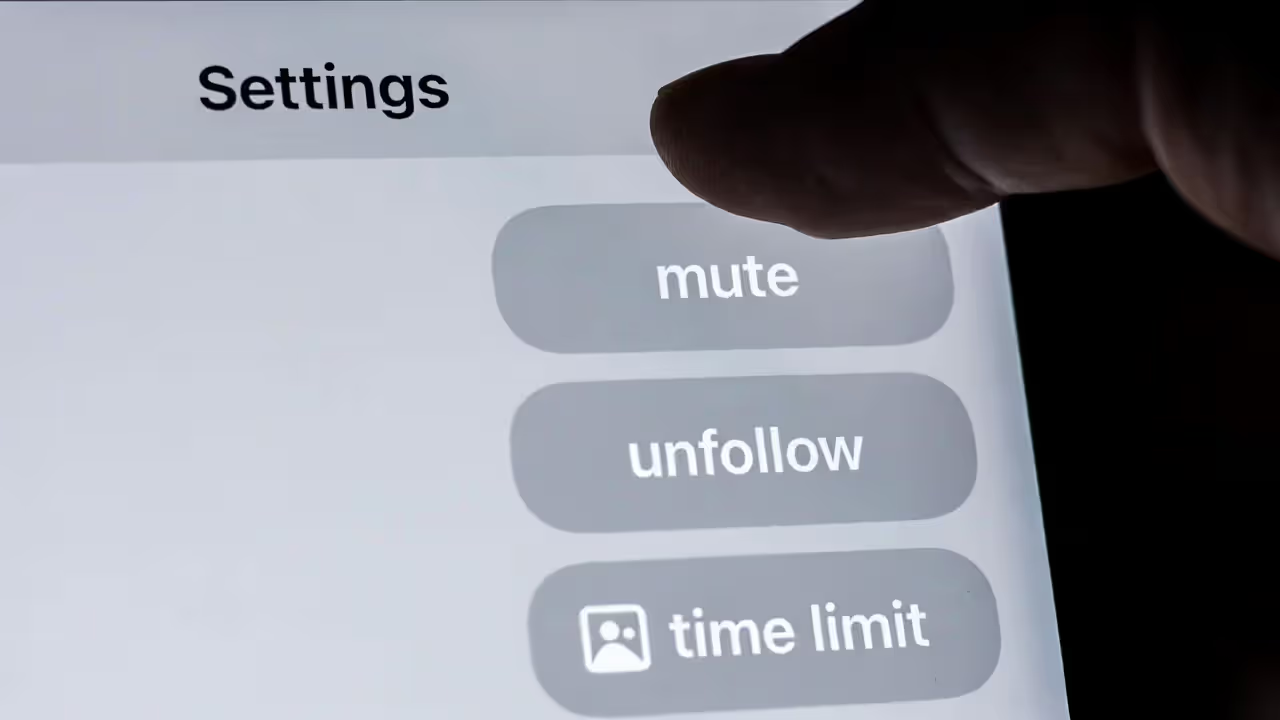
While you can't eliminate all comparison triggers, you can significantly reduce exposure:
Curate social media deliberately. Unfollow or mute accounts that trigger comparison. Follow accounts that inspire without triggering inadequacy. Reduce overall social media time, especially passive scrolling. Consider scheduled "social media sabbaticals."
Limit comparison-inducing conversations. Some people and social situations consistently trigger comparison. Where possible, reduce exposure to conversations focused on achievements, possessions, and status signaling.
Be selective about media consumption. Advertising, lifestyle media, and celebrity culture are designed to trigger comparison. Reducing exposure reduces comparison activation.
Create comparison-free zones. Designate times and places where comparison triggers are absent — device-free periods, nature time, activities where you're not evaluated against others.
Stop comparing yourself on social media by recognizing that social media is specifically designed to trigger comparison and that reduction rather than management may be most effective.
Reframing: Changing How You Think About Comparison
When comparison happens despite reduced exposure, cognitive reframing changes its impact:
Remember the highlight reel. When comparing to others' presentations, actively recall that you're seeing curated highlights, not full realities. Everyone has struggles you don't see. The comparison is between your complete life and their incomplete presentation.
Consider the full picture. When envying someone's success, consider what it cost them, what they sacrifice, what struggles accompany it. Often the success comes with tradeoffs you wouldn't want.
Ask: "Is this comparison useful?" Sometimes comparison provides valuable information or motivation. Often it doesn't. Asking whether the comparison serves you creates space to disengage from pointless comparisons.
Replace comparison with curiosity. Instead of "Why do they have what I don't?" ask "What can I learn from them?" or "What's their story?" Curiosity about others' journeys is more connecting and less damaging than comparison to their outcomes.
Practice gratitude for your own life. Comparison focuses on what you lack relative to others. Gratitude focuses on what you have. Deliberately shifting attention to appreciation of your own life counterbalances comparison's scarcity focus.
Building Internal Self-Worth
The most fundamental solution to comparison is developing self-worth that doesn't depend on external measurement. This is deeper work that often benefits from therapy for low self-esteem or self-esteem counseling online.
Identify intrinsic values. What matters to you regardless of how you compare to others? What would you value even if no one knew about it? Intrinsic values provide self-worth independent of external validation.
Recognize inherent worth. You are worthy simply because you exist, not because of what you accomplish, own, or look like relative to others. This philosophical shift — from contingent to inherent worth — undermines comparison's foundation.
Practice self-compassion. When comparison reveals perceived inadequacy, respond with kindness rather than criticism. Self-compassion exercises treat yourself as you would treat a good friend — with understanding, encouragement, and acceptance of imperfection.
Focus on personal growth over comparison. Compare yourself to your past self, not to others. Am I growing? Am I learning? Am I becoming more who I want to be? This self-referenced comparison can motivate without the damage of social comparison.
Develop self-acceptance. Acceptance doesn't mean complacency; it means acknowledging reality without harsh judgment. Accept your current self while working toward growth. Acceptance paradoxically enables change more than self-criticism does.
Mindfulness: Creating Space from Comparison
Author: Evan Miller;
Source: psychology10.click
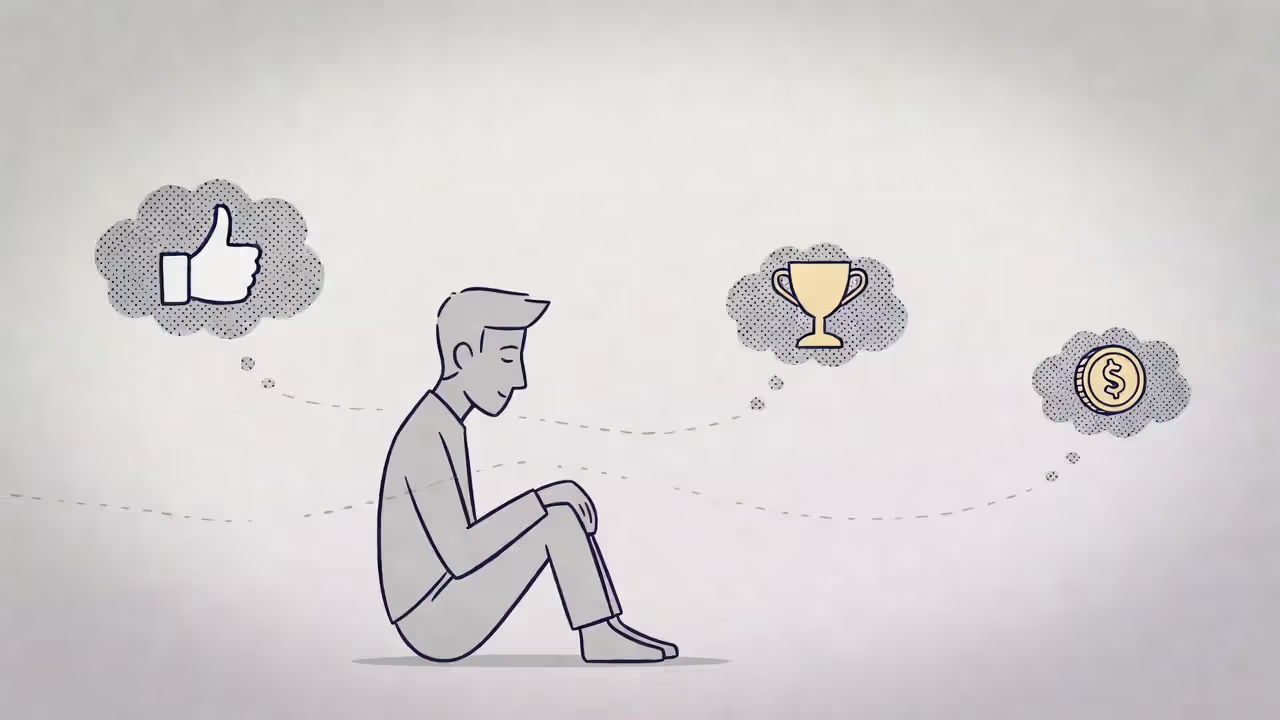
Mindfulness practices specifically help with comparison by creating observational distance from mental processes:
Observe thoughts without believing them. Mindfulness teaches that thoughts are mental events, not necessarily truths. Comparison thoughts ("They're better than me") can be observed without being accepted as reality.
Return to present moment. Comparison typically involves either past (ruminating on how you've failed to achieve) or future (worrying you'll never catch up). Mindfulness returns attention to present experience, where comparison doesn't exist.
Practice non-judgment. Mindfulness cultivates observing experience without evaluating it as good or bad. This practice directly counteracts the evaluative core of comparison.
Regular meditation builds these skills. Even 10 minutes daily develops capacity to observe mental processes including comparison. Meditation for self-esteem often incorporates loving-kindness practices that build self-acceptance.
Professional Support: When to Seek Help
While self-help strategies help many people, some comparison patterns benefit from professional support:
Consider therapy when:
- Comparison significantly impacts daily functioning
- Comparison contributes to depression or anxiety
- Self-worth feels persistently low despite self-help efforts
- Comparison connects to deeper issues (trauma, early experiences of inadequacy)
- You feel trapped in comparison patterns you can't change alone
Therapeutic approaches that help:
Cognitive Behavioral Therapy (CBT) addresses the thought patterns underlying comparison, identifying and challenging comparison-driven beliefs. Cognitive behavioral therapy self-esteem specifically targets the cognitive distortions that fuel comparison — the black-and-white thinking, the mental filtering that notices only unfavorable comparisons, the discounting of positives in your own life.
Acceptance and Commitment Therapy (ACT) builds psychological flexibility, including the ability to have comparison thoughts without being controlled by them. ACT helps you notice comparison thoughts, accept their presence without fighting them, and choose behaviors aligned with your values regardless of what your comparison mind says.
Compassion-Focused Therapy directly builds self-compassion to counteract the self-criticism that comparison intensifies. This approach is particularly helpful for those whose comparison patterns connect to harsh internal critics developed in response to critical or demanding early environments.
Schema Therapy addresses the deep patterns (schemas) underlying chronic comparison — core beliefs about inadequacy, defectiveness, or failure often formed in childhood that comparison continually activates.
Accessing professional support:
Online therapy for self-esteem has made professional support more accessible than ever. Platforms like BetterHelp, Talkspace, and Cerebral connect you with licensed therapists who specialize in self-esteem and comparison issues. Self-esteem counseling online removes barriers of scheduling, commuting, and geographic limitations.
Life coaching for confidence offers another avenue, focusing more on practical skills and forward-looking change than deep psychological exploration. Confidence coaching online can help develop strategies for building self-worth and managing comparison in specific life domains like career or relationships. Coaching works best for those without significant mental health issues who want structured support for building confidence.
Self-help apps for confidence like Woebot, Youper, Sanvello, and others provide accessible support for building self-esteem and managing negative thought patterns. These apps use evidence-based techniques from CBT and other approaches, making therapeutic tools available anytime. They work best alongside rather than replacing deeper therapeutic work for significant issues, but can be valuable supplements or starting points.
Living Beyond Comparison
Redefining Success

Author: Evan Miller;
Source: psychology10.click
Much comparison suffering stems from accepting external definitions of success that may not match your actual values. Redefining success on your own terms reduces comparison's relevance.
Question inherited definitions. The success standards you're comparing against — are they actually yours? Or did you inherit them from parents, culture, media? Many people compare themselves against standards they've never consciously chosen and wouldn't choose if they examined them.
Define your own metrics. What does success mean to you, independent of comparison? What life would satisfy you regardless of how it looked relative to others? These become your genuine standards, more meaningful than external comparisons.
Include wellbeing in success. If your success definition includes happiness, peace, meaningful relationships, and health — not just achievement and acquisition — the comparison game changes. Someone with more money but more stress may not be more successful by your redefined standards.
Cultivating Genuine Connection
Comparison turns others into competitors, judges, or threats. Cultivating genuine connection transforms the relational landscape:
Practice compersion. Compersion is feeling joy at others' joy, happiness at others' happiness. Rather than envying a friend's success, practice genuinely celebrating it. This retrains the emotional response to others' good fortune.
Share vulnerably. Comparison thrives in environments of performance and pretense. Sharing your actual struggles — not just highlights — invites others to do the same, creating connection instead of competition.
See common humanity. Comparison emphasizes difference and ranking. Seeing common humanity emphasizes shared experience. Others struggle too; others feel inadequate too; others compare themselves to you. This recognition builds compassion rather than competition.
Contribute to others. When you're focused on giving and contributing, comparison recedes. Asking "How can I help?" shifts attention from "How do I measure up?"
Embracing Your Unique Path
Ultimately, comparison assumes a single dimension of success along which everyone can be ranked. Reality is vastly more complex — each person walks a unique path with unique circumstances, gifts, challenges, and purposes.
Your circumstances are unique. Comparison ignores the vastly different starting points, resources, obstacles, and contexts that shape different lives. Comparing outcomes without comparing circumstances is inherently unfair to yourself.
Your gifts are unique. You have particular strengths, perspectives, and contributions that no one else has. Developing your unique gifts matters more than matching others' different gifts.
Your journey is unique. You're not behind or ahead; you're on your own path with its own timeline. Comparison to others' journeys makes no more sense than comparing your path up one mountain to someone else's path up a different mountain.
Your purpose is unique. What you're here to do, to experience, to contribute may be entirely different from what others are here for. Comparison to their purposes distracts from discovering yours.
Frequently Asked Questions
Comparison is deeply human — we cannot eliminate it entirely, nor would we want to eliminate the useful information and motivation it sometimes provides. But we can transform our relationship with comparison from one of compulsive measurement and inevitable inadequacy to one of conscious awareness and genuine self-worth.
This transformation isn't about becoming someone who doesn't care about anything or has no standards. It's about developing standards that are truly yours, that serve your growth rather than your suffering, that measure you against your own potential rather than others' performances.
The path from comparison to freedom involves several shifts:
From external to internal worth. Your value doesn't depend on how you rank against others; it exists inherently, simply because you exist.
From others' timelines to your own journey. You're not behind or ahead on someone else's path; you're exactly where you are on your own path.
From highlight reels to full pictures. Others' lives aren't what they appear; everyone struggles, everyone has hidden challenges, everyone sometimes feels inadequate.
From scarcity to abundance. Others' success doesn't diminish yours; there's room for everyone to have good lives.
From competitor to community. Others aren't rivals to defeat but fellow humans to connect with, learn from, and support.
These shifts don't happen by decision; they happen by practice. Each time you catch comparison and redirect attention, you strengthen new neural pathways. Each time you practice self-compassion instead of self-criticism, you build internal resources. Each time you celebrate another's success genuinely, you transform envy into connection.
The goal isn't to never compare again. The goal is to stop being controlled by comparison, to hold it lightly when it arises, to choose your response rather than react automatically, and to build a life where your worth doesn't depend on constant measurement against others.
You are not your rank. You are not your relative position. You are not how you measure against others on dimensions they chose and presented in their curated highlights.
You are you — unique, valuable, worthy of love and belonging not because you're better than anyone but simply because you exist. When you really understand that, comparison loses its grip, and you're free to live your own life rather than measure it.
Related Stories

Read more
Read more




The content on psychology10.click is provided for general informational and inspirational purposes only. It is intended to share evidence-based insights and perspectives on psychology, relationships, emotions, and human behavior, and should not be considered professional psychological, medical, therapeutic, or counseling advice.
All information, articles, and materials presented on this website are for general educational purposes only. Individual experiences, emotional responses, mental health needs, and relationship dynamics may vary, and outcomes may differ from person to person.
Psychology10.click makes no representations or warranties regarding the accuracy, completeness, or reliability of the content provided and is not responsible for any errors or omissions, or for decisions or actions taken based on the information presented on this website. Readers are encouraged to seek qualified professional support when dealing with personal mental health or relationship concerns.