

Feeling disconnected while surrounded by happy people
Why Chasing Happiness Makes It Harder to Feel Happy

In a world where happiness is often marketed as the ultimate goal, we are constantly told that joy is within reach—if only we could buy the right products, achieve the right lifestyle, or follow the right mindset. The self-help industry, social media platforms, and even well-meaning friends and family remind us to "choose happiness" as if it were a simple matter of decision-making, a switch we could flip if we only had sufficient willpower or the right technique. Yet, many people find that the more they chase happiness, the more elusive it becomes, slipping through their fingers like water the tighter they try to grasp it. This paradox of happiness—where the pursuit itself undermines its attainment—raises an important question that has puzzled philosophers for millennia and is now being investigated by modern psychology: Why does chasing joy often make it harder to find?
The question is not merely academic. Millions of people invest enormous resources—time, money, emotional energy—in the pursuit of happiness, only to find themselves no happier than before, or sometimes even less so. The self-help industry generates billions of dollars annually from books, courses, apps, and retreats promising the secret to lasting happiness, yet rates of depression, anxiety, and life dissatisfaction continue to climb in developed nations. Something fundamental appears to be wrong with our approach, a systematic error in how we conceptualize and pursue well-being that produces the opposite of its intended effect. Understanding this paradox is not just intellectually interesting; it is practically essential for anyone seeking genuine fulfillment in life.
In this comprehensive exploration, we will delve deep into the psychological, social, and cultural reasons behind the happiness paradox, examining the mechanisms that cause our pursuit of happiness to backfire. We will examine the scientific research that illuminates why our brains seem to work against us when we consciously pursue happiness, and we will explore how ancient wisdom traditions have long understood what modern psychology is only beginning to confirm through controlled studies. Additionally, we will look at how reframing our approach to happiness can lead to a more fulfilling, authentic sense of well-being that does not depend on constant positive emotion. Whether you are seeking personal contentment or trying to understand why society seems obsessed with happiness while simultaneously becoming more unhappy, this exploration will provide insights into one of life's most perplexing challenges and offer practical guidance for cultivating genuine joy in your daily life.
The Modern Obsession with Happiness
Happiness is universally desired—across cultures, throughout history, and regardless of individual circumstances, human beings have sought to experience positive emotions and avoid suffering. But in modern Western society, happiness has become more than just a natural human aspiration—it has transformed into a commodity, an industry, and arguably an ideology. From self-help books to wellness apps, from positive psychology seminars to happiness retreats, the pursuit of happiness has become a multi-billion-dollar industry promising quick fixes and formulas for joy that can be purchased, downloaded, or achieved through following the right steps. The implicit message is clear: happiness is available if you know where to look and are willing to invest in finding it.
Influencers, celebrities, and social media platforms present curated versions of life that suggest endless happiness is possible if you follow the right path, adopt the right mindset, purchase the right products, or achieve the right lifestyle. The global wellness industry, which encompasses everything from meditation apps to happiness retreats, from yoga studios to life coaching services, was valued at over $4.5 trillion in recent years, demonstrating the enormous economic weight placed on our collective desire to feel good. This commercialization of happiness has created an environment where people feel that if they are not happy, they are somehow failing—not just emotionally, but as consumers who have not found the right product or service to unlock their potential for joy. Happiness has become a personal responsibility, and unhappiness a personal failure.
We live in a culture that has made happiness an imperative, transforming a natural human aspiration into a mandatory achievement. When happiness becomes obligatory, its absence becomes not just unfortunate but shameful, adding guilt to our suffering.
— Dr. Svend Brinkmann
Yet, despite living in an age where the pursuit of happiness is more accessible than ever—where ancient meditation techniques are available through smartphone apps and the accumulated wisdom of positive psychology can be found in countless accessible books—rates of anxiety, depression, and dissatisfaction are rising rather than falling. According to the World Health Organization, global rates of depression have increased significantly over the past two decades, with more than 280 million people now affected worldwide. This concerning trend occurs precisely in the context of our growing focus on personal well-being, our expanding arsenal of happiness techniques, and our increasing investment in the happiness industry. The paradoxical rise suggests that something is inherently flawed in our approach to happiness—that the very tools and techniques we have developed to make ourselves happier may be contributing to our unhappiness, creating a vicious cycle where the harder we try, the worse we feel.
The Happiness Paradox Explained
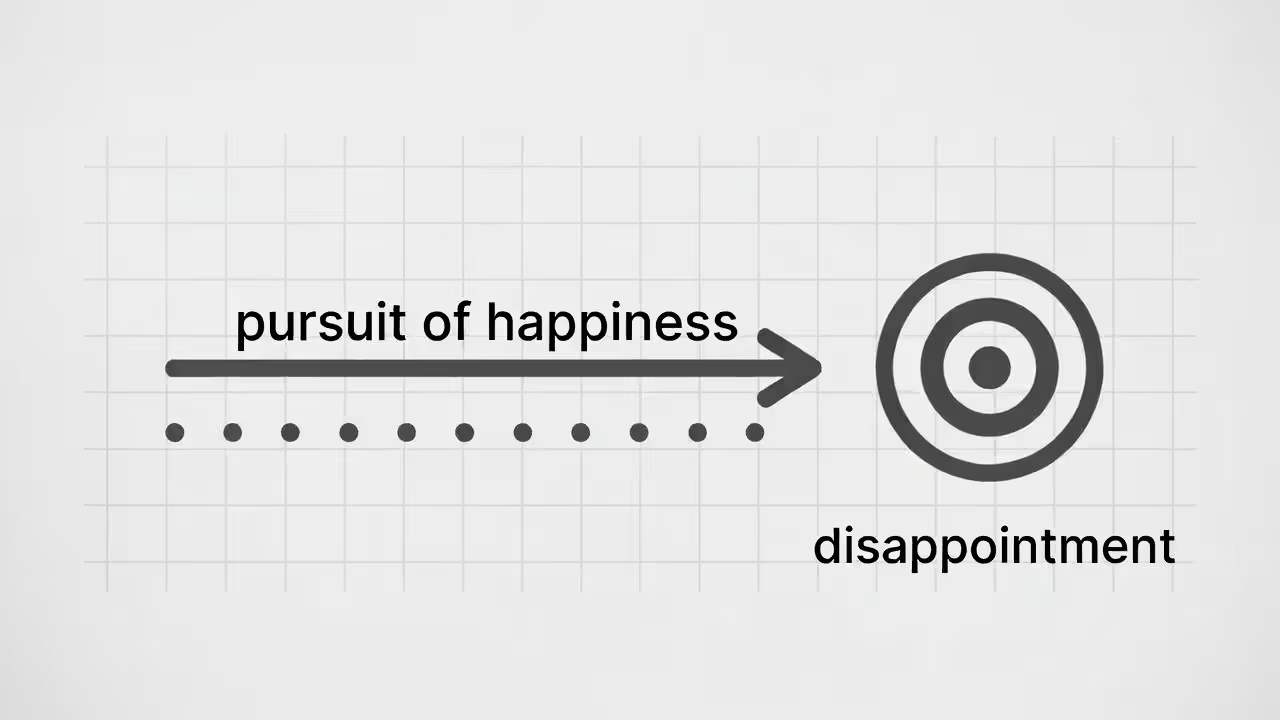
The Pursuit of Happiness Can Lead to Disappointment
Author: Sophie Daniels;
Source: psychology10.click
One of the core problems with actively chasing happiness is that it sets up an expectation for how life should be, creating a standard against which our actual experience is constantly measured and found wanting. When happiness becomes a goal—something to be achieved and maintained—it implies that there is a permanent state of joy we should reach, a destination at which we will finally arrive and remain. However, emotions are naturally transient, flowing like weather through the landscape of our experience, and life is inevitably filled with ups and downs that no amount of positive thinking can eliminate. By expecting constant happiness, we set ourselves up for disappointment whenever reality falls short of this impossible standard, which it inevitably will.
This expectation creates a cognitive framework where any deviation from happiness is perceived as failure, triggering a cascade of negative self-evaluation and emotional distress that compounds the original discomfort. The irony is profound: by trying so hard to be happy, we create the very conditions that make happiness impossible to achieve. We become hyper-vigilant about our emotional state, constantly monitoring ourselves for signs of happiness or unhappiness, conducting an ongoing internal audit of our psychological condition. This self-monitoring itself disrupts the natural flow of positive emotions, which typically arise spontaneously when we are absorbed in meaningful activities or connected with others rather than when we are watching ourselves for signs of joy.
Psychologist Iris Mauss and her colleagues conducted groundbreaking research demonstrating that people who place a high value on happiness often experience more dissatisfaction when they do not feel happy, creating a self-defeating cycle. Their intense focus on achieving happiness makes them hypersensitive to emotional fluctuations, resulting in greater feelings of failure and inadequacy when life does not match their expectations. In one particularly revealing study, participants who were induced to value happiness more highly reported feeling lonelier and less satisfied with their social connections, even though their actual social interactions had not changed in any objective way. The mere act of valuing happiness altered their subjective experience of the same reality, demonstrating that our relationship to happiness profoundly influences whether we can actually experience it. The implications of this research are significant, suggesting that our cultural emphasis on happiness may be inadvertently contributing to widespread unhappiness and dissatisfaction across society.
The Pressure to Be Happy Can Create Anxiety
The societal pressure to "be happy" can backfire spectacularly, especially when individuals feel like they are failing at this culturally mandated goal. Constantly striving for joy—treating it as an achievement to be pursued rather than an experience to be received—can lead to feelings of inadequacy, anxiety, and guilt, especially when happiness proves difficult to attain despite one's best efforts. This pressure is amplified exponentially in environments like social media, where curated, picture-perfect lives are displayed continuously, causing individuals to compare their own messy, complicated experiences to unrealistic standards that do not actually exist except as carefully constructed images.
The phenomenon known as "toxic positivity" describes this cultural tendency to dismiss or minimize negative emotions in favor of maintaining a facade of happiness at all costs. When people feel they must always appear happy—must respond to "how are you?" with enthusiasm regardless of their actual state—they suppress genuine emotions, creating a disconnect between their outer presentation and inner experience. This suppression requires significant psychological energy and leads to emotional exhaustion, increased stress, and paradoxically, deeper unhappiness than if the negative emotions had simply been acknowledged and allowed to pass naturally. The constant performance of happiness becomes a burden that depletes our capacity for authentic positive emotions.
The hedonic treadmill, a foundational concept in happiness research, illustrates this phenomenon with remarkable clarity. It refers to the observed tendency for humans to quickly return to a relatively stable level of happiness despite major positive or negative events or life changes. No matter how much we achieve or acquire—the promotion, the new house, the dream vacation—the pleasure from these things is often fleeting, and we adapt to our new circumstances more quickly than we expect. Research has shown that lottery winners, for example, return to their pre-winning happiness levels within a relatively short period, while people who experience significant negative life events similarly return to their baseline after adaptation. This psychological mechanism means that the pursuit of happiness through external achievements or acquisitions is fundamentally misguided—we are essentially running on a treadmill, expending enormous effort without making any real progress toward lasting contentment.
Overthinking Happiness Reduces Enjoyment of the Present
When we focus too much on whether we are happy, we may actually undermine our ability to experience joy in the present moment through a process of excessive metacognition. By constantly evaluating and questioning our emotional state—"Am I happy enough?" "Is this experience making me as joyful as it should?" "Why don't I feel happier than I do?"—we remove ourselves from direct engagement with experience and become fixated on the abstract concept of happiness rather than the lived reality of the present moment. This metacognitive focus creates a fundamental split in our attention: part of us is having the experience while another part is standing back and evaluating whether the experience is producing the required happiness, and this division prevents full immersion in life.
Research in cognitive psychology has consistently shown that self-focused attention is associated with negative affect, rumination, and reduced enjoyment of positive experiences. When we are constantly asking ourselves whether we are happy, we cannot simply be happy because the question itself creates a problematic distance between us and the experience we are trying to evaluate. It is like trying to fall asleep while anxiously monitoring whether you are falling asleep—the monitoring itself prevents the very state you are trying to achieve. The happiness we seek requires a kind of unselfconscious absorption that is impossible when we are simultaneously observing ourselves for signs of that happiness.
Mindfulness, a practice rooted in being present without judgment that has been extensively studied in recent decades, can be an effective antidote to this pattern of self-defeating self-monitoring. Studies have shown that mindfulness practices help people increase their capacity for contentment by encouraging them to experience life moment-to-moment without overanalyzing or evaluating it. Ironically, letting go of the obsession with happiness—releasing the constant self-evaluation—can often lead to more authentic moments of joy that arise naturally. Mindfulness teaches us to observe our experiences without trying to change them, to accept whatever emotions arise without labeling them as good or bad, successful or failed. This acceptance paradoxically opens the door to greater happiness because we are no longer fighting against our natural emotional experience or creating secondary suffering through our resistance to what is.
Find Lasting Joy
The External Search for Happiness Is Misguided

Author: Sophie Daniels;
Source: psychology10.click
Another critical dimension of the happiness paradox is that many people look for happiness in external sources—material possessions, achievements, status, validation from others, changed circumstances—rather than developing internal capacities for well-being. While these external things may provide temporary pleasure and genuine satisfaction, they rarely lead to lasting fulfillment for several important reasons. External sources of happiness are often outside of our ultimate control and can be taken away by circumstances beyond our influence, leaving us feeling empty or unfulfilled once the initial excitement fades or the external condition changes. Moreover, as the hedonic treadmill demonstrates, we adapt to positive external changes more quickly than we anticipate, returning to our baseline level of happiness regardless of improved circumstances.
The consumer culture that dominates modern society constantly reinforces the message that happiness can be purchased—that the right car, the right home, the right clothing, the right vacation, the right gadget will finally make us feel complete and satisfied. Advertising is specifically designed to create dissatisfaction with current circumstances and suggest that purchase of a product will resolve that dissatisfaction, producing the happiness we seek. Yet research consistently shows that material possessions provide only temporary boosts to happiness that fade with adaptation, and that people who prioritize material goals report lower levels of well-being than those who prioritize intrinsic goals such as personal growth, meaningful relationships, and contribution to community. The external pursuit of happiness leads us away from the internal conditions that actually produce lasting well-being.
Happiness cannot be pursued; it must ensue as the unintended side-effect of one's dedication to a cause greater than oneself or as the by-product of surrender to a person other than oneself. The more we aim at happiness, the more we miss it.
— Dr. Viktor Frankl
Happiness research suggests that intrinsic goals—such as personal growth, deep relationships, creative expression, and a sense of purpose—are more likely to lead to lasting well-being than extrinsic goals like wealth, status, fame, or physical appearance. By shifting focus from external rewards to internal fulfillment, from having more to being more, people can reduce their dependence on fleeting sources of happiness and cultivate a deeper sense of well-being that is more robust to changing circumstances. This does not mean that external achievements are meaningless or that we should abandon all material aspirations—we live in a material world and need material resources to survive and thrive. Rather, it suggests that when we pursue external goals primarily as means to happiness, we are likely to be disappointed, whereas when we pursue intrinsic goals that align with our values, happiness often emerges as a natural byproduct rather than a goal to be achieved directly.
The Science Behind Happiness: A Complex Emotion
Happiness is not as simple as a static state of joy or pleasure that one either has or lacks. In fact, happiness is a complex and multifaceted phenomenon that encompasses multiple components, operates through various psychological and neurobiological mechanisms, and can include experiences we might not immediately categorize as pleasurable. According to positive psychology, the scientific study of what makes life worth living, true happiness or well-being is derived from a combination of factors that work together to create a fulfilling life rather than from any single source.
The PERMA model, developed by Martin Seligman, one of the founders of positive psychology, provides a comprehensive framework for understanding the components of well-being that goes far beyond simply feeling good. This model suggests that true happiness involves much more than pleasant emotions—it requires engagement with meaningful activities, satisfying relationships, a sense of purpose larger than oneself, and the achievement of goals that align with our deepest values. Each component contributes something essential that the others cannot provide, and genuine well-being requires attention to all of them.
Positive Emotions encompass experiences of joy, contentment, gratitude, love, amusement, and pleasure that enhance overall life satisfaction and broaden our cognitive and behavioral repertoires. While not sufficient for well-being on their own, positive emotions are certainly an important component.
Engagement refers to being deeply involved in activities that bring fulfillment, often described as "flow" states where we lose track of time and self-consciousness while fully absorbed in what we are doing. These states of deep engagement contribute to well-being independently of whether they feel pleasurable in the moment.
Relationships include the meaningful connections with others that provide support, love, belonging, and a sense of being known and valued. Humans are profoundly social creatures, and our relationships are consistently the strongest predictors of happiness across all measures.
Meaning involves a sense of purpose in life—feeling connected to something greater than oneself, whether that is family, community, a cause, a spiritual tradition, or the pursuit of knowledge or beauty. Meaning provides coherence and direction that helps us navigate even difficult experiences.
Accomplishment refers to achieving goals that align with personal values and contribute to a sense of mastery, competence, and efficacy in the world. The pursuit and achievement of worthy goals contributes to well-being even when it involves stress and difficulty.
This model highlights that happiness is not just about feeling good but about living a life that is meaningful, engaged, connected, and accomplished. It is important to recognize that happiness so conceived is dynamic and can coexist with challenges, setbacks, and negative emotions, rather than being an all-or-nothing state of perpetual bliss. A person can experience profound meaning in demanding work while also feeling stressed, or deep connection in close relationships while also experiencing conflict. True well-being encompasses and integrates the full range of human experience rather than requiring the elimination of everything negative.
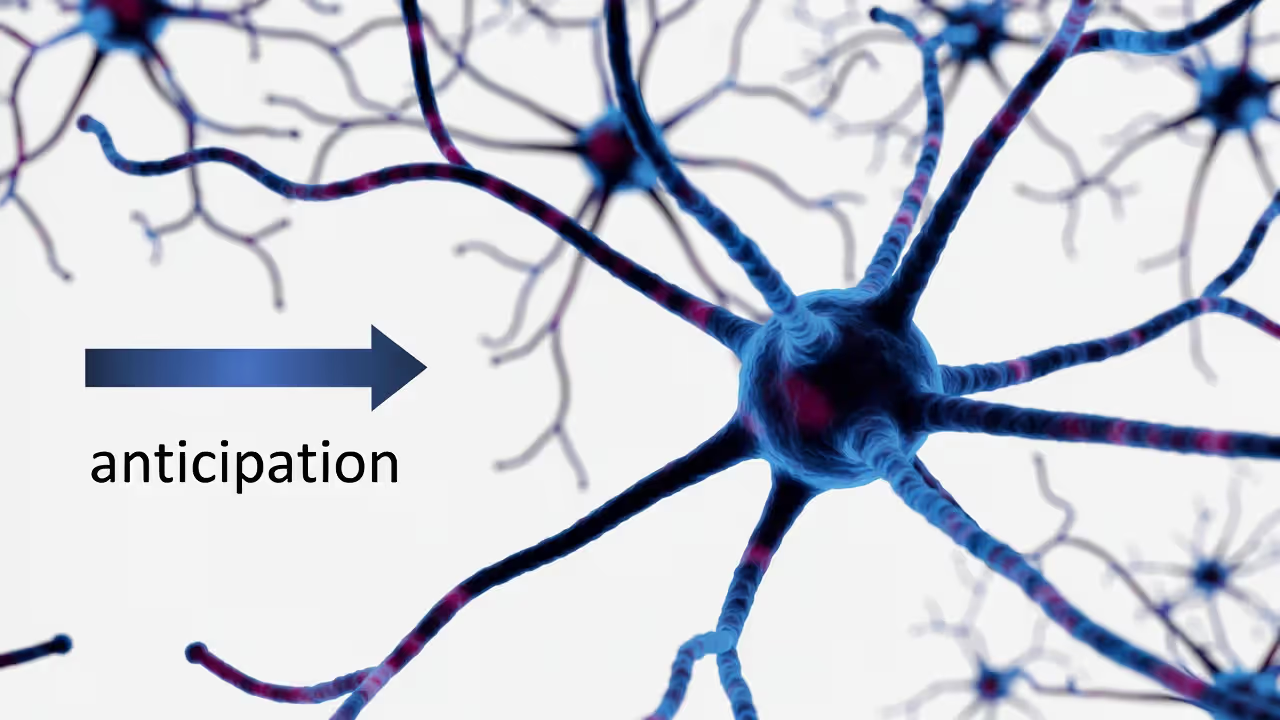
The Role of Dopamine in the Pursuit of Happiness
Author: Sophie Daniels;
Source: psychology10.click
Dopamine, often referred to in popular media as the "feel-good" neurotransmitter, plays a key role in the pursuit of happiness—but not in the way most people assume. Contrary to common belief, dopamine is not primarily responsible for the experience of pleasure itself; rather, it is responsible for motivation, wanting, and the anticipation of reward. It drives us to pursue things we expect will be pleasurable or beneficial. This distinction is crucial for understanding the happiness paradox: dopamine creates wanting, not necessarily liking, and these can become disconnected in ways that lead to compulsive pursuit without genuine satisfaction.
Dopamine is released not when we achieve a goal but when we anticipate achieving it, which can lead to a cycle of constant wanting without ever feeling fully satisfied once the goal is reached. The pleasure we anticipated often fails to materialize as expected, but dopamine is already orienting us toward the next potential reward. This mechanism contributes significantly to the hedonic treadmill: we constantly chase new experiences, material gains, or achievements, driven by dopamine's promise of reward, but the happiness from them quickly fades once obtained, and we find ourselves pursuing the next thing. Understanding this neuroscience helps explain why our brains seem almost designed to keep us perpetually dissatisfied—from an evolutionary perspective, this constant seeking behavior motivated our ancestors to continue searching for resources, mates, and opportunities for survival regardless of what they had already obtained.
According to neuroscientists, sustainable well-being involves not just the pursuit of pleasure driven by dopamine but also serotonin, a neurotransmitter associated with feelings of contentment, stability, and satisfaction with what one has. While dopamine drives us to seek novelty, achievement, and reward, serotonin helps us feel satisfied with our current state. These systems must be balanced for genuine well-being: we need dopamine's motivation to pursue goals and engage with life, but we also need serotonin's contentment to appreciate what we have and experience satisfaction. A sustainable approach to happiness requires cultivating both systems—allowing ourselves to enjoy achievements and pleasures while also developing the capacity for contentment and acceptance that does not depend on constant acquisition or achievement.
Why Chasing Happiness Can Lead to Unhappiness
Happiness Becomes an Obligation
When society places a premium on happiness, elevating it to the status of a moral imperative and personal responsibility, it transforms from a natural aspect of human experience into an obligation that must be fulfilled. People may begin to feel that they should be happy all the time—that anything less than consistent positivity represents a failure of character, effort, or technique. This pressure leads them to hide or deny negative emotions such as sadness, frustration, anger, or anxiety, creating a disconnect between their authentic inner experience and the socially mandated presentation of happiness they feel obligated to maintain.
The pressure to perform happiness for others—whether on social media, at work, or in personal relationships—adds another layer of stress to modern life that depletes the very resources needed for genuine well-being. We become actors in our own lives, constantly playing the role of happy people rather than actually experiencing genuine emotions as they arise. This performance is exhausting, requiring vigilant self-monitoring and emotional labor that leaves little energy for authentic engagement with life. It is also ultimately unsustainable—the gap between performed happiness and genuine experience cannot be maintained indefinitely without consequences, leading eventually to burnout, emotional numbness, and a profound sense of disconnection from our authentic selves.
Suppressing negative emotions, as the obligation to be happy requires, can lead to emotional exhaustion and paradoxically to more intense negative emotions when they finally emerge. Research published in peer-reviewed journals has consistently found that people who habitually suppress their emotions experience heightened psychological stress, worse physical health outcomes, and damaged relationships. The suppression of negative emotions does not make them disappear; instead, it pushes them below conscious awareness where they continue to influence behavior, create somatic symptoms, and build pressure. Eventually, suppressed emotions often emerge with greater intensity than if they had been acknowledged and processed when they first arose, creating the very negative experiences we were trying to avoid through suppression.
Comparison Culture and the Happiness Trap
The rise of social media has dramatically exacerbated the happiness paradox by creating a pervasive culture of comparison that previous generations never experienced to the same degree. With platforms like Instagram, Facebook, TikTok, and others, people constantly compare their lives to the idealized versions presented by others—not just celebrities and influencers but friends, acquaintances, and even strangers. These curated images display only the highlights of someone's life, carefully selected and often edited to present the best possible impression, while leaving out the struggles, boredom, conflict, or sadness that everyone experiences. The algorithms that power these platforms are specifically designed to show us content that generates engagement, which often means content that triggers comparison, aspiration, and the desire for more.
We see carefully filtered photographs, perfectly staged moments, and highlight reels of other people's lives, and we unconsciously compare these fabricated presentations to our own unfiltered, imperfect reality that includes all the mundane and difficult moments that never make it to social media. This comparison is fundamentally unfair—we are comparing our behind-the-scenes footage to everyone else's highlight reel—but our brains do not automatically make this distinction. The result is a persistent sense that everyone else is happier, more successful, more attractive, and living better lives than we are, creating chronic dissatisfaction with our own circumstances regardless of how objectively good they may be.
Social media presents us with thousands of edited moments that create a distorted picture of reality. We compare our ordinary insides to everyone else's extraordinary outsides, and we inevitably come up short. This comparison trap is one of the greatest threats to well-being in the modern world.
— Dr. Jean Twenge
This comparison culture leads to feelings of inadequacy and deficiency, where people feel that they are not as happy or successful as others regardless of their actual circumstances. As a result, they may chase external forms of happiness—material possessions, vacations, achievements, social validation—to "keep up" with the curated images they see. However, research shows that social comparison reliably leads to reduced self-esteem and increased levels of anxiety and depression, particularly among young people who have grown up with social media as a constant presence. Studies have found significant correlations between time spent on social media and rates of depression and anxiety. Breaking free from this comparison trap requires conscious effort to limit exposure to comparison-inducing content, develop media literacy skills that recognize the constructed nature of social media presentations, and cultivate an internal sense of worth that does not depend on external validation or favorable comparison to others.
The Pursuit of Happiness Can Make Us Self-Centered

Author: Sophie Daniels;
Source: psychology10.click
In chasing personal happiness as a primary life goal, there is a significant risk of becoming overly focused on oneself in ways that paradoxically undermine the very happiness being sought. While self-care and personal well-being are legitimately important, constantly prioritizing and monitoring one's own happiness can result in a diminished sense of empathy, reduced investment in relationships, and weakened connection to community—all of which are actually essential for sustainable well-being. This self-focus creates a paradox where the very pursuit of happiness isolates us from the social connections and meaningful engagement that are most likely to produce genuine well-being.
When we become preoccupied with our own emotional state—constantly asking whether we are happy enough, whether our needs are being met, whether we are getting sufficient fulfillment—we may become less attuned to the needs of others, less willing to invest in relationships that require sacrifice, and less capable of the kind of selfless giving that research consistently shows is strongly associated with happiness. The focus on personal happiness can make us worse friends, partners, family members, and community members, thereby undermining the relationships that would actually make us happy. The irony is substantial: by focusing too much on our own happiness, we often undermine the very relationships and connections that are most reliably associated with well-being in research.
Studies have consistently shown that altruism and acts of kindness towards others can significantly boost feelings of well-being, often more reliably than activities focused directly on increasing personal happiness. People who engage in prosocial behavior—volunteering, helping others, showing compassion, contributing to community—report higher levels of life satisfaction than those who focus primarily on their own happiness. This finding aligns with wisdom from virtually all spiritual and philosophical traditions, which have long emphasized service, compassion, and concern for others as paths to fulfillment. The "helper's high," as researchers call it, refers to the emotional reward that comes from helping others—a reward that appears to be hardwired into our brains through millions of years of evolution as social creatures whose survival depended on cooperation and mutual support.
How to Find Lasting Joy: Shifting Your Perspective on Happiness
If chasing happiness directly is counterproductive, how can we approach joy in a way that leads to genuine, sustainable well-being? The key lies in fundamentally reframing how we think about happiness and adopting a more balanced, realistic approach to emotional life. Rather than treating happiness as a goal to be achieved through direct pursuit, we can begin to understand it as a natural byproduct of living well—a consequence of engaging meaningfully with life, connecting authentically with others, and acting in accordance with our values rather than a destination to be reached through focused effort. This shift in perspective is subtle but profound, changing our relationship with happiness from one of striving and grasping to one of openness and reception.
Embrace Emotional Diversity
One of the most important steps in finding true joy is embracing the full spectrum of emotions, both positive and negative, rather than attempting to maximize positive emotions and eliminate negative ones. Emotional diversity refers to the capacity to experience and accept a wide range of emotions without judgment, understanding that all emotions serve functions and carry information. Instead of striving for constant happiness and viewing any other emotional state as failure, it becomes important to acknowledge that negative emotions—such as sadness, frustration, anxiety, anger, and fear—are natural, inevitable, and necessary parts of human life that serve important purposes.
These emotions evolved because they serve adaptive functions that contributed to survival: fear alerts us to danger, anger motivates us to address injustice or boundary violations, sadness helps us process loss and signals to others that we need support, and anxiety prepares us for future challenges. By attempting to eliminate these emotions through positive thinking, suppression, or medication, we not only fail but also lose access to valuable information about ourselves and our environment. A psychologically healthy approach involves allowing all emotions to arise and pass naturally, neither desperately clinging to positive emotions nor urgently pushing away negative ones, but relating to the flow of emotional experience with acceptance and equanimity.
Research shows that people who embrace emotional diversity tend to have better psychological and physical health than those who try to maintain constant positivity. By allowing yourself to experience a wide range of emotions, you reduce the pressure to "always be happy" and create space for more authentic moments of joy to emerge naturally. Studies have found that individuals with greater emotional complexity—who experience and can differentiate a wider range of emotions—have lower levels of inflammation, better emotional regulation, and greater resilience in the face of stress. The key insight is that psychological well-being is not about feeling good all the time but about having a flexible, accepting relationship with the full range of human emotional experience.
Focus on Meaning Over Pleasure

Author: Sophie Daniels;
Source: psychology10.click
Rather than chasing fleeting moments of pleasure in the hope that their accumulation will produce happiness, shifting focus to what brings meaning and purpose to life represents one of the most reliable paths to lasting well-being. This could involve deepening relationships, pursuing personal growth, expressing creativity, contributing to causes larger than yourself, or engaging with work that feels significant. When we align our actions with our deepest values and find meaning in what we do, happiness often follows as a natural byproduct rather than requiring direct pursuit.
Meaningful activities may not always be pleasurable in the moment—caring for a sick family member, working through a difficult creative challenge, standing up for what is right, or pushing through the discomfort of personal growth can all be stressful, demanding, and emotionally difficult. Yet these activities tend to contribute to a deeper sense of fulfillment and life satisfaction than purely pleasurable experiences that lack meaning. There is a qualitative difference between the shallow happiness of distraction and entertainment and the deeper satisfaction that comes from meaningful engagement, even when that engagement involves difficulty.
Research has found that people who pursue meaningful goals rather than purely hedonic ones experience greater life satisfaction in the long term and are more resilient when facing adversity. Meaning provides a sense of fulfillment that transcends temporary pleasures, offering a deeper, more sustained form of well-being that is not dependent on circumstances being pleasant. Viktor Frankl, the psychiatrist and Holocaust survivor who founded logotherapy, argued that the search for meaning is the primary motivation in human life and that meaning can be found even in unavoidable suffering. His experiences in concentration camps led him to observe that those who maintained a sense of meaning were more likely to survive, while those who lost their sense of purpose often succumbed. While most of us will never face such extreme circumstances, the principle applies to ordinary life: meaning provides a foundation for well-being that pleasure alone cannot offer.
Cultivate Gratitude and Acceptance
Gratitude has been shown through numerous scientific studies to have a powerful positive impact on well-being that rivals or exceeds many other positive psychology interventions. By focusing on what we have rather than what we lack, we cultivate a mindset of abundance and appreciation that shifts attention from endless wanting to present satisfaction. This practice can redirect focus away from constantly seeking external validation or pleasure and toward recognizing the sources of joy and goodness that already exist in our lives and often go unnoticed.
Gratitude practices can be remarkably simple: keeping a daily journal noting things we are thankful for, writing letters of appreciation to people who have helped us, taking moments throughout the day to notice and mentally acknowledge good things, or sharing gratitudes with family members at meals. Research has consistently shown that regular gratitude practice is associated with increased positive emotions, improved relationships, better physical health, improved sleep, and greater overall life satisfaction. The effects appear to work through multiple mechanisms: gratitude shifts attention toward positive aspects of life, strengthens relationships through expressed appreciation, and may directly influence brain chemistry in beneficial ways.
In addition to gratitude, acceptance of the present moment—whether it brings joy, sadness, frustration, or any other experience—can help reduce the pressure to constantly feel happy and the suffering that comes from resistance to what is. When we stop resisting negative emotions and learn to accept them as part of the natural flow of human experience, we create space for more authentic happiness to emerge. Acceptance does not mean passive resignation or abandonment of efforts to improve our circumstances. Rather, it means acknowledging reality as it is in the present moment without unnecessary resistance or denial, without adding the secondary suffering of fighting against what is already the case. From this foundation of acceptance, we can take wise action to improve our situation while not being at war with the present moment.
Lonely amid shared joy
Prioritize and Community

Author: Sophie Daniels;
Source: psychology10.click
Humans are fundamentally social creatures whose brains and bodies evolved in the context of close-knit communities, and our well-being is deeply connected to our relationships with others. Instead of pursuing individual happiness in isolation—treating well-being as a personal project to be achieved through self-focused effort—prioritizing meaningful connections with family, friends, and community represents one of the most reliable and well-documented paths to lasting well-being. Research consistently shows that people with strong social bonds report higher levels of happiness and life satisfaction than those who prioritize material success, individual achievement, or other goals that do not involve relationships.
The Harvard Study of Adult Development, one of the longest-running studies of adult life ever conducted, followed participants for over 80 years and reached a clear conclusion: good relationships keep us happier and healthier, and the quality of our close relationships is the strongest predictor of both happiness and longevity. This finding has been replicated across cultures and using various methodologies. The protective effect of relationships operates through multiple mechanisms: relationships provide emotional support during difficult times, practical assistance with life challenges, a sense of meaning and purpose, accountability that promotes healthy behaviors, and opportunities for positive experiences.
Building and maintaining deep relationships requires effort, vulnerability, time, and sometimes the willingness to prioritize connection over personal comfort or convenience. But the rewards are profound and well-documented. By fostering authentic connections—relationships characterized by mutual knowledge, care, and support—we increase our chances of experiencing joy rooted in love, trust, and shared experiences rather than the fleeting pleasure of individual achievement or acquisition. In an age of increasing loneliness and social isolation despite technological connectivity, intentionally cultivating genuine community becomes even more important. This might involve joining groups aligned with your interests, volunteering for causes you care about, investing significant time in deepening existing friendships, or simply being more present and attentive in daily interactions.
Conclusion: The Happiness Paradox and the Path to True Joy
The happiness paradox teaches us an important and counterintuitive lesson: the more we chase happiness as an elusive goal to be achieved through direct pursuit, the more it tends to slip away from us. In a world that constantly tells us to pursue joy through external means—whether through achievements, material goods, social status, or the right techniques—we are often left feeling empty, dissatisfied, or exhausted by the endless pursuit. The problem is not that we want to be happy—that is natural and legitimate—but that our conception of happiness and our strategy for pursuing it are fundamentally misguided.
By embracing emotional diversity rather than insisting on constant positivity, by focusing on meaning rather than pleasure, by cultivating gratitude and acceptance rather than endless wanting, and by prioritizing genuine connection rather than isolated self-improvement, we can find a deeper, more lasting form of happiness that is robust to life's inevitable challenges. The path to genuine well-being is not a straight line toward a fixed destination but a winding journey through the full range of human experience, including experiences we might not choose but from which we can nevertheless grow and find meaning.
True joy is not about eliminating negative emotions or reaching a state of perpetual bliss—that goal is neither achievable nor, upon reflection, even desirable. Rather, genuine well-being involves embracing life's full range of experiences, allowing moments of happiness to arise naturally from meaningful engagement while finding purpose and connection even in difficulty. By letting go of the constant chase for happiness—releasing the anxious monitoring and grasping that characterize the direct pursuit—we can finally discover the joy that was always available in the present moment but obscured by our frantic seeking. In the end, the secret to happiness may simply be to stop chasing it and start living fully in the here and now.
This article provides general information about the psychology of happiness and well-being and is not intended as professional psychological advice. If you are experiencing persistent low mood, depression, or other mental health concerns, please consult with a qualified mental health professional.
FAQ
Related Stories

Read more

Read more




The content on psychology10.click is provided for general informational and inspirational purposes only. It is intended to share evidence-based insights and perspectives on psychology, relationships, emotions, and human behavior, and should not be considered professional psychological, medical, therapeutic, or counseling advice.
All information, articles, and materials presented on this website are for general educational purposes only. Individual experiences, emotional responses, mental health needs, and relationship dynamics may vary, and outcomes may differ from person to person.
Psychology10.click makes no representations or warranties regarding the accuracy, completeness, or reliability of the content provided and is not responsible for any errors or omissions, or for decisions or actions taken based on the information presented on this website. Readers are encouraged to seek qualified professional support when dealing with personal mental health or relationship concerns.