

Person scrolling a social media feed of smiling posts and likes
Toxic Positivity Guide to Redefining Happiness

In today's hyperconnected world, happiness has become a commodity—something to be pursued, purchased, displayed, and performed for an audience of friends, followers, and strangers alike. Social media feeds overflow with curated smiles, inspirational affirmations, and relentless positivity, painting picture-perfect lives where struggles, challenges, and authentic human difficulty are systematically brushed under the carpet or reframed as "growth opportunities" without acknowledging their genuine pain. It seems that contemporary society has become obsessed with cheerfulness, presenting perpetual positivity as the ultimate life goal, the marker of a successful existence, and the baseline expectation for how we should feel and present ourselves at all times.
However, this cultural obsession with happiness—especially the forced, performative, or superficial kind that dominates our digital landscapes and social interactions—can be profoundly toxic, creating unrealistic expectations that leave millions of people feeling inadequate, broken, or ashamed when their internal emotional reality doesn't match the cheerful external standard. The pressure to maintain constant positivity denies the legitimacy and inherent value of the full range of human emotional experience, pathologizing normal responses to genuinely difficult circumstances and creating a culture where acknowledging struggle feels like admitting personal failure.
It's time we critically examine this happiness obsession and work toward redefining happiness in a more holistic, authentic, and psychologically healthy way—one that moves beyond the superficial layers of positivity dominating our culture and embraces the rich complexity of human emotional life. This comprehensive exploration will dive deep into the roots of our cultural happiness obsession, examining the pressure to be cheerful at all times, how this pressure impacts our mental health and relationships, and most importantly, how we can redefine happiness to include authenticity, emotional flexibility, meaning, and genuine personal growth rather than simply the absence of negative feelings or the performance of constant joy.
The Positivity Trap: A Modern Dilemma
Modern Western culture, particularly in its American manifestation that has spread globally through media and technology, has elevated happiness to an almost sacred pedestal, equating it with success, fulfillment, virtue, and even moral worth. This phenomenon is evident everywhere we look: in the proliferation of self-help books promising secrets to lasting joy, in online influencers whose brands are built on relentless optimism, in corporate wellness programs encouraging employees to bring their "best selves" to work, and in social media content presenting curated highlight reels as if they were complete representations of human life.
This cultural narrative pushes the message that constant happiness and positivity are not just desirable but essential—that anything less represents a personal failure requiring correction. This creates what mental health professionals and cultural critics increasingly refer to as toxic positivity—the pressure to remain optimistic regardless of circumstances, which denies the legitimacy of difficult emotions like sadness, anger, grief, anxiety, or despair even when such emotions are entirely appropriate responses to genuinely difficult situations.
The Rise of Toxic Positivity
Author: Marcus Reed;
Source: psychology10.click
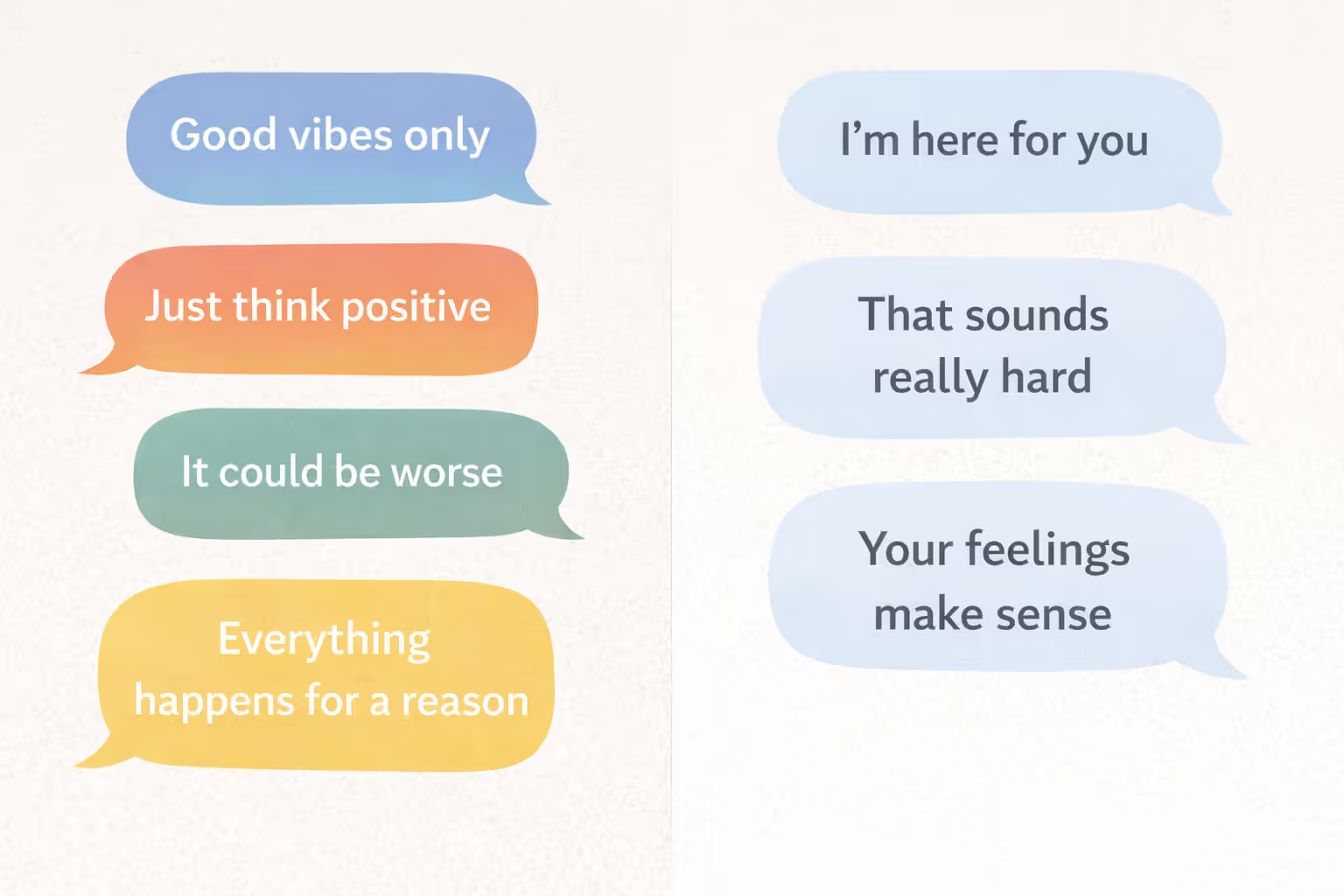
Toxic positivity refers to the pervasive cultural pressure to maintain an exclusively positive outlook even in the face of significant adversity, loss, or suffering. This mindset dismisses, minimizes, or invalidates negative emotions, often through phrases that sound supportive but actually communicate that certain feelings are unwelcome: "Look on the bright side," "Everything happens for a reason," "Good vibes only," "Just think positive," "It could be worse," or "At least you still have..." While these sentiments are typically well-intentioned—offered by people genuinely trying to help—they can leave those experiencing genuine hardship feeling profoundly ashamed, misunderstood, or invalidated when their emotional reality doesn't conform to expected positivity.
Toxic positivity is the assumption that despite a person's emotional pain or difficult situation, they should only have a positive mindset. It's the excessive and ineffective overgeneralization of a happy, optimistic state that results in the denial, minimization, and invalidation of authentic human emotional experience.
— Dr. Jaime Zuckerman
Toxic positivity manifests across multiple domains of contemporary life:
- Social interactions: Friends and family who respond to expressions of difficulty with dismissive encouragement rather than genuine acknowledgment, leaving the person feeling unheard and alone in their struggle
- Workplace culture: Corporate environments that demand constant enthusiasm, discourage expression of frustration or concern, and celebrate "positive attitudes" while punishing honest assessments of problems or challenges
- Social media: Platforms that algorithmically reward positive content, creating ecosystems where sharing struggles feels risky and performative happiness becomes the expected norm for participation
- Mental health spaces: Even therapeutic and wellness contexts can be infected by toxic positivity when difficult emotions are treated as problems to be quickly solved rather than experiences to be understood and processed
- Parenting and education: Messages to children that certain feelings are "bad" or unacceptable, teaching emotional suppression from an early age and creating lifelong patterns of emotional avoidance
- Grief and loss: Cultural discomfort with mourning that pressures bereaved individuals to "move on," "find the silver lining," or "stay strong" before they've fully processed their devastating loss
This obsession with cheerfulness isn't confined to casual social interactions but permeates workplaces, media, healthcare settings, and even mental health spaces. People are systematically encouraged to present an image of constant success and happiness, while darker, more complex emotions are swept under the rug as if acknowledging them would somehow make them more real or more powerful. The fundamental problem with this approach is that it creates a false dichotomy where happiness is categorized as good and any other emotion is categorized as bad, wrong, or problematic. In reality, human emotional experience is infinitely more nuanced, and emotions like sadness, grief, anger, fear, and anxiety are not only normal but serve important functions and are often necessary for personal growth, authentic relationships, and appropriate response to life's genuine difficulties.
The Happiness Industry
The cultural obsession with happiness has given rise to what critics call the "happiness industry"—a vast commercial enterprise that commodifies emotional well-being and sells it back to consumers through books, seminars, courses, apps, supplements, retreats, coaching programs, and countless wellness products that promise to unlock the secrets to perpetual joy. The global wellness market has been valued at over $4.5 trillion, with a substantial and growing portion focused specifically on happiness, mental well-being, and the pursuit of positive emotional states.
The happiness industry encompasses numerous interconnected sectors:
- Self-help publishing: Thousands of books published annually promising formulas, secrets, habits, and step-by-step guides to achieving lasting happiness
- Wellness technology: Apps for meditation, gratitude journaling, mood tracking, positive affirmations, and habit formation, many using gamification to make the happiness pursuit feel productive and measurable
- Corporate wellness programs: Workplace initiatives that often focus on individual happiness and stress management rather than addressing structural sources of workplace stress, burnout, and dissatisfaction
- Coaching and consulting: A largely unregulated industry of life coaches, happiness consultants, and personal development gurus offering guidance on achieving fulfillment
- Retreats and experiences: From yoga retreats to happiness workshops to transformational seminars, experiences promising personal transformation through immersive positivity
- Supplements and products: Everything from mood-enhancing supplements to products marketed as bringing joy, reducing stress, or promoting well-being
While there is nothing inherently wrong with seeking happiness or using tools that genuinely support well-being, significant problems arise when happiness is treated as a product to be purchased, a skill to be mastered through the right technique, or an achievement to be unlocked through external means. The underlying message becomes unmistakably clear: if you're not happy, you're doing something wrong, you haven't found the right approach, you haven't bought the right product, or you simply aren't trying hard enough. This framework transforms happiness from a natural emotional state that appropriately comes and goes in response to life circumstances into an obligation and a metric of personal success, leaving many people feeling inadequate, broken, or morally deficient when they don't experience constant joy despite their sincere efforts and significant investments.
The Problem with Chasing Happiness
When happiness becomes the ultimate goal—the central organizing principle around which we structure our lives and evaluate our worth—we can fall into traps that are profoundly counterproductive to the very well-being we seek. The relentless, single-minded pursuit of happiness can lead to paradoxical effects, where the more aggressively we chase positive feelings, the more elusive they become. This phenomenon is often referred to as the happiness paradox—the counterintuitive finding that directly pursuing happiness often undermines it, while happiness more reliably emerges as a byproduct of other pursuits like meaning, connection, engagement, and contribution.
Emotional Suppression and Its Psychological Effects
Author: Marcus Reed;
Source: psychology10.click
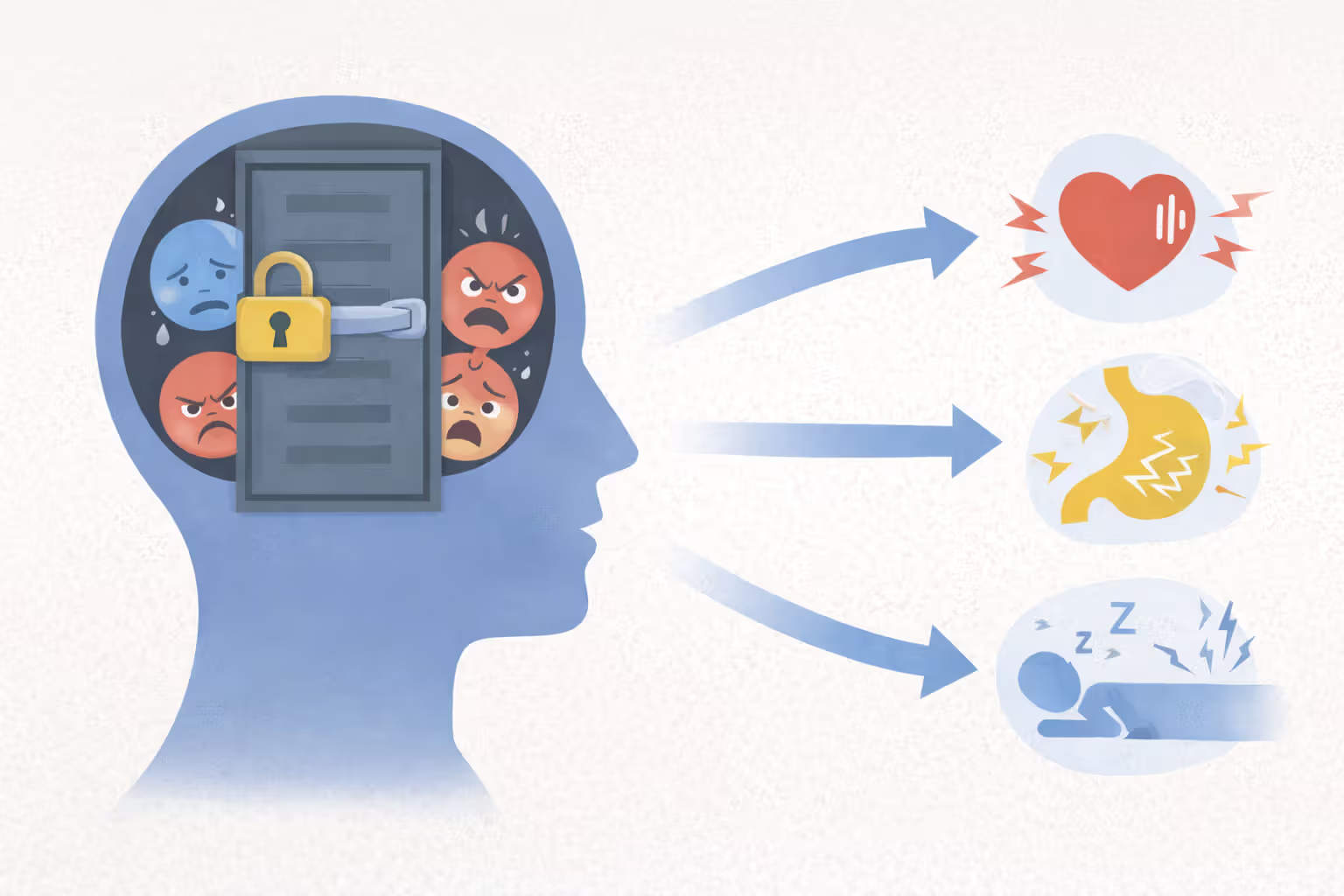
The cultural pressure to always be cheerful, optimistic, and positive frequently leads to the suppression of negative emotions—pushing down, denying, masking, or hiding feelings like sadness, frustration, anger, fear, grief, or anxiety because they don't fit the expected positive presentation. When we consistently suppress these emotions rather than allowing ourselves to acknowledge, experience, and process them in healthy ways, we prevent the natural completion of emotional cycles and create psychological pressure that must eventually find expression, often in destructive or problematic ways.
Research has linked emotional suppression to numerous negative outcomes:
- Mental health impacts: Significantly increased rates of anxiety disorders, depression, and general psychological distress among those who habitually suppress negative emotions rather than processing them
- Physical health consequences: Weakened immune function, increased inflammation, elevated cardiovascular stress, and other measurable physical manifestations of chronically unprocessed emotional experience
- Relationship difficulties: Reduced intimacy, authenticity, and genuine connection in relationships where emotional suppression prevents honest sharing of inner experience
- Behavioral problems: Suppressed emotions often resurface in destructive forms such as sudden anger outbursts, substance abuse, impulsive behavior, or self-destructive patterns
- Chronic stress: The ongoing cognitive and emotional effort of suppression creates a persistent stress state that takes cumulative toll on both body and mind over time
- Emotional numbness: Suppressing negative emotions often inadvertently dampens positive emotions as well, as the mechanisms that suppress one tend to suppress all, leading to a flattened, gray emotional landscape
A landmark study published in the Journal of Experimental Psychology found that people who accept and process their negative emotions, rather than suppressing or avoiding them, experience significantly better mental health and emotional well-being over the long term. Attempting to bottle up difficult emotions doesn't make them disappear—it causes them to persist beneath the surface, often intensifying over time, and eventually resurface in more harmful ways, all while consuming psychological resources in the ongoing effort of suppression.
The Pursuit of External Validation
Another significant problem with our cultural happiness obsession is the tendency to seek happiness through external validation rather than internal fulfillment. Social media has dramatically amplified this issue, creating platforms where people curate and present only the best, most positive, most enviable aspects of their lives, generating a collective performance of happiness that bears little resemblance to the actual complexity and difficulty of human experience.
We've created a culture where the appearance of happiness has become more important than genuine well-being. People spend enormous energy crafting images of perfect lives while their actual inner experience remains unattended, often suffering in silence behind the smiling posts.
— Dr. Jean Twenge
The external validation trap manifests in several interconnected patterns:
- Social comparison: Constantly comparing our real, complete lives (including all our struggles, doubts, and ordinary moments) to others' carefully curated highlights, inevitably finding ourselves feeling inadequate
- Metric dependency: Equating self-worth with quantifiable external measures like followers, likes, comments, shares, or other indicators of social approval and perceived popularity
- Performance pressure: Feeling obligated to present a happy, successful image regardless of internal reality, creating exhausting and ultimately unsustainable disconnection between public and private selves
- Validation addiction: Developing psychological dependency on external feedback for emotional stability, making well-being contingent on others' responses rather than internal sources
- Authenticity erosion: Gradually losing touch with genuine preferences, feelings, and values as external expectations increasingly shape self-presentation and even self-perception
This creates a vicious cycle where happiness becomes contingent on factors entirely outside our control—how others perceive us, how our posts perform, whether our lives seem enviable compared to the curated images we see—rather than emerging from internal sources of meaning, connection, purpose, and self-acceptance. When external validation becomes the primary happiness strategy, we effectively hand our emotional well-being over to the unpredictable judgments of others and the arbitrary algorithms of social platforms.
The Impact of Forced Positivity on Relationships
Toxic positivity doesn't just affect individuals struggling internally with the gap between expected and actual feelings; it can significantly strain and damage relationships as well. When people are constantly told to "stay positive," "look on the bright side," or "focus on gratitude" when they express difficulty, they may feel increasingly unable to share their authentic emotional experience with friends, family, or romantic partners. This creates emotional distance and superficiality precisely when genuine connection is most needed, as vulnerability and authenticity are essential components of deep, meaningful relationships.
Forced positivity damages relationships through several mechanisms:
- Invalidation: When someone shares a struggle and receives positivity-focused responses, they feel their experience has been dismissed rather than genuinely acknowledged and understood
- Trust erosion: Repeated experiences of invalidation teach people that their authentic feelings aren't welcome in this relationship, reducing willingness to share openly in the future
- Superficiality: Relationships that only accommodate positive emotions remain at surface level, lacking the depth and intimacy that comes from sharing life's full range of experiences together
- Isolation: Feeling unable to share genuine struggles leads to profound loneliness even within relationships, as the true self remains hidden behind an acceptable positive facade
- Resentment: The person sharing may grow increasingly resentful of partners or friends who seem unable or unwilling to engage with their authentic emotional experience
- Disconnection: Over time, the growing gap between what's shared and what's actually experienced widens into fundamental disconnection even in theoretically close relationships
For example, if someone is grieving a significant loss and receives advice like "They're in a better place now," "At least you had them for as long as you did," or "You need to stay strong for others," they likely feel profoundly misunderstood and unsupported rather than comforted. What they actually need is acknowledgment that their loss is genuinely painful, permission to grieve without timeline expectations or silver-lining requirements, and presence that can tolerate witnessing their pain without rushing to fix or minimize it. Over time, consistently receiving positivity rather than genuine empathy can seriously erode trust and closeness in relationships as partners feel their emotional reality is being systematically dismissed or invalidated.
Redefining Happiness: Moving Beyond the Superficial
Author: Marcus Reed;
Source: psychology10.click
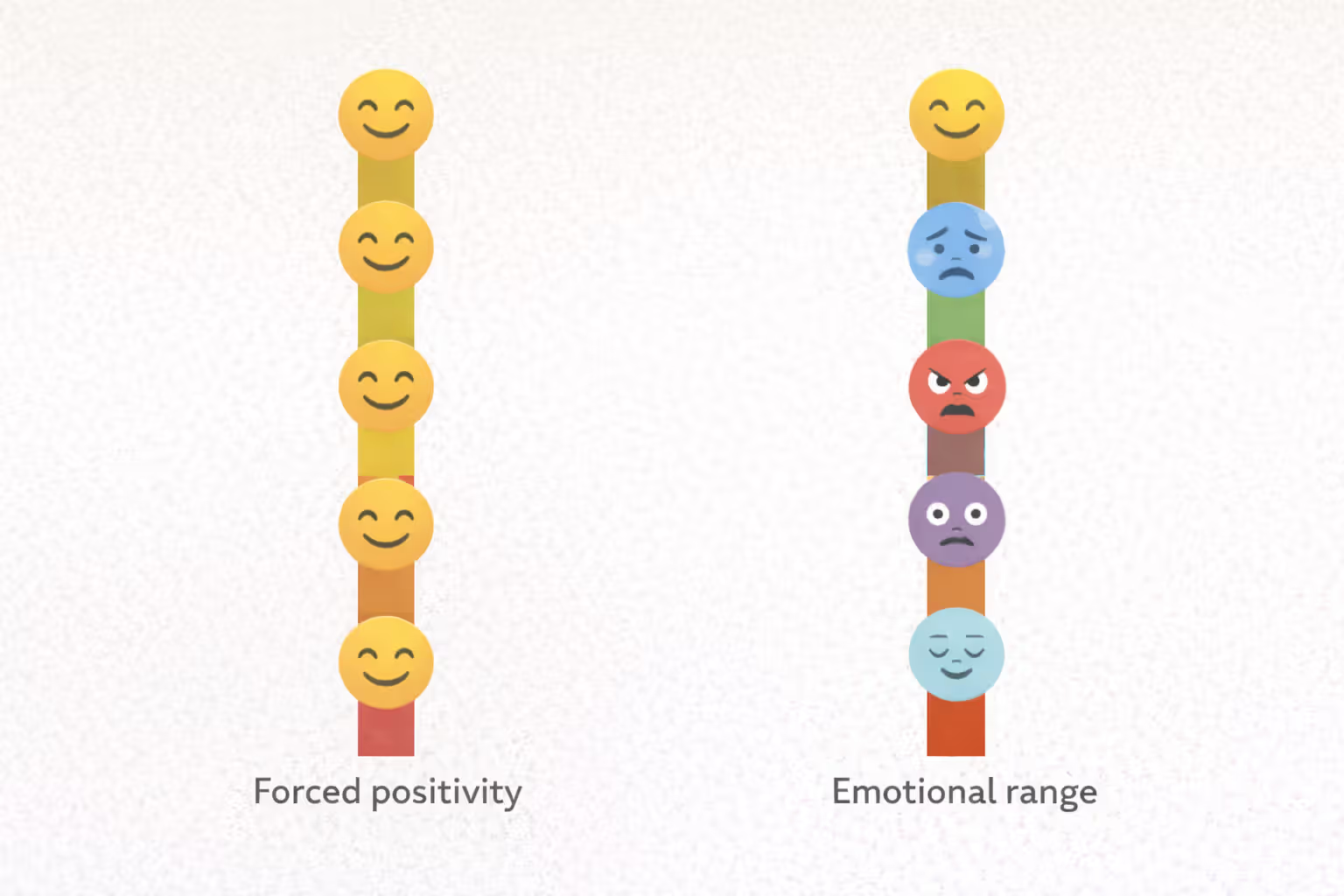
Given the significant problems with toxic positivity and the single-minded pursuit of constant cheerfulness, how do we redefine happiness in a way that's more sustainable, authentic, psychologically healthy, and genuinely inclusive of the full range of human emotional experience? The key lies in moving beyond the superficial notion of happiness as constant positive feelings and embracing a more nuanced, flexible, and ultimately more satisfying approach—one that acknowledges the importance and value of difficult emotions, prioritizes meaning over momentary pleasure, and values personal growth and authentic self-expression over the performance of well-being.
Emotional Flexibility: The Key to Authentic Happiness
Rather than striving for constant positivity or attempting to engineer and maintain particular emotional states through willpower or technique, psychological flexibility—also called emotional flexibility—allows us to experience the full spectrum of emotions, both positive and negative, in a healthy, balanced, adaptive way. Emotional flexibility is the capacity to adapt to different emotional states, understand their messages and functions, accept their presence without being overwhelmed, and process them constructively rather than suppressing them or being controlled by their intensity.
Emotional flexibility involves several core competencies that can be developed:
- Emotional awareness: The ability to recognize and accurately name emotional states as they occur, developing a sophisticated emotional vocabulary that allows for nuanced understanding
- Acceptance: Allowing emotions to be present without judgment, resistance, or the urgent need to immediately change or escape them
- Contextual sensitivity: Understanding emotions as meaningful responses to circumstances rather than random events, asking what information they provide about our situation, values, and needs
- Values clarity: Maintaining connection to core values even during difficult emotional experiences, using values rather than momentary moods to guide important decisions and behavior
- Adaptive response: Choosing responses that serve long-term well-being and deeply held values rather than simply reacting to immediate emotional pressure or discomfort
- Emotional tolerance: Building capacity to experience difficult emotions without being overwhelmed, acting destructively, or needing to immediately escape
Emotional agility means being aware and accepting of all your emotions, even learning from the most difficult ones. It also means getting beyond conditioned or preprogrammed cognitive and emotional responses to live in the moment with a clear reading of present circumstances.
— Dr. Susan David
Emotional flexibility acknowledges that life is inherently full of ups and downs, that difficult emotions are not signs of failure or pathology but natural responses to challenging circumstances, and that suppressing or avoiding negative feelings ultimately creates more problems than it solves. In this framework, happiness becomes less about achieving and rigidly maintaining a particular positive emotional state and more about developing a resilient, adaptable emotional capacity that supports genuine well-being across all of life's varied circumstances—the joyful and the painful, the triumphant and the disappointing.
Embracing Negative Emotions as Part of the Human Experience
Contrary to the popular cultural narrative that negative emotions are problems to be solved, symptoms to be treated, or obstacles to be overcome as quickly as possible, difficult emotions actually serve important psychological, physiological, and social functions that contribute to survival, growth, and well-being. Emotions like sadness, anger, fear, frustration, grief, and anxiety evolved because they provided survival advantages for our ancestors, and they continue to provide valuable information, motivation, and social signals in contemporary life.
The functions and value of various "negative" emotions:
- Sadness: Signals loss and the significance of what was lost, invites reflection on values and what truly matters, naturally slows us down for necessary processing, elicits compassion and support from others, and helps us eventually let go and adapt
- Anger: Signals boundary violation, unfairness, or injustice; provides energy for protective action; communicates limits to others; and motivates change in situations that should not be accepted passively
- Fear: Alerts to potential danger requiring attention; prepares body and mind for defensive action through the fight-flight-freeze response; and encourages appropriate caution in genuinely risky situations
- Anxiety: Anticipates potential problems before they occur; motivates preparation, planning, and preventive action; and keeps important concerns in awareness when attention might otherwise drift
- Grief: Honors the profound significance of what or who was lost; allows psychological adjustment to fundamentally changed circumstances; and maintains meaningful connection to what mattered even after it's gone
- Frustration: Signals blocked goals requiring attention; motivates creative problem-solving and strategy adjustment; and indicates where current approaches need to change
- Guilt: Signals violation of personal values or harm to others; motivates repair, apology, and behavioral change; and helps maintain moral consistency between values and actions
By embracing negative emotions as natural and valuable parts of human experience rather than viewing them as enemies to be defeated or problems to be solved, we can move away from the exhausting and ultimately counterproductive effort of emotional avoidance. Instead, genuine well-being—what psychologists often call flourishing—includes the ability to navigate difficult emotions with grace, wisdom, and resilience, using their valuable information while not being controlled or overwhelmed by their intensity.
As the influential psychologist Carl Jung famously observed, "What you resist, persists." When we try to avoid, suppress, or deny negative emotions, they often linger beneath the surface and eventually manifest in more harmful ways—as chronic tension, unexplained physical symptoms, relationship problems, sudden destructive outbursts, or generalized unhappiness and dissatisfaction. However, when we face difficult emotions directly, acknowledge their presence, understand their message, and allow them to complete their natural cycle, we can process them effectively and eventually move toward a deeper, more sustainable form of well-being that doesn't depend on emotional control or avoidance.
The Concept of Eudaimonic Happiness

Author: Marcus Reed;
Source: psychology10.click
The ancient Greek philosopher Aristotle introduced the concept of eudaimonia, which refers to a deeper, more sustainable form of happiness and human flourishing grounded in meaning, purpose, virtue, and personal growth rather than simply in pleasure, comfort, or positive feelings. Unlike hedonic happiness—which centers on pleasure, enjoyment, and the avoidance of pain—eudaimonic happiness is about living in alignment with one's deepest values, contributing to something larger than oneself, developing one's unique capacities and potentials, and pursuing genuine self-actualization.
Comparing hedonic and eudaimonic approaches to happiness:
| Hedonic Happiness | Eudaimonic Happiness |
| Pleasure-focused | Meaning-focused |
| Seeks comfort and enjoyment | Embraces growth-producing challenge |
| Avoids pain and discomfort | Accepts necessary suffering |
| Present-moment feeling | Long-term fulfillment |
| Often externally dependent | Primarily internally generated |
| Can be superficial or fleeting | Tends toward depth and durability |
| "Feeling good" | "Living well and doing well" |
Eudaimonic happiness recognizes that a well-lived, deeply satisfying life is not always easy, comfortable, or pleasant—that pursuing meaningful goals often requires sacrifice, discipline, effort, and the willingness to tolerate significant discomfort. It suggests that genuine fulfillment comes not from maximizing pleasant feelings and minimizing unpleasant ones, but from a sense of purpose, continued inner growth, contribution to others and the world, and the pursuit of excellence in domains that matter to us. This type of happiness tends to be more sustainable than fleeting hedonic pleasures because it provides deep satisfaction and resilience that persist even when circumstances are difficult—in fact, often becoming most apparent precisely when circumstances are challenging.
The Role of Gratitude and Acceptance
While toxic positivity asks us to focus exclusively on the good while ignoring, denying, or minimizing the bad, genuine well-being comes from a more balanced approach that integrates both authentic gratitude for what is genuinely good and acceptance of what is genuinely difficult. This balanced approach doesn't involve pretending that problems don't exist, that suffering isn't real, or that everything is actually fine when it isn't—it honestly acknowledges the full picture of life, including its genuine gifts and its genuine challenges, without selective attention in either direction.
Healthy gratitude differs from toxic positivity in important ways:
- Gratitude acknowledges the good without denying the bad; toxic positivity uses "good" to dismiss or minimize the bad
- Gratitude can genuinely coexist with grief, struggle, or difficulty; toxic positivity demands exclusive positivity
- Gratitude involves authentic appreciation that's genuinely felt; toxic positivity often involves forced or performative positivity
- Gratitude enhances and enriches life experience; toxic positivity restricts and impoverishes it
- Gratitude makes space for emotional complexity; toxic positivity enforces simplistic emotional uniformity
Similarly, acceptance doesn't mean resignation, giving up, passivity, or pretending that difficult situations are actually acceptable. It means recognizing that certain things are genuinely beyond our control, that fighting against unchangeable reality creates additional suffering beyond the original difficulty, and that peace often comes from working skillfully with circumstances as they actually are rather than exhausting ourselves fighting against them. By practicing genuine gratitude for the positive aspects of life while accepting its inherent imperfections and genuine difficulties, we cultivate a balanced, authentic form of well-being that doesn't depend on circumstances being perfect or on maintaining illusions about reality.
Pursuing Authenticity Over Perfection
Another crucial element in redefining happiness is releasing the exhausting idea that life needs to be perfect—or to appear perfect to others—for us to experience genuine well-being. The pursuit of perfection, whether in our actual lives or in our curated presentations of them, is a major source of stress, anxiety, and chronic dissatisfaction because it sets standards that are literally impossible to achieve and maintain. The inevitable gap between perfect expectations and imperfect reality becomes a constant source of suffering and self-criticism.
Authenticity as an alternative to perfection involves:
- Accepting imperfection: Genuinely recognizing that flaws, mistakes, limitations, and struggles are universal parts of human existence, not personal failures that separate us from others
- Valuing genuineness: Prioritizing real experience over impressive appearance, depth of connection over breadth of admiration
- Embracing vulnerability: Being willing to be seen in less-than-perfect states, trusting that real connection comes through authenticity rather than through impressive but false presentation
- Living by values: Making important choices based on what genuinely matters to us rather than what will appear impressive or enviable to others
- Self-acceptance: Extending genuine compassion and acceptance to ourselves as complete, imperfect human beings rather than demanding impossible standards
- Honest expression: Sharing authentic experience rather than curated highlights, in relationships and in how we present ourselves to the world
Authenticity is fundamentally about being true to oneself even when that means facing uncomfortable truths, experiencing difficult emotions, or presenting something less than an ideal image. When we prioritize authenticity over perfection, we create space for genuine happiness to emerge and flourish—not happiness that depends on everything being right or appearing right, but happiness that can genuinely coexist with imperfection, struggle, and the full complexity of human life.
Cultivating Well-Being in a Cheerfulness-Obsessed World
Having explored the pitfalls of toxic positivity and the pursuit of constant happiness, as well as the value of emotional flexibility, meaning, and authenticity, the practical question becomes: how can we actually cultivate a more sustainable, genuine form of well-being while living in a culture obsessed with cheerfulness and saturated with messages that equate constant positivity with success and worth?
Mindfulness and Emotional Awareness

Author: Marcus Reed;
Source: psychology10.click
One of the most effective and well-researched approaches to cultivating sustainable well-being is mindfulness—the practice of bringing present-moment, non-judgmental awareness to our thoughts, feelings, bodily sensations, and surrounding environment. Mindfulness helps develop emotional awareness and acceptance, allowing us to recognize and observe our emotions as they arise rather than immediately reacting to them, suppressing them, or being carried away by them.
Mindfulness supports well-being through several mechanisms:
- Emotional recognition: Developing the ability to identify emotions accurately as they arise, naming them and noticing their qualities with curiosity
- Non-reactive observation: Creating valuable space between emotional experience and behavioral response, allowing for choice and wisdom rather than automatic reaction
- Acceptance practice: Learning to allow emotions to be present without harsh judgment, desperate resistance, or urgent need to change them immediately
- Present-moment focus: Reducing rumination about unchangeable past events and worry about uncertain future possibilities, both of which fuel negative emotional states
- Perspective taking: Recognizing that emotions are temporary experiences we have, not permanent identities we are—"I notice I'm feeling anxious right now" rather than "I am an anxious person"
- Compassionate response: Developing the habit of meeting difficult emotions with kindness and understanding rather than criticism and rejection
Through regular mindfulness practice, we can learn to observe our emotions with genuine curiosity and self-compassion rather than immediately labeling them as "good" or "bad" and trying to change them accordingly. This approach naturally fosters emotional flexibility and helps us respond to life's inevitable challenges in a more balanced, intentional, wise way rather than being governed by reactive patterns or cultural prescriptions about how we "should" feel.
Building Resilience Through Self-Compassion
Another essential component of sustainable well-being is self-compassion—the practice of treating ourselves with the same kindness, understanding, patience, and support that we would naturally offer a good friend going through a difficult time. When we experience difficult emotions, setbacks, failures, or struggles, it's remarkably easy to fall into patterns of harsh self-criticism, shame, and negative self-judgment that significantly amplify our suffering. Self-compassion offers a powerful alternative: meeting our own struggles with warmth and understanding rather than judgment and rejection.
Self-compassion involves three core components identified by researcher Dr. Kristin Neff:
- Self-kindness: Treating yourself with gentleness, warmth, and understanding rather than harsh criticism, especially during difficult times when self-criticism feels most automatic
- Common humanity: Recognizing that suffering, failure, and imperfection are universal human experiences that connect us to others, not signs of personal inadequacy that isolate us
- Mindful awareness: Holding painful experiences in balanced awareness rather than over-identifying with them and being consumed, or suppressing and avoiding them
Research has consistently shown that self-compassion is associated with greater emotional resilience, significantly reduced anxiety and depression, more stable and realistic self-worth, and greater ability to cope effectively with difficult life experiences. Importantly, self-compassion is fundamentally different from self-pity (which isolates us in our suffering and emphasizes how bad we have it), self-indulgence (which avoids taking appropriate responsibility), or low standards (self-compassionate people can maintain high standards while responding to failures with kindness rather than punishment).
By practicing self-compassion, we build the resilience and emotional strength necessary to navigate life's inevitable challenges without falling into either toxic positivity (forcing ourselves to feel better than we genuinely do) or emotional suppression (pushing away feelings that seem unacceptable). Self-compassion helps us fully embrace our humanity, including our struggles and imperfections, and move toward authentic well-being that doesn't depend on everything going right.
Seeking Meaning and Purpose
As we've explored, eudaimonic happiness is fundamentally about finding genuine meaning and purpose in life rather than simply chasing pleasant feelings or avoiding discomfort. Cultivating sustainable well-being involves the deep work of identifying what truly matters to us—what we value most deeply, what we want to contribute, what kind of person we want to become, what legacy we want to leave—and progressively aligning our daily actions, major decisions, and life direction with those values and purposes.
Sources of meaning that support eudaimonic well-being:
- Relationships: Deep, authentic connections with family, friends, partners, and communities that involve genuine mutual care, support, and growth
- Contribution: Work, service, creativity, or other expression that makes a positive difference in the lives of others or in the world
- Growth: Ongoing development of skills, understanding, character, wisdom, and virtue throughout life
- Transcendence: Connection to something larger than oneself—whether spiritual, philosophical, scientific, artistic, or natural
- Values expression: Living consistently in alignment with deeply held principles, beliefs, and commitments
- Legacy: Creating something meaningful that will outlast one's individual life, contributing to future generations
When we live in genuine alignment with our authentic values and pursue goals that feel deeply meaningful—rather than chasing culturally prescribed definitions of success or happiness—we experience a qualitatively different and deeper sense of fulfillment that sustains us through difficult periods and provides resilience in the face of life's inevitable challenges. This sense of meaning and purpose gives us compelling reasons to persist, to tolerate necessary discomfort, and to keep growing even when growth is difficult and painful.
Fostering Authentic Connections

Author: Marcus Reed;
Source: psychology10.click
Relationships are consistently identified as one of the most important contributors to human well-being across cultures, life stages, and circumstances. However, the quality of relationships matters enormously: superficial connections characterized by positivity performance, curated self-presentation, and mutual impression management provide far less well-being than authentic relationships grounded in genuine mutual vulnerability, honest emotional expression, and real support through life's full range of experiences.
Cultivating authentic connections involves:
- Vulnerability practice: Being genuinely willing to share struggles, doubts, fears, and difficulties rather than presenting only polished positivity
- Emotional availability: Being truly present for others' authentic emotional experiences, even when those experiences are difficult, uncomfortable, or painful to witness
- Validation over fixing: Learning to acknowledge and genuinely validate others' feelings rather than immediately trying to change how they feel or solve their problems
- Reciprocal support: Both giving and receiving real support through difficult times, allowing relationships to demonstrate and build their strength through shared challenge
- Acceptance of imperfection: Fully embracing others' flaws, limitations, and struggles as part of their complete humanity, just as we wish them to embrace ours
- Shared meaning: Building relationships around genuinely shared values, purposes, and growth rather than merely shared pleasant activities or mutual entertainment
By building authentic connections that genuinely allow for the full range of human experience rather than only accommodating performative positivity, we create support systems that actually sustain us through difficulty, authentically celebrate genuine joys, and provide the profound sense of belonging and being truly known that is fundamental to human flourishing.
Redefining Happiness in an Authentic, Sustainable Way
In a world obsessed with cheerfulness, positivity performance, and the commodification of happiness, it's remarkably easy to fall into the trap of believing that genuine well-being means avoiding discomfort, suppressing difficult emotions, or constantly seeking pleasurable experiences while presenting a carefully curated image of perfect contentment. However, as we have explored throughout this comprehensive examination, this superficial version of happiness is not only unsustainable but actively counterproductive—creating shame around normal human emotions, damaging relationships through inauthenticity and superficiality, and setting standards for emotional experience that virtually guarantee persistent feelings of failure, inadequacy, and self-criticism.
True happiness—or more accurately, true flourishing and well-being—is profoundly more complex, nuanced, and ultimately satisfying than the version presented by toxic positivity and the happiness industry. It involves embracing genuine emotional flexibility that allows us to experience, understand, and learn from the full spectrum of human emotions rather than fighting against half of our emotional nature. It requires pursuing authentic meaning and purpose rather than simply maximizing pleasant feelings and minimizing unpleasant ones. It demands practicing self-compassion that allows us to be fully human, complete with our inevitable imperfections, struggles, and failures. And it necessitates fostering authentic connections where we can be genuinely known and accepted rather than merely admired for our performances.
By releasing the impossible and ultimately counterproductive standard of constant cheerfulness and embracing a more mature, authentic, psychologically healthy understanding of well-being, we can cultivate lives that are genuinely fulfilling rather than merely appearing so to others or even to ourselves. This doesn't mean abandoning the pursuit of positive experiences, neglecting genuine sources of joy, or giving up on improving our emotional lives—it means pursuing these worthwhile goals in ways that honor our full humanity, honestly acknowledge life's genuine difficulties, and build sustainable well-being rather than brittle positivity that collapses at the first serious challenge.
Ultimately, happiness redefined is not about living a perfect life free from struggle, loss, failure, or difficult emotions—it's about living an authentic life that genuinely embraces both profound joy and deep sorrow, meaningful growth and painful setbacks, intimate connection and necessary solitude, certainty and confusion. It's about becoming people capable of experiencing life fully, in all its complexity and difficulty and beauty, rather than people skilled primarily at avoiding, suppressing, or performing around certain parts of experience. By redefining happiness in this way, we move beyond the real but unnecessary limitations of toxic positivity and create space for the kind of deep, resilient, authentic well-being that can genuinely sustain us through whatever life brings.
FAQ: Redefining Happiness Beyond Toxic Positivity
Related Stories

Read more

Read more




The content on psychology10.click is provided for general informational and inspirational purposes only. It is intended to share evidence-based insights and perspectives on psychology, relationships, emotions, and human behavior, and should not be considered professional psychological, medical, therapeutic, or counseling advice.
All information, articles, and materials presented on this website are for general educational purposes only. Individual experiences, emotional responses, mental health needs, and relationship dynamics may vary, and outcomes may differ from person to person.
Psychology10.click makes no representations or warranties regarding the accuracy, completeness, or reliability of the content provided and is not responsible for any errors or omissions, or for decisions or actions taken based on the information presented on this website. Readers are encouraged to seek qualified professional support when dealing with personal mental health or relationship concerns.